A Wall of Hope
What’s in a Name Anyway?
B Corporations. I’m not so sure about that name. Sounds like they’re just slightly better than average corporations. Like they didn’t quite make the A grade, but they’re not quite as bad as a C, so we gave them a B. Maybe they’re named after the Bumble Bee, since Bumble Bees are so important for the future of our planet? Or maybe the B stands for Brilliant? Or Better? Or Bloody Brilliant and a much Better Bet? Maybe. I suppose I could just check really couldn’t I? But it doesn’t matter anyway, forget about the name, because this isn’t just some jumped-up marketing campaign. This is the real deal yo! Like a bee pollinating the flowers so the forest can grow. B corporations are changing the business world, and by doing that, they can change the real world too. So what’s the deal B?
What the Flip is a B Corporation?
B Corporations must be officially certified to ensure that they ‘meet the highest standards of verified social and environmental performance, public transparency, and legal accountability to balance profit and purpose.’
Well I looked it up and it turns out that the B in B Corporation doesn’t seem to stand for any particular word. They just have B stamped all over their website with no explanation as to what word it stands for at all. So it’s just ‘B’. I guess that makes the first paragraph seem a little silly, but I like the first paragraph, so it’s staying just as it is, and we’re going to move on from here. Like the human race focusing on building a beautiful future while leaving our negligent past behind us. Is that first negligent paragraph a mistake, or my motivation to write the rest of the article more prudently? Well does a bee shit in the woods? Does a bee even shit? You know I’m not entirely sure. Maybe B Corporations can help us find the answer?
A Certified B Corporation is basically a for-profit company that works to help the world instead of destroying it. As stated in ‘The B Corp Declaration of Interdependence’, The B Corp vision is one of ‘a global economy that uses business as a force for good.’ Now I like the sound of that!
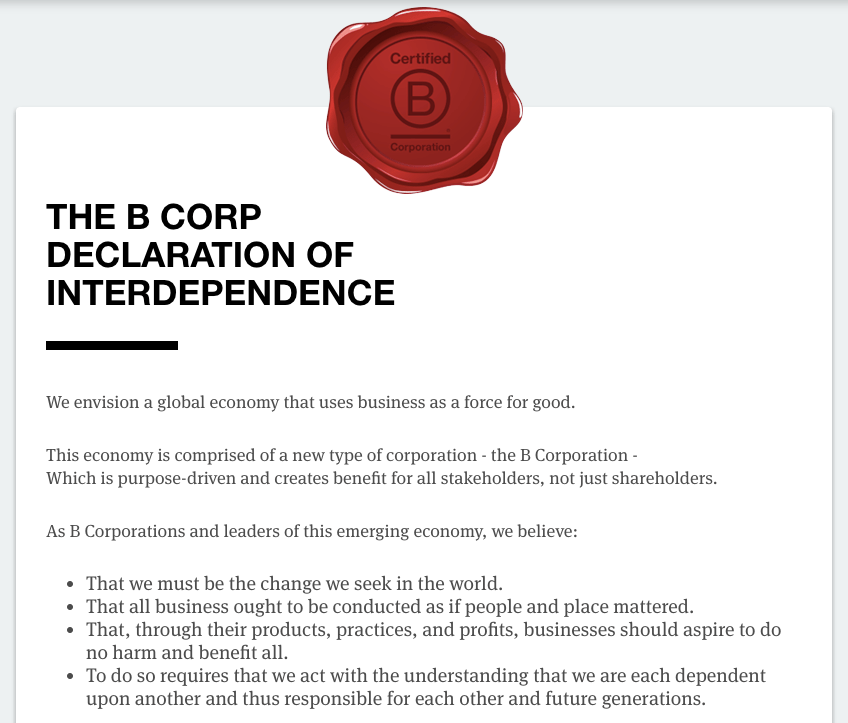
These companies make it their mission to solve social and environmental problems as well as making a profit. B Corporations must be officially certified by a not-for-profit, The B Lab Company, to ensure that they ‘meet the highest standards of verified social and environmental performance, public transparency, and legal accountability to balance profit and purpose.’ B Corporations must also re-certify their credentials every two years to keep in line with evolving standards if they want to hold onto their precious B.
So a B Corporation pretty much has to help communities and the environment at all times while always being transparent about their actions and legally committing to not being greedy, and they have to prove that they’re doing all these things every two years through a rigorous assessment from an independent not-for-profit organisation. I mean we probably should have made every corporation since the very dawn of corporating follow these kinds of rules but we’ve got to start somewhere haven’t we? And thank goodness, it seems, we have started!
Okay so this whole B Corporation thing seems like a truly fabulous planet-altering idea, but one thing I was wondering was this: Hmmmmm so the B Corporations are monitored by ‘The B Lab Company’, but who the hell is monitoring those guys? How do we know they’re not the devil in disguise? Or worse, politicians, or flaming lobbyists? Well after checking out the governing bodies and advisory bodies that oversee the work of B-Lab, it seems that all the people involved come from different independent foundations, companies, and initiatives that all have to do with good things like sustainability, philanthropy, and improving the environment. The B Impact assessment is also overseen by an independent committee of 20-22 members, each with deep industry or stakeholder expertise.
So it seems like the guys keeping the B Corporations in line are legit, which suggests that the good work the B Corporations are doing must be genuine. But what exactly sets them apart from regular companies?
What Makes B Corporations Better?
When a company is certified as a B Corporation, you can be pretty sure that they’re treating both people, and planet, with respect.
As we’ve already discussed, to become a ‘Certified B Corporation’, a company has to commit to doing things differently. So what exactly do they have to do? Below are some of the commitments wannaB (haha) B Corporations have to make and genuinely implement in order to pass the ongoing B Impact assessments.
- Directors are required to consider the impact of their actions on all stakeholders, including the social and environmental impacts, as well as the financial. So if a project is proposed within the company that will make bucket tonnes of cash dollar, but will also pollute a couple of rivers or negatively affect the local community, the company cannot go through with the project. Actions must be beneficial for everyone involved.
- The company must publish regular reports outlining overall social and environmental performance assessed against a third-party standard. So there’s really no hiding if you wanna be a long term member of the B Brigade!
- The company must achieve a minimum verified score on the ‘B Impact Assessment’, and must maintain this score every two years against evolving assessment standards. And these assessments aren’t just a short walk through a supposedly un-polluted corporate park, they involve measuring a companies entire social and environmental performance, and evaluating how the companies operations and overall business model impacts their workers, community, environment, and customers. From supply chain and input materials to charitable giving and employee benefits. You can even find a directory on the B Lab Website where you can find every single Certified B Corporation, and view their exact impact scores over time in areas of governance, workers, community, environment, and customers. So when a company is certified as a B Corporation, you can be pretty sure that they’re treating both people, and planet, with respect.
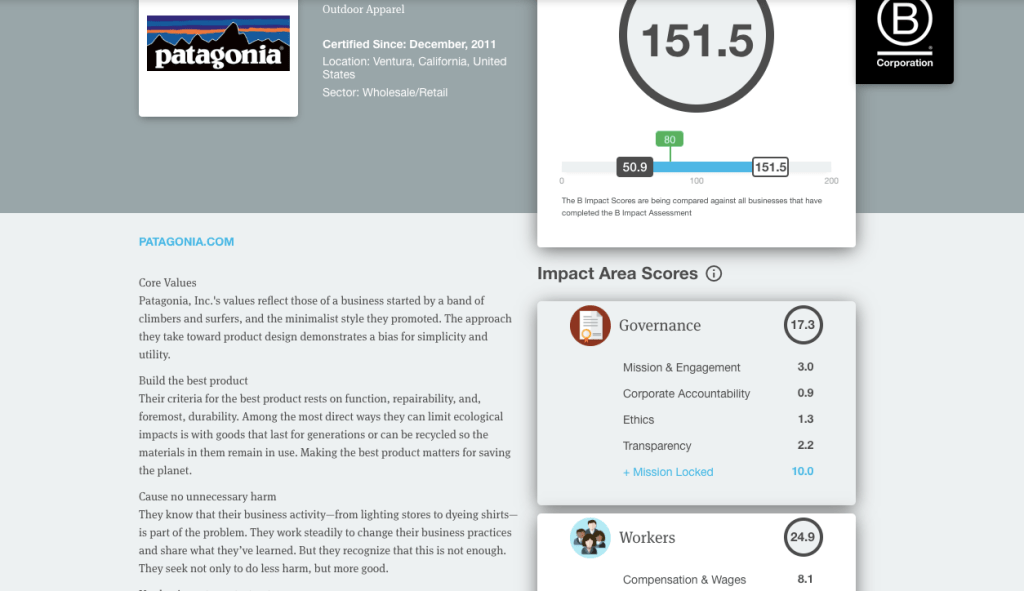
The B Lab website states that the positive impact of B Certified Corporations is supported by transparency and accountability requirements, so the B Corp Certification doesn’t just prove where the company excels in the present, but also commits it to consider stakeholder impact for the long term by building it into the companies legal structure. So to become a B Corporation, a company has to make itself legally responsible for improving the environment and the communities in which it operates.
The B Corporation model represents a way for us to utilise the structures and institutions we already have in place to do good instead of bad. To build instead of destroy.
You know I was going to do a section after this one titled ‘So how can B Corporations save the world?’, but I don’t think there’s any need for a whole section on that. I think it’s quite simple really: If every single business on earth had a legal obligation to improve the environment and the communities they operate in, thereby working to heal the planet and the human race, as opposed to destroying them, what do you think would happen? I think we’d probably save the world, that’s what.
The B Corporation model represents a way for us to utilise the structures and institutions we already have in place to do good instead of bad. To build instead of destroy. We don’t have to come up with great big revolutionary systems of commerce or governance to create the change that’s needed. We can use the structures we already have to save the world, we just have to start holding them to higher standards; standards we should have held them to from the very beginning. Some might argue that this is all fanciful idealism, and that it can’t possibly work in the real world. But those arguments are invalid. It’s already working in the real world, and there are some really big Certified B Corporations already who are fully operational, profitable, and absolutely thriving! Do have a look below.
To become a B Corporation, a company has to make itself legally responsible for improving the environment and the communities in which it operates.
Who’s on Board Already?
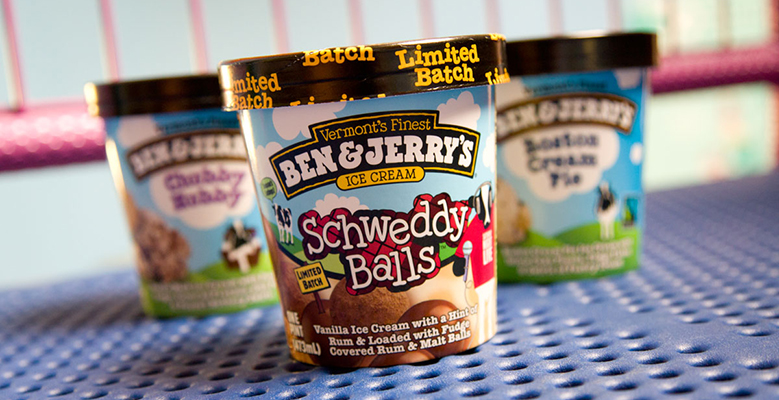
There are currently over 2,500 Certified B Corporations in over 50 countries around the world, and you may have heard of a few of them. Ben and Jerry’s, Patagonia, Etsy, Danone North America, and so many other companies are all Certified B Corporations, which means that all of these companies are actually improving the health of the planet and the people around them, as opposed to causing damage.
Danone really is an incredible example of how a huge multinational corporation can operate in a way that helps the world instead of harming it. Danone North America, a business unit of Danone which contains 14 subsidiary companies, is entirely B Certified, while Danone have many other B Certified subsidiaries around the world, and are working towards becoming entirely B Certified. This is proof that the B Corporation model doesn’t just work for the little guys. Danone is one of the largest multinational food production companies in the world, spanning over 120 markets worldwide with a reported yearly profit approaching €25 Billion. If they can fundamentally change their ways and operate successfully while also healing the planet, then surely everybody can. The question to ask though, is will everybody try?
What’s the Future Looking Like for The B Corp Movement?
Just last week something completely out of the norm happened. Something quite incredible. And it directly involves the B Corp Movement. Over 30 Certified B Corporations, including Ben and Jerry’s, Patagonia, and Danone North America, took out a full-page advertisement in the New York Times urging members of ‘The Business Roundtable Lobby Group’, which represents pretty much all of the US’s biggest companies, to ‘get to work’ on making real change happen. This follows the recent decision of The Business Roundtable to ‘shift its statement of the purpose of a corporation to include all of its stakeholders, including employees, suppliers, and broader society.’ That was big talk from a group which contains the CEOs of companies like Apple, Amazon, Coca Cola, AT&T, Chevron, Exxon, Deloitte, Pepsi, Pfizer, Ford, and pretty much everyone else, and The B Corporation movement has now officially, and publicly, challenged these influential companies, to start walking the walk.

The fact that these kinds of things are happening in the business world is absolutely astonishing really. The big guys claiming they’re going to start changing their ways is one thing, but being publicly challenged to actually do it by companies who already have is another (B)east entirely. (hahaha)
So with thousands of companies around the world already B Certified, many more in the process of joining, and huge multinational companies like Danone and Ben and Jerry’s banging The B Corp drum, I’m inclined to think the future is looking pretty bright for The B Corp Movement, and dare I say it, for our planet as well?
About the Author

Adam Millett is a freelance writer for hire with an affinity for dressing up as Spiderman and writing about saving the planet. He likes to climb trees and stare at the stars in his spare time and likes to help businesses tell their sustainability stories while he’s working. Visit his website at wordchameleon.com if you want to tell the world yours.

Where is the Magic?
You know I’m not a huge fan of mushrooms. The one’s Mam puts in the dinner at least. White mushrooms I think they’re called? It’s the texture you see. Too squidgy. (No not squidy, you heard right the first time, I did say squidgy. With a g before the y. I think this word accurately sums up that spine-tingling huffy puffy mushy feeling you get when you bite into one of those funny-looking fungus bumps.) Portobello’s are the same, too squidgy for Adam. But you know what? Mushrooms are a whole lot more magical than a hearty bowl of stroganoff with fungi soup on the side, and I’m not just talking about that 60’s kind of magic.

The world is in such a state these days that we could do with a little magic. Or a lot of magic. I mean where to even start? Micro-plastics have been found floating around from the bottom of the oceans to the top of the highest mountain peaks (so basically everywhere). A red-faced wig-wearing racist alien masquerading as a president wants to actually purchase Greenland, an island that contains so much ice that its own fate may very well determine the fate of the entire world. Another red-faced chaos declaring racist alien masquerading as a headmaster wants to financially strangle his own country while potentially starting a war in another. The arctic is on fire, Spain is on fire, the world is on fire! More people suffer from heart problems, obesity and diabetes than ever before, while nearly a billion people go hungry every day. Anxiety is rife. Depression rates are at an all-time high. 1% of the human population hold 45% of the financial wealth and 3 flipping men in the United States hold more wealth than the entire bottom half of the population. 3 men.
It seems the world has categorically lost its flipping mind. Our species has lost its way. The indigenous mycelium chefs have lost the magic recipe. So what I’ll explore in this article, is how mushrooms might help us get some of that magic back. The magic of being at peace with ourselves, each other, and the world around us.
Now obviously mushrooms aren’t going to stop a no-deal Brexit from happening, unless somebody spikes the tea bags at number 10 Downing Street, in which case all those overpaid pompously educated goober heads might actually have a genuinely enlightening epiphany for the first time in their pampered lives and finally figure out a way to stop being egotistical apathetic parasites, but since that’s not going to happen, let’s discuss how mushrooms can help us with some of our other issues. We can start with the one closest to home, our personal health.
A Mushroom a Day Keeps the Doctor Away: Healing Ourselves
We can’t expect a world full of sick people to heal a sick planet, so improving our personal health could be seen as the first step towards a planetary recovery. Embracing the versatile magic of the mushroom has so much potential to heal each one of us, physically, mentally, and spiritually, and if we can learn to heal ourselves, maybe we can learn to come together and heal the planet as well. Here’s how mushrooms can help.
Healing the Body
Cardiovascular disease is the leading cause of death worldwide, and is responsible for a third of all deaths. A quite remarkable statistic. High blood pressure, high cholesterol, obesity, and diabetes are all conditions that can lead to cardiovascular death, and can all be prevented or treated one way or another using mushrooms.
High blood pressure and cholesterol for example, can be treated with the shiitake and maitake mushroom strains, which contain various vitamins and minerals linked with reductions in blood pressure and cholesterol levels. The reishi mushroom can be used to treat diabetes and obesity by lowering blood glucose levels, and by reducing inflammation and insulin resistance. This truly magical (and legal) reishi mushroom has also been found to help treat arthritis, liver damage, and the second leading cause of death worldwide, cancer.

Now it must be stated that some of these mushroom strains can cause significant side-effects, and people should always consult with their doctors before using them, and also that mushrooms are not the holy grail for disease prevention, and that a relatively balanced lifestyle is of course required as well, but the potential of mushrooms for healing the most widespread physical health problems we face as a species is clear to see. Here’s a list of all (or at least most) of the conditions mushrooms can be used to treat:
- Cardiovascular disease.
- High blood pressure.
- High cholesterol.
- Obesity.
- Diabetes.
- Cancer.
- Arthritis.
- Liver Damage.
- Asthma.
- Renal Failure.
- Stroke Damage.
As well as treating these diseases, mushrooms also provide the following benefits:
- Boosted Immune System.
- Improved gut health.
- Increased Vitamin D.
- Provides antioxidants.
- Boosts metabolism.
- Protects bladder health.
- Increased energy.
- Decreased stress.
- Improved cognitive function.
Even if we leave the medicinal benefits of mushrooms aside for a second, merely incorporating more edible mushrooms into our everyday diets would provide all sorts of valuable proteins, vitamins, and minerals that are essential for achieving and maintaining sound physical health. It’s actually quite fascinating to contemplate how compatible these little fungus filled friends really are with the human body, and how they can work to heal it.
You would swear it was all connected or something.
The potential of mushrooms for healing the most widespread physical health problems we face as a species is clear to see.
Healing the Mind
It is a truly disturbing and saddening reality that mental health problems such as depression and anxiety disorders are more common throughout the world now than ever before, and are showing no signs of disappearing any time soon. There is no single factor behind these troubling statistics, and I’m sure many of the problems I mentioned in the opening paragraph play their part. I mean how can people not be depressed and anxious when the planet is on the brink of collapse, everyone’s eating a poisonous diet, and the marketeers keep reminding everyone that they’re just not good enough?
It’s a bit of a catch 22 really; the sorry state the world is in is making people depressed and anxious, but we can’t really do anything to improve the state the world is in because everyone is depressed and anxious. So what to do? Mushrooms can certainly be a part of the solution.
Up until now all the mushrooms strains I’ve mentioned could generally be classified as ‘legal’, whereas the mushrooms that can help us overcome depression and anxiety disorders are generally considered ‘illegal’. Just remember though that slavery was once legal, women voting was once illegal, and condoms were illegal in Ireland up until 1985 for christ’s sake (literally), so sometimes ‘the law’ might not be designed with everyone’s health and wellbeing in mind. With that in mind, let’s talk about how ‘illegal’ psilocybin mushrooms can help to heal the mind. If you wouldn’t mind.

Psilocybin mushrooms are the mushrooms more commonly referred to as ‘magic mushrooms’, and increasingly are showing capabilities for treating depression without the ‘dulling’ side-effects of conventional antidepressants. The psilocybin compound in these mushrooms works to activate a specific subtype of serotonin receptor, the 5-HT2A receptor, which is known to play a key role in regulating mood, anxiety, schizophrenia and consciousness.
Recent studies have found that when administered in a supportive environment, psilocybin mushroom therapy can be effective at facilitating emotional breakthrough and renewed perspective, and treating psychiatric conditions including:
- End-of-life anxiety and depression.
- Alcohol and tobacco addiction.
- Obsessive compulsive disorder.
- Treatment-resistant major depression.
Multiple trials, volunteer studies, and clinical studies have shown that these treatments can have a rapid and lasting positive impact on mental health, often after just one or two doses. A truly incredible reality.
It seems quite obvious to me that these ‘illegal’ mushrooms can help. We keep trying to treat mental health conditions with chemical-ridden pharmaceutical drugs that often just make the conditions worse, when there’s a completely natural solution right in front of us. These mushrooms grow in the ground, not a lab, and are clearly designed by nature to connect with us, work with us, and heal us, physically and mentally.
We’ve barely even scratched the surface when it comes to the potential of psychedelic mushrooms for healing our minds. Maybe if we legalised them, studied them more deeply, and started sharing their healing properties with the world, they might gift us the mental clarity and wisdom to grow as individuals, and then, as a collective as well.
We keep trying to treat mental health conditions with chemical-ridden pharmaceutical drugs that often just make the conditions worse, when there’s a completely natural solution right in front of us. These mushrooms grow in the ground, not a lab, and are clearly designed by nature to connect with us, work with us, and heal us, physically and mentally.
(Thankfully the legalisation of these magical little friends is already well under way in the States, and once the Americans do something, the dominoes tend to start falling all over the western world.)
Healing the Soul

I’m not going to dive too far into this one, as obviously there can be no objective evidence that mushrooms help to ‘heal the soul’ or to ‘deepen ones spirituality’, regardless of how many people claim that they’ve ‘tripped out on shrooms and talked to god.’ I mean we don’t even know for sure if the soul is actually a thing.
So all I will say is this: Regardless of spiritual or religious beliefs, it’s easier to be happy when you’re healthy, and mushrooms can help us achieve that. Connection to a ‘higher power’, or ‘deeper purpose’ may very well come as a result. Maybe that deeper purpose might come in the form of a collective effort to save the planet?
A Mushroom a Day Keeps the Apocalypse at Bay: Healing the Planet
Mushrooms are the ‘great facilitators’, the ‘glue that holds everything together’, the ‘bridge from sun to plants to human prosperity’.
So mushrooms can make us healthy, but what good is that when the planet’s already drawing up our eviction papers? The planet is becoming inhospitable and we need to do everything we can to reverse the damage we’ve done. We still have time to save ourselves, and yes, you guessed it, mushrooms can help us do it.
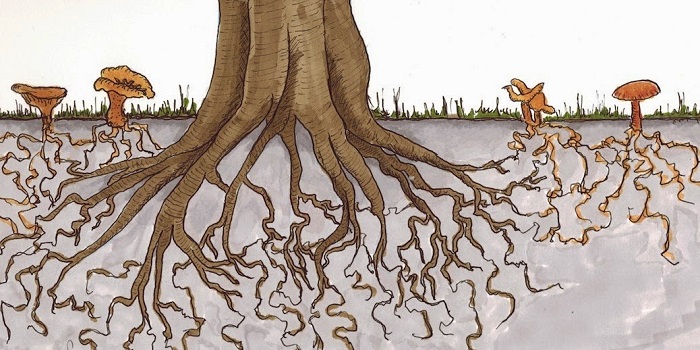
Fungal mycelia holds the soil together, helps it retain water, and makes its nutrients available to vegetation. Certain species use their mycelia to envelop or penetrate plant roots, contributing nitrogen compounds and mineral salts in exchange for sugars from the host organism. Mushroom-producing fungi also feed animals, and animals return the favour by spreading fungal spores. Basically, mushrooms make everything work. They are the ‘great facilitators’, the ‘glue that holds everything together’, the ‘bridge from sun to plants to human prosperity’.
Mushrooms were the first organism on this planet to live on land, and they are responsible for creating a liveable environment for plants and animals to prosper. Unfortunately, we have done our very best to push that environment to the verge of destruction. Here’s how mushrooms can help make it liveable again.
Boosting Reforestation
As I’ve mentioned already, mushrooms make everything work. They allow plants and trees to grow bigger and stronger by helping their roots absorb nutrients and water from the soil. This, in turn, allows plants to absorb energy from the sun through photosynthesis, which makes it possible for animals to thrive as well. Mushrooms can even be used in micro-forestry to kill sickness in other plants, as they can live off the bacteria that make other plants sick.

As well as the natural maintenance of forests and other ecosystems, different types of fungi are already being used in human-led reforestation efforts in Scotland and China. It seems clear from these examples that if we’re going to grow enough trees in time to rebalance the CO2 levels in the atmosphere, mushrooms are going to be essential to our success.
Tackling Toxic Pollution
Through a process known as mycoremediation mushrooms can be used to clean up all sorts of polluted areas and damaged habitats. Different types of fungi are able to secrete digestive enzymes which work to break down various contaminants. Mushrooms are incredibly effective at the following:
- Cleaning polluted water.
- Removing pollution from soil.
- Cleaning up oil spills.
- Remediating radioactive contamination and waste.
It’s incredible really. We have made such a royal mess of this planet, spilling oil and filth and radioactive waste all over the rivers, oceans and lands, and it turns out, mushrooms are actually capable of ‘eating’ all these toxic chemicals and converting them into harmless organic matter. Now if that doesn’t sound like magic, I don’t know what does?
Turning Plastic Waste into Organic Matter and Food
Here’s something else that sounds like magic. What if I told you there was a way to just wave a magic wand, and make all the mountains of plastic we have piling up around the world simply disappear? Okay so it’s not quite as simple as that, but it’s still pretty magical: there is one particular species of mushroom that can survive on a diet of pure plastic. A flipping mushroom that eats plastic! I mean isn’t that surely the answer to all our problems? Our single-use plastic packaging problems at least?
This truly majestical ‘Pestalotiopsis Microspora’ mushroom can also live without oxygen, making it perfectly suitable for landfill clean-up. Scientists are hopeful that mushroom-based community composting centres and home recycling kits will soon replace landfills altogether, which could go a long way to eradicating rubbish entirely. I mean imagine if we could just use mushrooms to eat all the garbage? It really just might be possible.

There’s actually another type of mushroom called the ‘oyster’ mushroom that can transform plastic waste into an edible biomass that’s completely free of any toxicity. I mean my goodness gracious me, a mushroom with the ability to turn plastic waste into food? Just imagine the possibilities. The more plastic we remove from the world, the more mouths we feed? It’s just simply incredible.
Revolutionising Consumer Products (In a Sustainable Way)
There’s an initiative called the FungusChain project that’s transforming mushroom waste into usable eco-friendly products. There’s a company called Ecovative Design that uses mycelium to produce compostable packaging, skincare products, leather alternatives, clothes, bags, shoes, and all sorts of other stuff. It’s really quite astonishing how many things you can make out of mushrooms. Here’s a list:
- Plastic bag alternatives.
- Cling film.
- Cleaning products.
- ‘Rubber’ gloves.
- Food additives.
- Building bricks.
- Material for clothes, bags and other accessories.
- Robust and compostable packaging.
- Skincare products.

The possibilities really do seem endless. It could very soon be the reality that instead of carrying your new pair of plastic-based rubber gloves home in a plastic bag wearing a polystyrene (plastic) outfit to clean your house with artificial chemical-based cleaning products, you could be carrying your brand spanking new mushroom gloves home in a mushroom bag wearing mushroom clothes to clean your mushroom house with your mushroom-based cleaning products. Okay so maybe you won’t be living in a mushroom house, but who knows what the future might hold right?
Point is, we can make a whole lot of products that would normally be made out of plastic and chemicals, with mushrooms instead. And we should.
Making Batteries more Powerful and Better for the Environment
Is there anything mushrooms can’t do? It seems like their magic knows no bounds.
As if the mushrooms haven’t done enough for us already, they can even be used to make batteries more efficient; helping conserve energy while also replacing non-renewable materials such as graphite.
In 2015, researchers created a new type of lithium-ion battery using portobello mushrooms, which are inexpensive, environmentally friendly, and easy to produce, replacing the high-cost and environmentally damaging graphite.
The mushroom batteries are actually more powerful than the graphite ones, and last longer, all while being much cheaper to produce and better for the environment. I mean is there anything mushrooms can’t do? It seems like their magic knows no bounds.
I Take it Back
I started this post by saying I’m not a huge fan of mushrooms. Well, I take it back. Entirely back. I’m a tremendously big fan of mushrooms. I couldn’t be a bigger fan of mushrooms. Mushrooms are God. Mushrooms are everything. Mushrooms are my one and only true love. Mushrooms, simply put, are life.

Mushrooms may not be able to stop a no-deal Brexit, de-clownify a presidency, or immediately solve inequality, but they can make us healthy, help the trees grow back, remove toxic pollution and plastic waste from the world, offer sustainable product solutions across multiple industries, power all our phones and gadgets and electric cars more efficiently, and maybe, even offer us a little drop of ancient cosmic wisdom as well.
They may not be the answer to all our problems, but mushrooms can go a long way to helping us live on this planet for years to come. And it wouldn’t be the first time.
We would certainly be lost without them.
About the Author
Adam Millett is a freelance writer for hire with an affinity for dressing up as Spiderman and writing about saving the planet. He likes to climb trees and stare at the stars in his spare time and likes to help businesses tell their sustainability stories while he’s working. Visit his website at wordchameleon.com if you want to tell the world yours.
We are what we Eat – and that’s why we’re Fucked! (But Kelp can Help)
I don’t think it’s news to anyone these days that our planet is in trouble, and that one of the reasons we find ourselves in such a mess has to do with the way we eat. How we choose to farm our food, how we process it, package it, transport it, and what it is we actually choose to eat has a massive effect on the world around us, for good or for bad, and lately we’ve been putting all our red-meat-wrapped, methane-soaked, factory-farmed, chemical-ridden, anti-nutritional eggs in the bad basket. Well if a quite brilliant man named Bren Smith has anything to do with it, the good basket might soon be gaining some weight, and he’s going to fill it with seaweed!
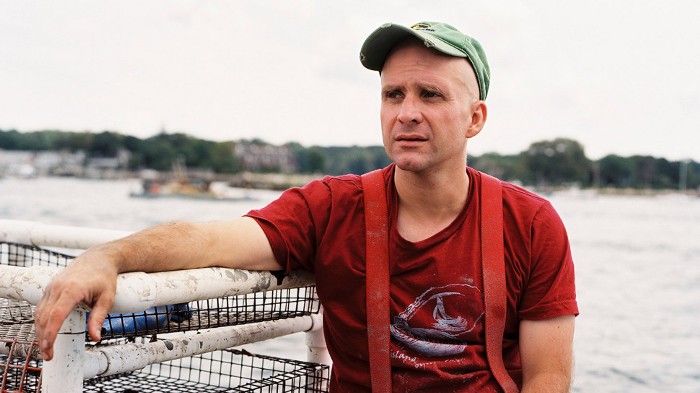
Bren Smith is a fisherman turned ‘restorative ocean farmer’, and quite honestly is such an inspirational figure I wanted to just write this article about his unrivalled suitability for the role of ‘president of the world’, but I think he would agree that it’s more important to talk about what he, and many like him, are trying to create; a food system that works for everyone, including the planet.
How we choose to farm our food, how we process it, package it, transport it, and what it is we actually choose to eat has a massive effect on the world around us, for good or for bad.
At the age of just 14 years old, Mr. Smith left school to become a fisherman, and spent over 20 years working within the industrialised fishing economy, ‘tearing up entire ecosystems’ in ‘one of the most unsustainable forms of food production on the planet’. When the cod stocks crashed in the 90’s, thousands of fisherman were thrown out of work, and Mr. Smith knew that something had to change.
Today, he has envisioned exactly what that change needs to look like, and is leading the push to make it a widespread reality. As an alternative to plundering the oceans and polluting the skies in search of ever-dwindling fish stocks, Mr. Smith has designed a method of ‘3D Ocean Farming’ which involves growing kelp and high-value shellfish in a way that actually improves the health of the oceans. Not only that, he has set up a not-for-profit called GreenWave that aims to help others become 3D Ocean Farmers by giving the designs away for free, as well as providing all sorts of other financial and educational support. Pretty amazing stuff, but I did say that I wasn’t going to write this post as a stars-in-my-eyes tribute to the magnificence of Mr. Smith, so I think it’s time we talked about kelp.
What’s so Great about Kelp?
Kelp can sequester up to 20 times more CO2 per acre than forests.
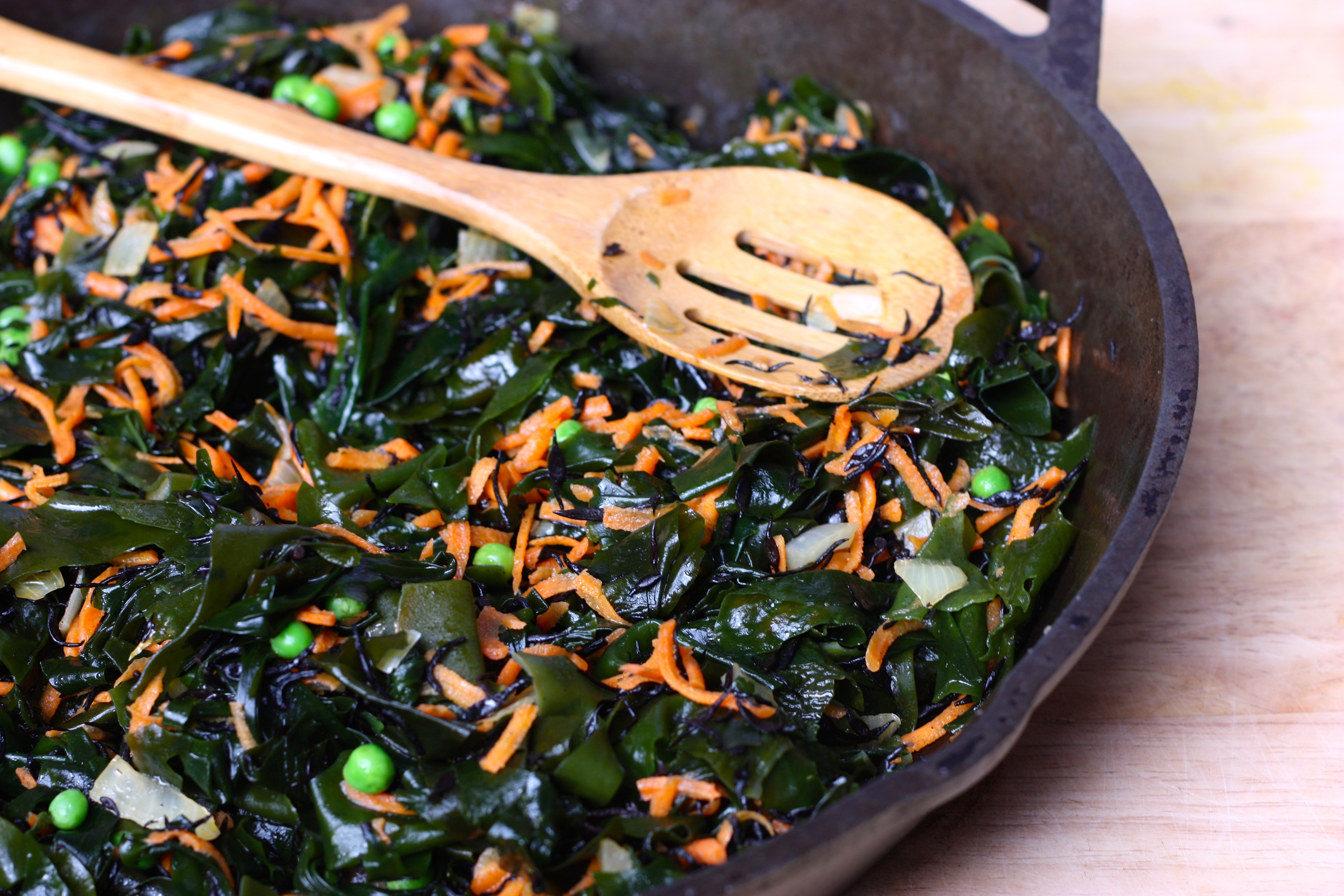
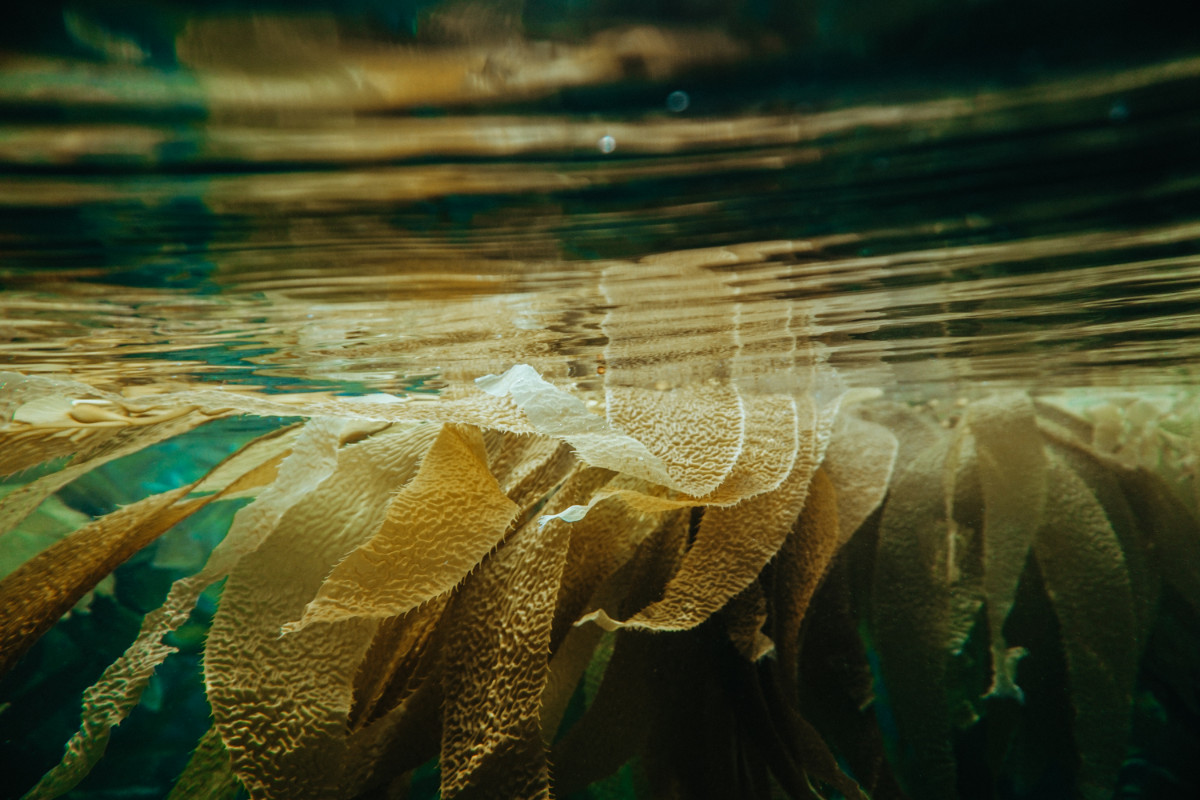
Kelp is a type of seaweed, or ‘macroalgae’, and has a whole load of benefits. Not only is it an extremely nutritional food, it also helps de-acidify the oceans, can sequester up to 20 times more CO2 per acre than forests, and can be used as organic fertiliser, animal feed, biofuel, and a number of other wonderful things. Sounds tremendous right? But what’s the catch? You know what? There is no catch. Just more details below about how great it is!
Great for the Planet
Kelp draws in so much CO2 from the water around it that it actually helps de-acidify the ocean, which provides an ideal environment for shell growth, which in turn help to clean the water as well. I don’t think there’s any need to elaborate on why sequestering CO2 from the atmosphere and cleaning up the oceans is an essential thing for the future of the planet, and since Kelp seems to do these things so effectively, I think it’s very reasonable to start yelling from the rooftops: ‘All hail master kelp! All hail master kelp! We need seaweed we need seaweed to grow and save the planet’s health!
Great for the Health
Kelp is good for you. Very good for you. It is packed full of calcium, copper, iodide and iron, and is also rich in protein, fibre, and vitamins, while being low in calories and fat. Sounds pretty ideal. It is thought to help lower blood pressure, promote heart health, assist the body in fighting illness and disease, and ultimately lead to increased life-expectancy. Sounds like it could be worth our while munching down the odd seaweed salad or two.
Other Uses and Benefits
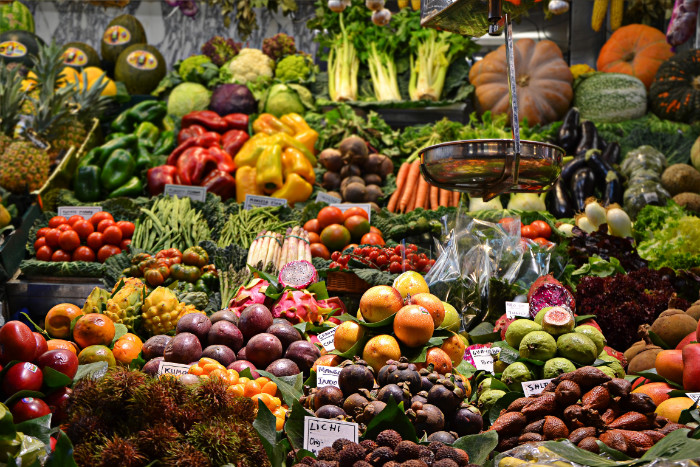
Kelp seems to dramatically improve the health of everything it touches, and it’s possible uses stretch far beyond just super-nutritious food and saving the oceans. Here are some of the main ones.
- It works well as a natural fertiliser, improving soil quality while negating the need to use pollution heavy industrial fertilisers.
- It can be used as animal feed, and it has even been reported that ingestion of kelp can significantly reduce the amount of methane produced by cows. (Methane is a very potent greenhouse gas; so kelp-fed farts are happier farts!
- Kelp can be used as a biofuel, and may have the potential to one day replace fossil fuels!
- Another huge advantage of kelp is the speed at which it grows; at rates more than 30 times that of land-plants, making it a super-efficient option.
So it’s pretty damn clear that kelp, can help! In a number of incredible ways. But it’s not just kelp we’re talking about here, it’s the innovative method of ocean farming designed by our main man Bren Smith that might really help to save the world. So what exactly is 3D Ocean Farming? Well we’re about to find out.
3D Ocean Farming
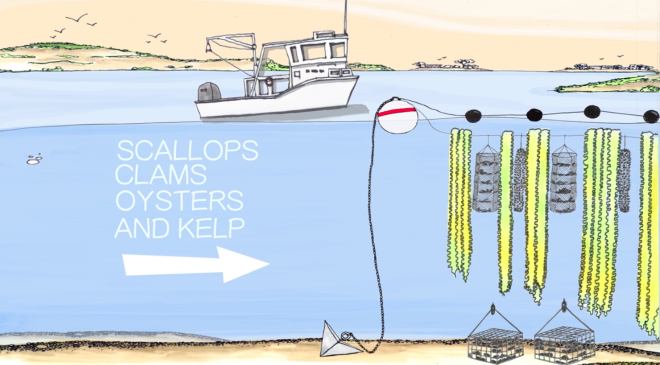
3D Ocean Farming is a restorative method of ocean farming where seaweed (kelp) and mussels grow in the water on vertical floating ropes, with oysters and clam cages underneath. By de-acidifying the water around it, the kelp creates the ideal conditions for the cultivation of the shellfish, which in turn help to further clean the water. This is all done in a vertical design that utilises the entire depth of the water, so maximum produce can be farmed from a significantly smaller area. Where as most agricultural systems are often quite resource-intensive, and can damage the environment through use of fertilisers and pesticides, 3D Ocean Farming requires very few resources, and actually restores environmental health. You can see in the image below how it might work.
The Benefits of 3D Ocean Farming
According to GreenWave, the not-for-profit founded by Bren Smith that is working to help grow and improve 3D Ocean Farming around the world, farming roughly 5% of US waters could achieve the following:
- Produce the protein equivalent to 3 trillion cheeseburgers. (That’s a whole lotta beef!)
- Sequester 135 million tonnes of Carbon and 10 million tonnes of Nitrogen a year.
- Reduce the methane output from cattle by over 58%.
- Create 50 million new jobs.
3D Ocean Farms can also serve as storm-surge protectors, artificial reefs that attract more than 150 species of aquatic life, and they require absolutely no fresh water, fertilisers, pesticides, or feed, adding to the already monumental list of environmental and economic benefits of growing food this way. Referring to his move from traditional farming methods to 3D Ocean Farming in a wonderful article he wrote on Medium, Mr. Smith states that his farm ‘used to be 100 acres; now it’s down to 20 acres, but it produces much more food than before.’
So 3D Ocean Farming really does seem like a great idea both economically and environmentally, and the good news is, it is growing in all the right ways.
3D Ocean Farms require absolutely no fresh water, fertilisers, pesticides, or feed, adding to the already monumental list of environmental and economic benefits of growing food this way.
A New Economy
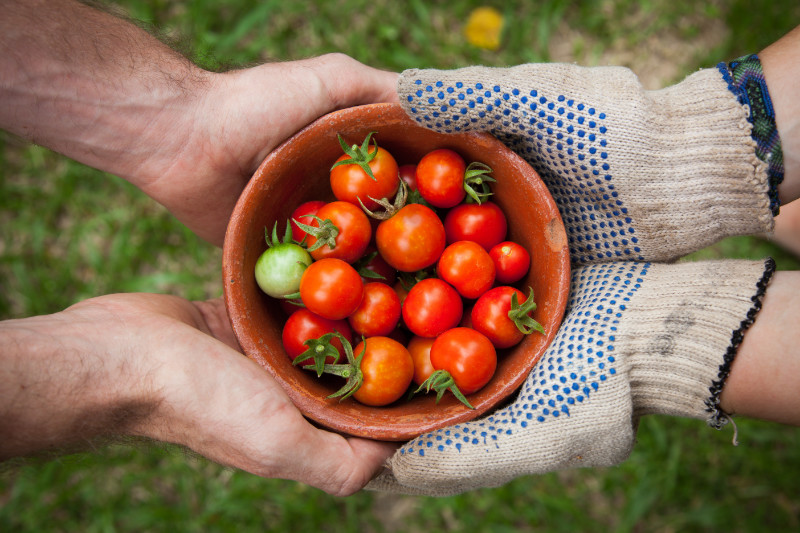
As I mentioned earlier, although Mr. Smith is responsible for designing this innovative method of farming, instead of opting to patent or franchise it, he decided to make the design available to others for free. He set up a not-for-profit called GreenWave which is dedicated to helping other people start their own farms, using his design! This is such a refreshing break from the usual capitalistic tendency to maximise personal profit above all else. In that same article he wrote on Medium, Mr. Smith repeatedly talks about ‘the old economy’ and how it is ‘built on the arrogance of growth at all costs, profiting from pollution, and the refusal to share economic gains with 99 percent of (people.) Rejecting the principles of this old economy, it is through ‘new-economy’ principles of collaboration, community-driven innovation, shared profits, and meeting social needs that GreenWave is helping to proliferate the 3D Ocean Farming revolution.
GreenWave guarantee to purchase 80 percent of all farmers crops for the first five years at triple the market rate.
They have open-sourced the farming model so that ‘anybody with 20 acres and a boat and $30,000 can start his or her own farm.’ That may sound like a lot, but it would be a whole lot more if Mr. Smith had decided to patent the design instead of sharing it. GreenWave also provide all new farmers with startup grants, access to free seed, gear donated by Patagonia, two years of free consulting, and most incredibly, they guarantee to purchase 80 percent of all farmers crops for the first five years at triple the market rate.
Now I’ve never bolded something in the middle of a blog post before, but I just find that last bit absolutely astonishing, and entirely worthy of a good bolding! One of the biggest factors that’s likely to deter new farmers from joining this planet-saving aquacultural revolution is likely to be the fear of economic struggle or failure, and GreenWave have absolutely unanimously incredibly mitigated that fear by virtually guaranteeing all new farmers economic stability for the first five years of their venture. I mean that really is something.
So it’s clear that 3D Ocean Farming and the absolute Goddess of the ocean that is kelp can have a big part to play in solving the climate crisis, and could also play a significant role in ushering in the circular economy. (A fascinating economic system of the future that you can read more about in this blog post.) It’s also clear that a whole lot is being done to ensure that 3D Ocean Farming becomes a popular and profitable farming method, for the people, and not just for the big bad corporations. So what could possibly be stopping it from instant global domination? Well, more than anything, it’s that same old pesky pest that just loves itself a bit of planet bashing trouble……. Us.
Help Kelp to Help Us
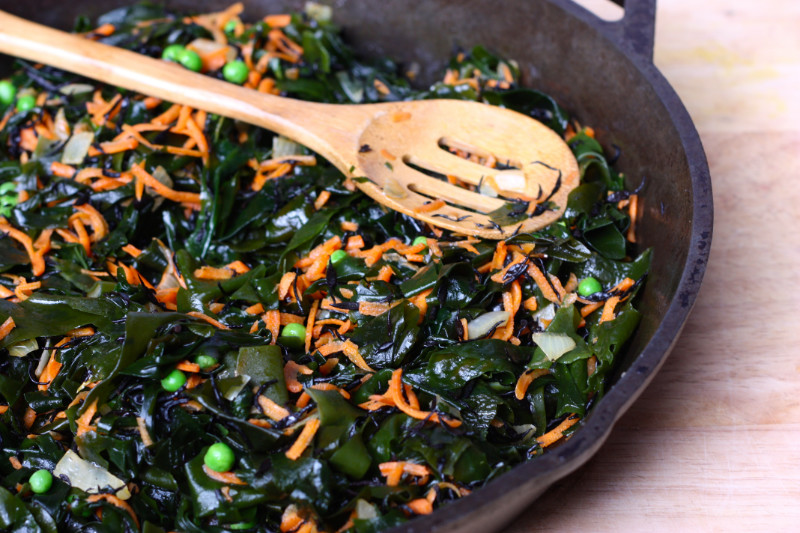
As I’ve already mentioned a tremendous number of times in this article, the benefits of kelp float (haha) far beyond just providing us with a nutritious meal, but we do still need to start eating the stuff if we want to increase it’s production. More demand for kelp equals more 3D Ocean Farms, equals more kelp in the water, equals less CO2 in the environment and acid in the seas. The biggest immediate increase in demand for kelp can be created by choosing to eat it, and that’s where the main problem might lie; will people really be willing to swap the sweet big mac’s for the seaweed snacks??
Your guess is as good as mine on that one. Mr. Smith suggests that ‘as the price of fertilizer, water, and feed goes up, zero-input food (such as 3D Ocean Farmed Kelp) is going to be the most affordable food on the planet. The economics of it will drive us to eat ocean greens.’
So maybe the supply is destined to create the demand in this case, as opposed to the other way around, but either way, adding the odd seaweed sandwich or two to our diets certainly won’t do our chances of saving the planet any harm.
About the Author
Adam Millett is a freelance writer for hire with an affinity for dressing up as Spiderman and writing about saving the planet. He likes to climb trees and stare at the stars in his spare time and likes to help businesses tell their sustainability stories while he’s working. Visit his website at wordchameleon.com if you want to tell the world yours.
Gone Farming
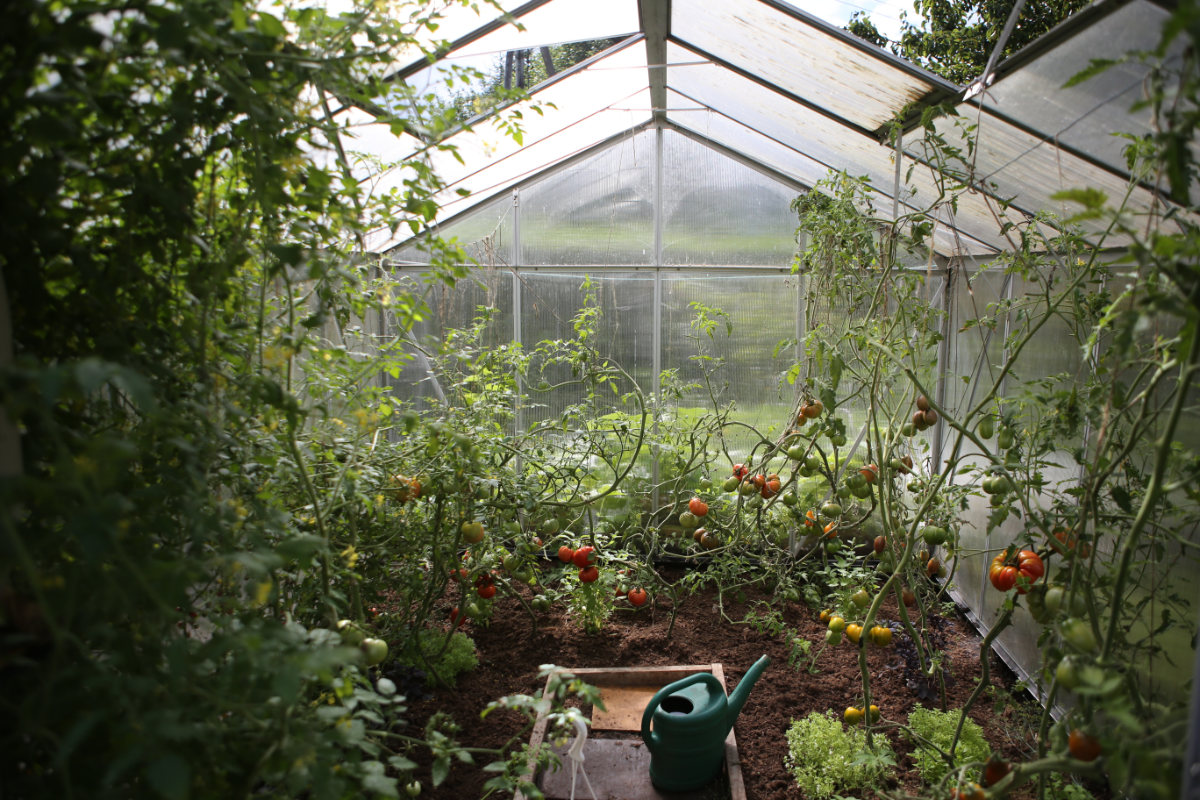
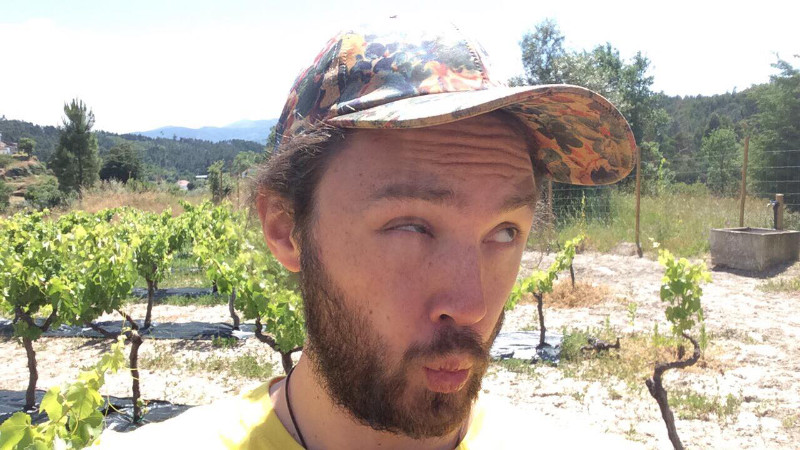
I haven’t posted on the wall for a while, my goodness, it’s been a month and a flaming half! But worry not, I certainly haven’t stopped building it, and the posts will be coming thick and fast and skinny and quick from now on. I’ve been pre-occupied the last few months volunteering on sustainable farms in Portugal while also setting up a freelance writing service which focuses on helping planet-conscious businesses with their communications. So it’s been busy busy busy times but I have returned from the farm with a wealth of knowledge, experience, sunburn, aching muscles, questionable tattoos, a couple of vineyard related scars, a hankering for fresh fruit and veg, and bucket loads of sustainable agriculture shaped joy and appreciation that I’m very keen to start sharing with the world. (I did manage to keep the Facebook page regularly updated with heartwarming, hope-restoring news from around the world if you’re in the market for daily bouts of positivity and hilarious posting skills.) (Wink wink.)
What the WWOOF?
Now that I’m back from the farm and writing full time again I shall be posting much more regularly on here about all sorts of interesting stuff but first I wanted to do a little post about my farming experience, because that’s interesting stuff too! I was farming as a member of what’s called the ‘WWOOFing’ community, making me a ‘WWOOFer’, which because of my extreme fondness for daft and ridiculous words made the whole experience even more rewarding; I’m a flaming WWOOFer for Spiderman’s sake, I mean what could be better than that? Nothing, that’s what.
WWOOF stands for ‘worldwide opportunities on organic farms’, and it’s an international movement that links curious volunteers such as myself with organic farmers and growers around the world. WWOOFing gives people with an interest in sustainability, green business, and self-sufficient living a chance to learn about and experience these things hands-on, while also providing organic farmers with a cost-effective way of finding enthusiastic ‘helping hands’ to work on their farms. (Believe me, there’s always plenty of work to be done.) So how does WWOOFing work? Well if you’re brave enough to move on to the next paragraph, I’m about to explain the whole process! (Don’t worry, it’s not too scary. Actually, it’s not scary at all. It’s like, the opposite of scary. It’s yracs? Time to move on.)
‘WWOOF’ is an international movement that links curious volunteers with organic farmers and growers around the world.
How does WWOOFing work?
So how does WWOOFing work? It’s actually incredibly simple to become a WWOOFer (hahaha, it gets me every time, WWOOFer!), and if you decide it’s something you want to do, you could be off around the world WWOOFing within weeks. First I’ll give you some of the main things you need to know about WWOOFing, and then I’ll give you a step-by-step run-through of how to set up your WWOOFing adventure. And yes, I am trying to type WWOOF as many times as possible in this post, because why the WWOOF not? Hehe, here’s some of the main things you need to know about WWOOFing.
Things you should know
- You don’t get paid.
You won’t earn a wage as a WWOOFer, but you will receive free room and board (accommodation and food) in exchange for your effort on the farm. I WWOOF’d in two different places and the food and accommodation in both was tremendous.
- It’s (basically) free to sign up.
It’s 15 euro for a years membership on the Portuguese WWOOFing site, which allows you to apply to as many farms as you want within the year. I mean 15 euro for a year? That’s organically grown, sustainably produced beans if you ask me!
- It’s incredibly affordable.
Once you’ve arranged transport to your farm of choice, you can actually survive without any money. All meals are provided, as well as a place to sleep, so if you’re not flush with cash all the basics are there. There’s no reason you couldn’t WWOOF for a year on 500 euro or so (transport between farms and a little spending money), but if you’re like me, when I WWOOF’d in the Algarve, a little extra cash came in handy. (Wine wine wine.)
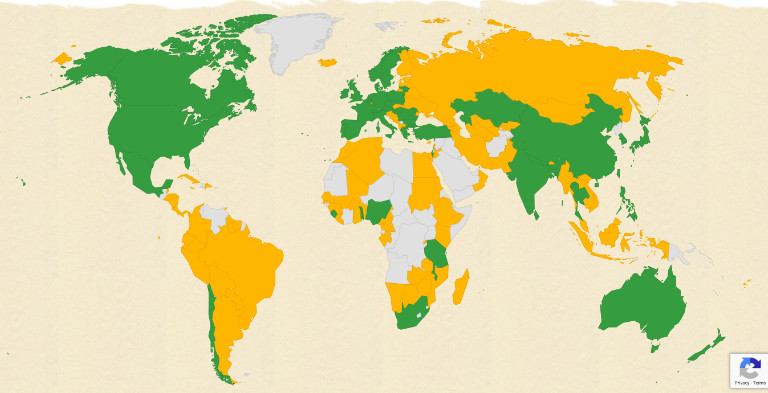
- You can WWOOF nearly anywhere.
Seriously, you can find WWOOFer friendly farms in most countries in the world, so set sail, we’re going on a WWOOFventure! (couldn’t resist.)
- You will live on the farm.
Maybe this one was obvious, but just in case it wasn’t, as a WWOOFer, you will be living on the farm with the people who run it, so get ready to meet your new farming family!
- It’s easy to organise, and incredibly fun and educational.
How to sign up
It’s as simple as sausages
So how do you sign up? It’s flipping simple. Here’s a step-by-step guide.
1. Choose your location.
Because WWOOFing basically spans the entirety of the globe, each country organises it’s own community, and has it’s own website, so you need to choose your location and sign up to the WWOOFing community in your country of choice before you can start applying to farms. You can choose your location here.
2. Register with your chosen community.
Whichever country you choose to WWOOF in, you will have to sign up to that particular website before you can start applying. Just sign up, pay the very minimal yearly fee, and then you’re ready to move on to step 3!
3. Create your personal bio.
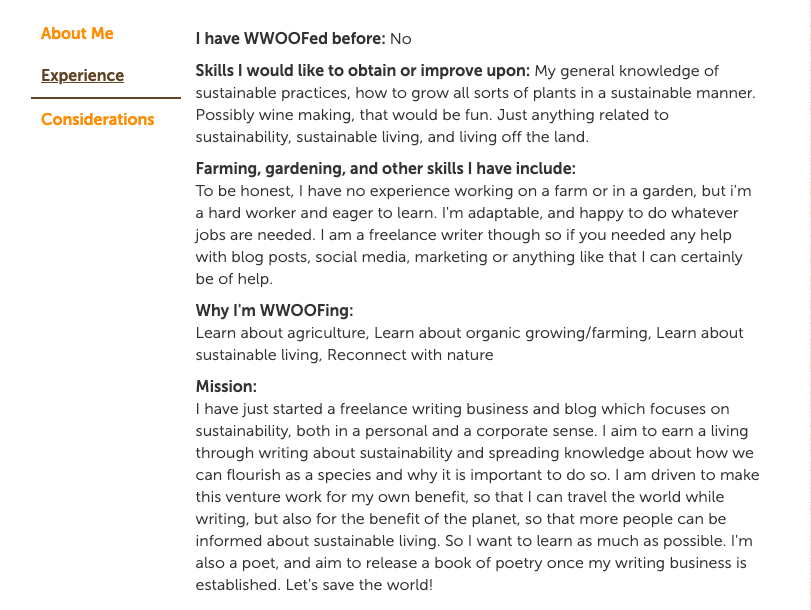
You will then have to create a bio with some information about you. What you’re all about, why you want to be a WWOOFer, previous farming experience, dietary requirements, all that kind of stuff. Don’t worry, it’s very light-hearted, and pretty much all the farms are happy taking people on who have no farming experience whatsoever. (Like me.)
4. Find a farm you like.
There are loads of different farms, and it’s important that you find one that suits you. I for example wanted to work on my writing while I was WWOOFing, so I needed somewhere with WIFI, and a room to myself so I had a quiet place to work. I also wanted a farm where I was the only WWOOFer there in order to limit distractions. This was easy to organise. Each farm has to set up their own WWOOF profile, where they detail things like accommodation type, cooking arrangements, number of other WWOOFers staying, work schedule etc, so it’s easy to find a farm that’s suited to your needs.
5. Reach out to the farm.
Once you’ve found a farm you fancy, send them a message through the WWOOF platform explaining your motivations for choosing them and boom, you’re nearly done. It doesn’t usually take long to receive an answer.
6. Get accepted.
Not all farms will accept you, as they may be booked up or not accepting WWOOFers at that particular time. (you can check their calendar before you apply.) Just wait for your ‘visit request’ to be confirmed, and hey presto! You’re ready for your adventure. (My goodness I haven’t said ‘hey presto’ in a while. I wonder how presto’s doing these days? Hey Presto, how’s it going? Aaaaah good man Presto, good to see you. Nice hat Presto, I’m pretty impressed yo, did you buy it in Tesco? Okay, let’s go. (To number 7.)
7. Sort your transport.
Once your visit request has been accepted all you have to do is book your transport, pack your bags, and gooooooooooooooo farming. Woooo, see, told you it was flipping simple!
8. Go.
This may involve getting on a bus, or a plane, or a combination of the two, maybe even a train, but basically, put one foot in front of the other, repeat for an unspecified number of steps, and voila, you’re a WWOOFer.
So that’s pretty much everything you need to know about setting up your WWOOFing adventure, it’s as simple as sausages, but what are the main benefits of becoming a WWOOFer? And what can you expect to learn from your WWOOFing experience? Well now, you’ll just have to wait and see won’t you? Just kidding, all shall be revealed in the next section.
Why go WWOOFing?
The main benefits
I’ve gone bullet point crazy in this post, but it’s that kind of post isn’t it? Is it? Who knows. But anyways, here are the main benefits of going WWOOFing. (In bullet points!)
- Learning
From my experience, WWOOFing is incredibly educational. From running a farm using only natural methods, to processing, bottling, and marketing organic wine, to living a self-sufficient, planet-friendly lifestyle, I really did learn so much. If you choose a farm that’s aligned with your interests and learning goals, and you approach your WWOOFing experience with an open mind and a willingness to soak up information, you will learn a tremendous amount.
- Travelling (on the cheap)
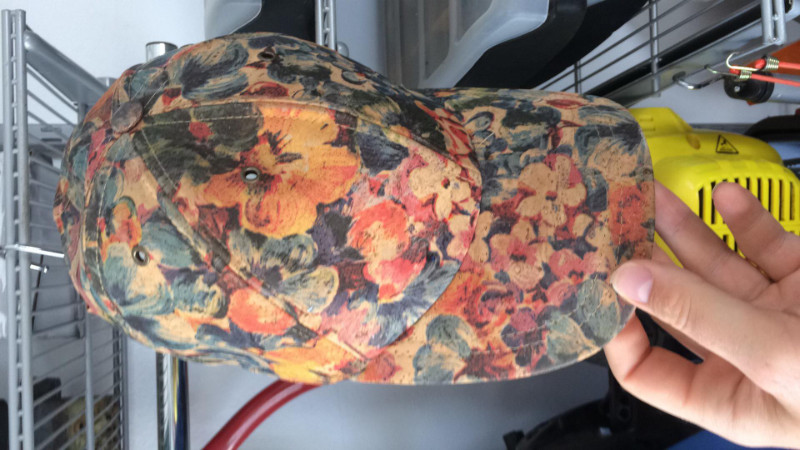
WWOOFing presents the opportunity to travel the world on the smallest of budgets. After paying for my flight to Portugal (about 50 euro one-way), and my bus from Lisbon to the farm (about 20 euro), I’m pretty sure I only spent about 20 euro in the first month I was there, and that was on a beer, an ice cream, and a flowery cork hat (which I ended up losing at the beach, don’t ask me how!). The point is, WWOOFing allows you to pretty much travel the world for nothing more than the cost of the transport.
- Experiencing the local culture (for real)
This isn’t just a regular holiday where you barely scratch the surface of the place you’re staying. You will be living with the people/family who run the farm, and they are likely to be connected and immersed in the local community. One of my favourite things about my WWOOFing experience was meeting the locals and experiencing their way of life. At one point I found myself in a neighbours house with their family drinking homemade wine, cracking fresh walnuts straight from the farm, and cooking chorizo sausage over a tray filled with burning alcohol. Apparently this is a post-work tradition in the area of rural Portugal I was staying. I was there with my WWOOFing family and the neighbours family, and I could really feel that I was having a genuine experience of rural Portuguese family life. Now you certainly won’t get that on your all expenses paid three-star package holiday to tourismville. WWOOFing is the way to go if you’re looking for an authentic insight into local life, wherever you may choose to WWOOF.
- Meeting wonderful people
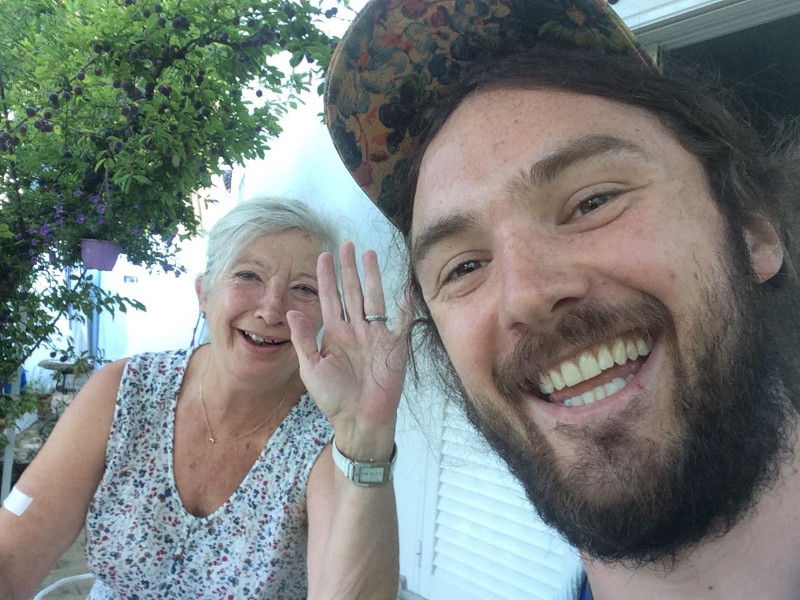
I met so many fascinating characters and lovely people while WWOOFing. Not just the people who hosted me, but their friends and neighbours as well, and the locals I met while adventuring around on my bicycle. I really did make some friends for life, and I couldn’t say a better word about any of my hosts. I think something like WWOOFing tends to attract kind, wholesome, insightful, knowledgeable people who share a passion for helping the planet and sharing their experiences. I would imagine that wherever you decide to WWOOF, you would be surrounding yourself with top-notch humans.
- Staying healthy
Working on the farm, any farm, inevitably involves being outdoors and constantly exercising, and it’s likely this will be coupled with eating mainly fresh, healthy, organic food. Not a bad combination for staying healthy. The peace of the farm and working with the land is also great for nourishing the mind and spirit, and I would highly recommend it.
So those are the main WWOOF shaped benefits I can think of, and there really are no downsides. Also, if you’re a host, you get enthusiastic people to help you on your farm for the very reasonable price of a bed and a bit of food; not a bad deal all in all I would say.
What did I learn?
Everyone is different, every farm is different, and every WWOOFing experience is different, so I’m not going to go into detail about the specific work I was doing on each farm or anything like that. You can read about the kind of work you can expect to be doing on each farm’s WWOOFing profile, so instead, here are some of the main insights I picked up while working on the farm and learning from my hosts.
- Nature is beautiful. (And can surprise you)
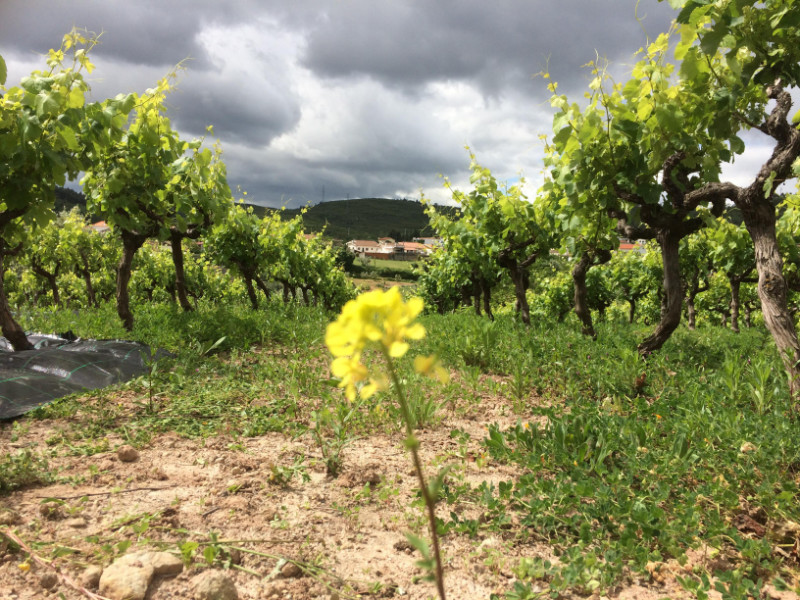
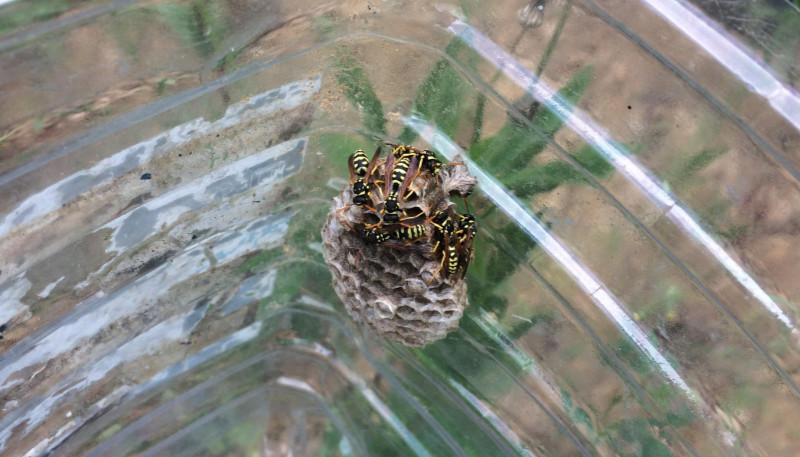
Okay so I didn’t learn this for the first time on the farm, but I was certainly reminded of it. Nature is beautiful, and I’m not just talking about big wondrous landscapes and brightly coloured flowers; one of the loveliest things I saw on the farm was ants. I was in the middle of placing bio-degradable sheeting around wine trees in the vineyard to control weed growth and direct as much energy to the wine trees as possible when I noticed three particular ants. (There were a whole lot of ants.) One of the ants was injured, and the two other ants were carrying the injured ant back to the nest. This really reminded me that things like intelligence, awareness, love, and compassion are very much present all around us. Humans are not ‘the be all and end all’, and we’re not the only ones who care for our neighbours and friends. I think it’s important to remember that.
- Everything we do has consequences. (The butterfly effect)
On the farm you quickly realise that every little action has consequences, and this is a lesson that applies to everyday life as well. If I use too much water while watering the plants in the orchard there may not be enough water for the neighbour to water her plants, and if she can’t water her plants they may wither and die, meaning the bees and insects will lose their home, meaning the birds will lose their source of food, meaning bigger plants and trees may have trouble dispersing their seeds, meaning plant life and wildlife in the local and wider area may begin to disappear etc etc etc. This of course is an extreme example, but you get the point. What seem like insignificant actions in life, can have significant ‘knock-on’ effects. Everything is connected, and this becomes much more obvious on the farm.
- Change is the only thing that’s constant. (Nothing lasts, and that’s okay)
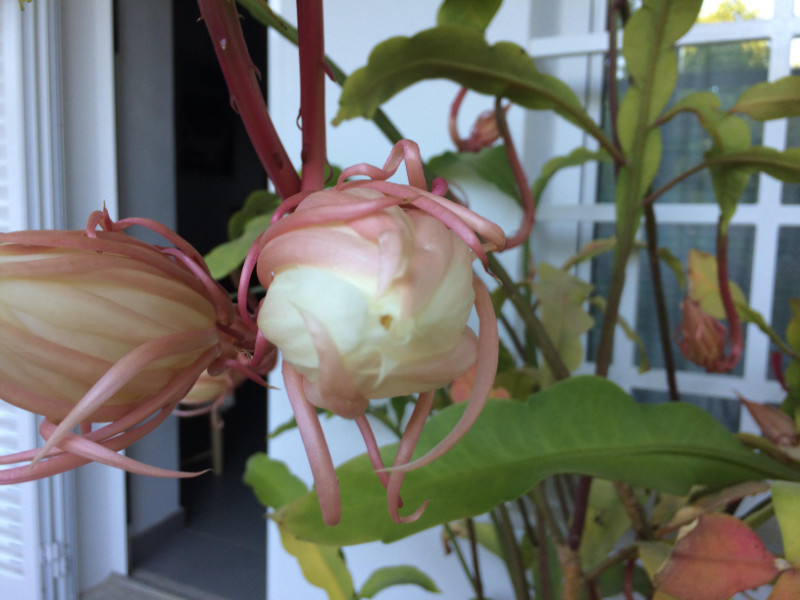
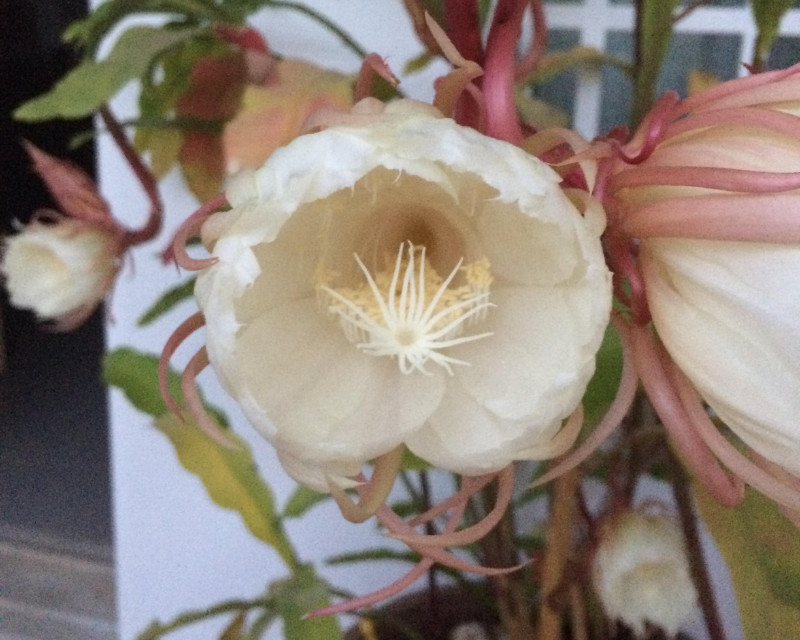
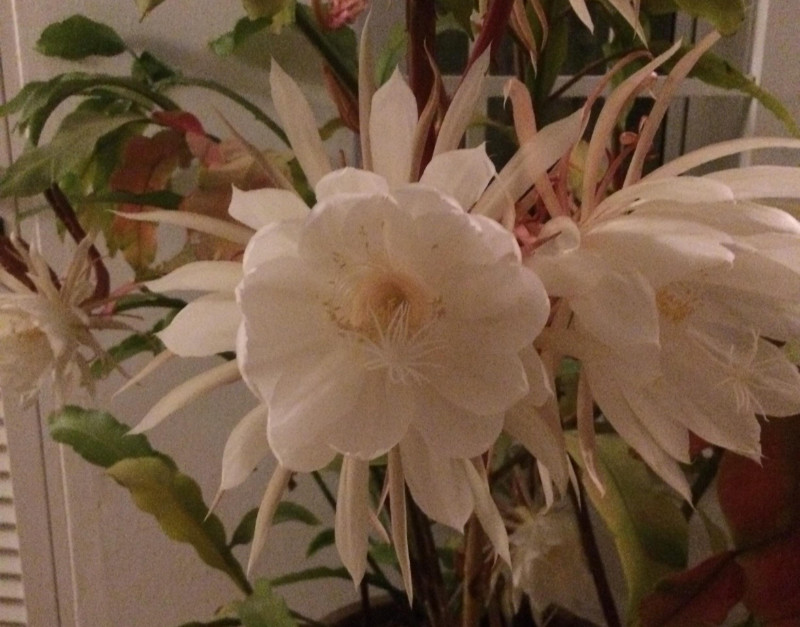
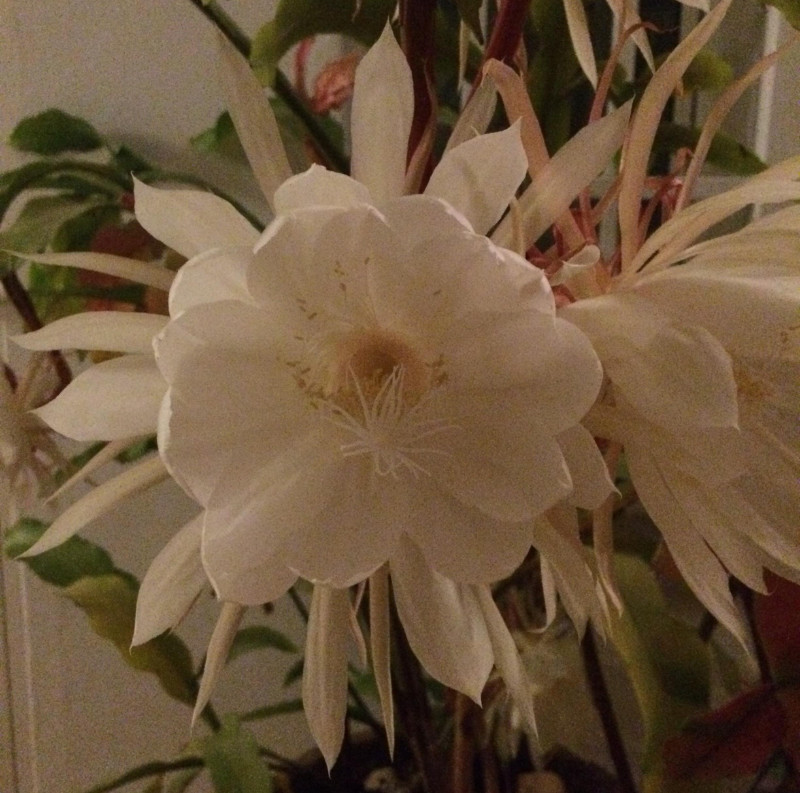
When dealing with crops and plants that give fruits and flowers and then shrivel up and die it becomes crystal clear that everything has it’s day in the sun, however long that may be, and then it dies and decomposes, so that other things can grow. (And that includes us!) There was one particular plant I saw that only flowers for one night in the year. You could actually see the flower appear over the space of 12 hours, open up gradually, bloom, and then close and fall off by the following day. I think there are lessons to be learned here for everyday life as well. We tend to worry so much about change while trying to cling on to what’s familiar, we forget that change is inevitable and natural. Whether it’s a failed relationship, an old job or house, whatever it is, old ways will die, and new ways will bloom, and the more openly and willingly we embrace this constant change, the more enjoyable our lives will be. Think like the flowers maaaaaaaaaaaaan; and you will bloom.
(WordPress doesn’t let you put a caption below a ‘gallery’ for some reason, the silly sausages, so I shall put the caption at the top instead. The gallery below consists of photos taken over a 12-15 hour period. The flower was fully shut around 3pm, began opening around 6pm, was in full bloom by midnight, and was already half closed when I found it at 7am the next morning. By that afternoon it had fallen off the plant. This is a wonderful illustration of the fact that nothing lasts, but it can be beautiful while it does, and then, when it’s finished, we move on, and wait for the next bloom! (Such a beautiful flower though and the smell was something else.)

- People can make a difference
The first farm I volunteered on had been neglected before my hosts moved in. The land was basically barren and the trees were so diseased they weren’t giving fruit. The previous owner had left the land idle for over three years. But within a year, my hosts had transformed the place. The trees were giving more fruit than they could handle, there was veg growing everywhere, and there were newly planted trees growing all over the place. The insects and birds had moved in, and the place was a wildlife paradise! This really underlined for me the incredible effect people have on nature, either positive or negative. If we work with nature as a species, everyone, we can absolutely save this planet and turn it into a haven for humans, plants and animals alike.
- There are brilliant people out there in the world. (And they want to save the planet!)
It brought me great hope and comfort to witness first hand the passion and commitment people can have for making the world a better place. All my hosts and their friends and neighbours are incredibly dedicated to doing things as naturally and organically as possible. Not using chemicals, treating the land and nature with respect, minimising waste and plastic use, only buying ethically sourced goods. All of these things and much much more. These people are more than willing to put in the extra time, effort, and finances to make a real difference for the planet, and it’s inspirational to witness. I will try my best to do the same myself.
Happy WWOOFing
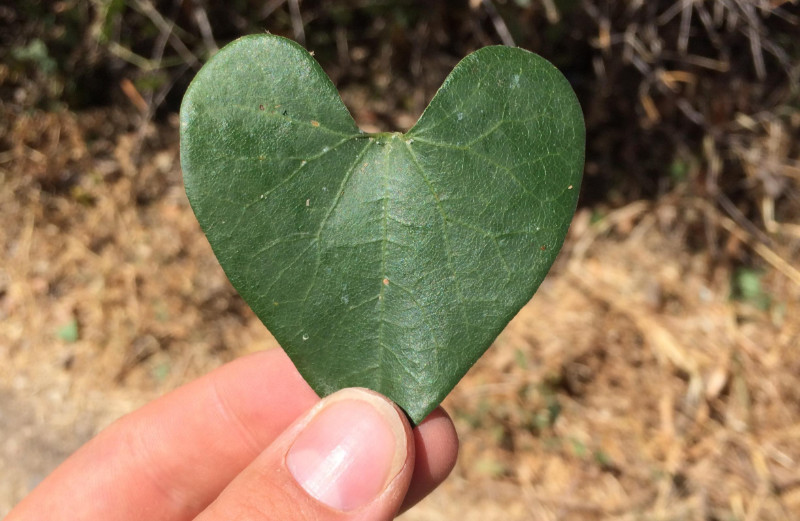
So that’s it really, it’s been an absolute WWOOF of a time writing this post, and I hope you found it WWOOFfull (that works as useful doesn’t it?) Haha, anyways, if you’re interested in sustainability or self-sufficiency or green business or even if you just wanna travel on the cheap, I would absolutely recommend WWOOFing as an option to consider. I thoroughly enjoyed it, and intend to WWOOF again in the near future.
Aaaaaaaaah, it sure is nice to post on the wall again. Do stay tuned for plenty more interesting posts in the near future. Cheerio dudes.
WWOOF WWOOF.
About the Author
Adam Millett is a freelance writer, blogger, and published poet with an affinity for dressing up as Spiderman and writing about saving the planet. He likes to climb trees and stare at the stars in his spare time and likes to help sustainable businesses tell the world their stories while he’s working. Visit his website at wordchameleon.com if you want to tell the world yours.
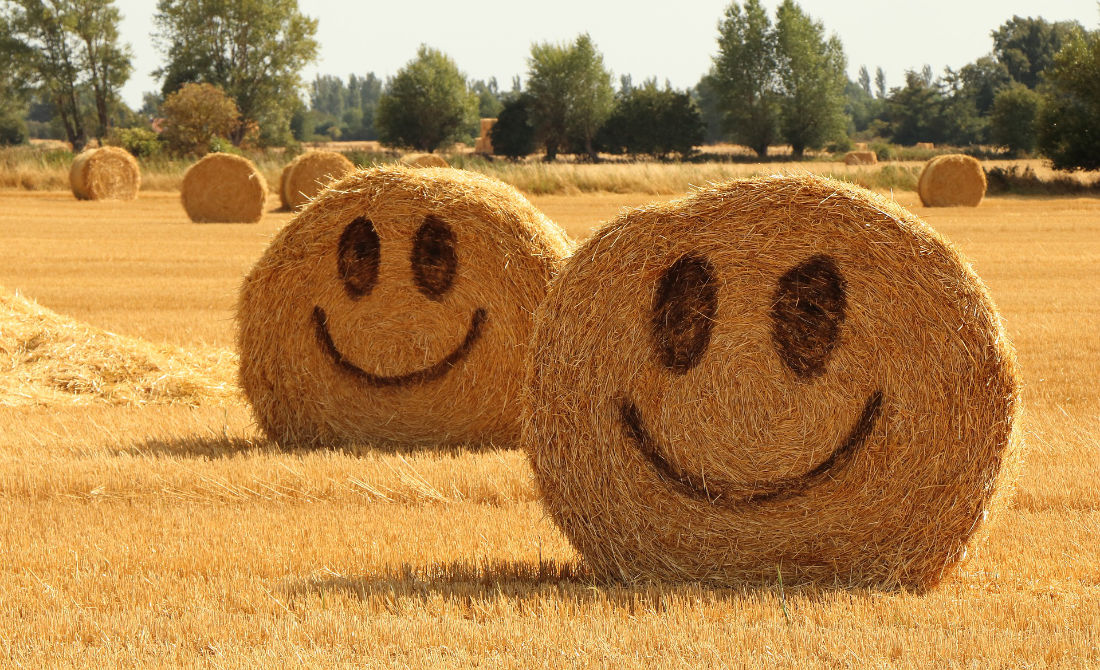
Sunday Morning Madness
I have been known for spending entire weeks only rising at the GODLY hour of 1-2pm, and spending entire Sundays in bed after a long weekend’s workout routine of using pint glasses as dumbbells and dancefloors as pilates mats.
It’s early in the morning on a Sunday, 7.44am to be nearly precise, which may not seem early for many, but for me it’s the crack of dawn, especially for a Sunday. I’ve been getting up at 7am every day this week to work on the farm and I’m loving it but really I’m still a night owl masquerading as a bird with a worm addiction. (The early bird usually makes me squirm, unless it’s a menu, in which case it makes me jump for Joy, somersault for Debra, and Cartwheel for Samantha. I wonder why Joy get’s all the jumps? She must be doing something right!) I have been known for spending entire weeks only rising at the GODLY hour of 1-2pm, and spending entire Sundays in bed after a long weekend’s workout routine of using pint glasses as dumbbells and dancefloors as pilates mats.
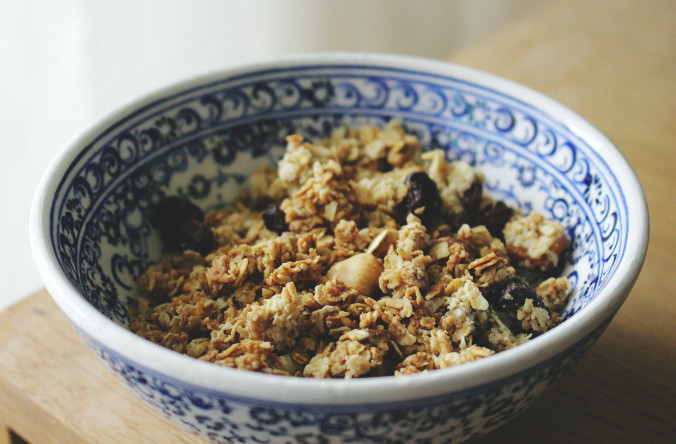
But alas, I am awake, breakfast in my belly (Granola, not worms) and I even had some coffee, which is unusual for me, I usually stick to tea, cause tea will set you free! A few minutes ago, I got smacked unrelentingly in the jaw with a spontaneous urge to start writing while I roughly brushed my teeth at 7.42.39 am. (That’s not a date, it’s the time with milliseconds included. No of course I don’t remember the exact time I started brushing my teeth, it’s a joke baby! See I put the roughly before the brushed up there and then proceeded to provide an exact time for brushing my teeth, insinuating that I knew exactly when my teeth received their makeover, and it was the manner in which I delivered the makeover that was rough, not my recalling of the time it was done. Well that’s actually not the case; I brushed my teeth gently, but the exact time in which I did it has sadly eluded me, so we will just have to move on. (Move on with sparkling white teeth I might add!)
Too much good stuff to write about!
I’ve found so many incredible stories about inspirational people and wonderful environment soothing technologies since starting this blog that to write about them all in detail would be impossible.
So this tremendous urge to dive fingers first into a brand new document has led me exactly here (hehe, I just hyperlinked from this page to: this page! That’s like hyperlinkception or something, the hypermatrix! Maybe I’m hyper? Is that what coffee does to you???? Goodness.) (I also had to write this post, and then come back and edit it to add the URL in, now that’s flipping dedication for you) and although I have a never-ending list of topics I want to write about for A Wall of Hope, and that’s barely an exaggeration, I’ve found so many incredible stories about inspirational people and wonderful environment soothing technologies since starting this blog that to write about them all in detail would be impossible, (especially while working six days a week on a farm in Portugal, which I am doing right now!) and I just keep finding more and more every day.
That was all a bit wordy so it’s best we go back to the start of the sentence again so this next bit actually makes sense without you having to read back and start connecting dots that lie entire flaming paragraphs apart! SO, although I have a never-ending list of topics I want to write about for A Wall of Hope, I haven’t actually done any topic-specific research yet today, and I usually do quite a lot of research when I write an article on here.

My mind, body, soul, tail, hair, wings, extremities, organs, capillaries, hopes, dreams, insecurities, sweat glands, knees, ankles, hands, everything really, was strongly in favour of writing over research this morning (it was more like one of those, who can shout the loudest kind of voting situations you tend to see on game shows and silly sausage shaped singing competitions than an actual democratic vote, and every single part of me started animalistically screaming when the MC exclaimed with financially motivated artificial enthusiasm ‘everybody make some nooooooise for wrriiitttting’, (that was a dig at game shows and commercialised singing competitions and ‘The X Factor’, and certainly not at my motivation for writing, I mean who in their right mind would ever pay me for this nonsense?) where as every little molecule in the Adam shaped blood flesh and consciousness arena fell silent after research had staked it’s claim for the prize. To be honest maybe there’s not a whole lot of difference between the ‘who can shout the loudest’ form of gameshow democracy and the generally accepted and utilised western political version? Voices are just replaced by dollars is all. Or Euros. Or whatever it’s all just numbers on a screen these days. ‘Democracy’ my arse.) I digress.
So with no research done, and a hankering (hehe, that’s a nice word) to start writing immediately, I decided to just write about the fact that I have so much to write about on here. I mean isn’t it an incredibly positive sign that after setting out to find uplifting and inspirational stories about the current human situation and our future, I have found, and constantly continue to find, far more than I can ever hope to write about? That has to be the greatest cause for hope yet. There’s so much good happening in the world it’s unwriteableaboutable. (Un-write-able-about-able) (I just realised that I could probably delete everything but this paragraph, and probably delete some of this paragraph as well, and still make the point I set out to make in this article, but where’s the fun in that? It’s stream of consciousness baby! Beautiful coffee-fueled Sunday morning stream of consciousness. Wooooooo!)
I mean isn’t it an incredibly positive sign that after setting out to find uplifting and inspirational stories about the current human situation and our future, I have found, and constantly continue to find, far more than I can ever hope to write about?
I genuinely thought I’d be struggling to find stuff to write about when I set up this site, and I’ve found it very motivating that I’ve found much more than I can handle. If you want proof by the way, go have a look at the Facebook and Twitter pages, as I’m constantly posting all the good news I can find on those, and I even have a backlog of articles and stories to share there! There’s just so much of it.
Now I’m not saying at all that the world is all safe and rosy or anything, and that we can all just forget about the climate epidemic’s and mass extinctions and the plastic sea monsters because someone else has got us covered, it’s quite dangerous to think that way, and plenty plenty more has to be done, by everybody, but it’s just nice to know that there is plenty of good stuff going on as well as all the carnage. Stuff to build on. Stuff to be inspired by. Stuff for hope.
On the dot
Now would you look at that, 8:41:00 on a flaming Sunday, and I’ve already written an article. (yes of course, it’s a silly article, but it’s an article nonetheless) Also, I actually had to change the time settings on my laptop so that I could see the milliseconds in order to take that reading, and the moment I clicked in to change the settings, the time ticked over to exactly 8:41 on the dot, so I probably didn’t need the milliseconds after all, but there you are, you have them now, two zeroes, side by side, like an owls eyes without the pupils, or an arse, or boobs without nipples, or coconuts, or eggs.
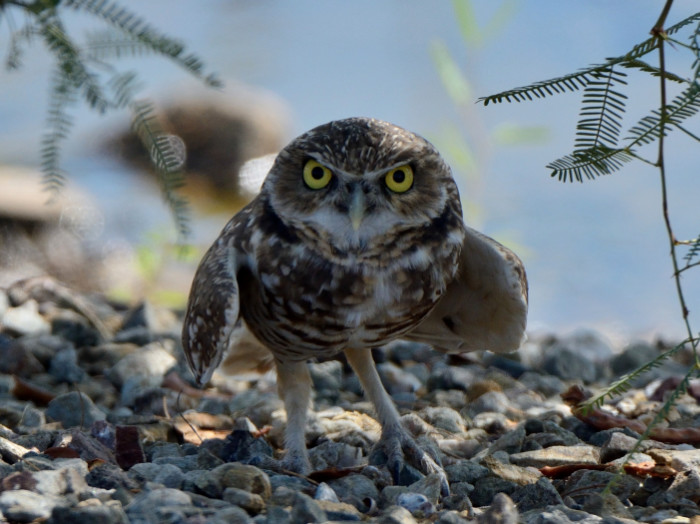
Well, that was intense. Time for a second breakfast now I reckon. Maybe I’ll have eggs, or coconuts, or an arse, or an owls eyes without pupils,
or boobs without nipples? Now that would be berzerk.
Peace out dudes.
About the Author
Adam Millett is a freelance writer, blogger, and published poet with an affinity for dressing up as Spiderman and writing about saving the planet. He likes to climb trees and stare at the stars in his spare time and likes to help sustainable businesses tell the world their stories while he’s working. Visit his website at wordchameleon.com if you want to tell the world yours.
The word ‘economy’ can be defined as the
‘careful management of available resources’,
or the ‘sparing or careful use of something’.
Think about that.
The Non-Economy
People love ‘stuff.’ It’s the modern day, the western way, to buy and try then throw away and it’s not doing the planet much good. (Even if it does seem like it rhymes sometimes.) People’s unrelenting addiction to stuff, or rather, the way that stuff is being produced, used, and then disposed of, has led to gargantuan islands of plastic mess floating around in our oceans, great big shit heaps of rubbish building up in the ‘developing’ countries of the world, countless beautiful creatures choking to death and being found with plastic packed into their stomachs, and so much more disgustingly common scenery disfigurement and animal cruelty. They’ve even found plastic in some of the deepest parts of the ocean now, I mean for goodness gracious the world’s contagious sake, there’s disregarded stuff all over the place, and I haven’t even mentioned the monumental effect our appetite for buying stuff, using it for a short while, and then throwing it on the rubbish pile is having on the planet’s natural resources and the CO2 levels in the atmosphere. (No need to elaborate on that at this stage I’m sure, as if you’re a regular human being you already know, and if you’re a climate change denier I don’t actually speak your language anyway.)
So yes, we really do love our stuff, and a lot of the time, the slogans on the stuff might rhyme, but the fact is, when it comes to rhyming with nature, the ‘stuff’ just doesn’t. (All the rhyming in this paragraph was done partly to make a point, but mainly because, well, it just happened okay? Good day.) (Okay, the ‘Good day’ there was in no way an effort to say farewell, or goodbye, it was just for the sake of rhyming; I’m not done with the article yet, I’ve barely even started.) (I just farted.) Let’s move on.
You know what does rhyme with nature though? Circular Economy, that’s what. Okay so not in the literal ‘Peter Piper Picked a woolly sweater’ kind of way, but in an ‘ecological harmony’ kind of way. See the picture I painted so rhythmically above (I just have bloody rhyme on the mind today, apologies) of pollution and destruction and environmental disgust is a picture created by ‘the linear economy’, which is the model most of us use to produce and consume things right now. Under the linear economy model, sometimes referred to as the ‘take-make-waste model, a product is manufactured, used for a short time, and then disposed of, resulting in resource-guzzling greenhouse gas emitting damage during production, and physical waste after use. So beautiful, wonderful, preciously finite resources get plundered from the earth, turned into our little toys and trinkets in an environmentally destructive manner, and then, after a short time, get thrown on the shit-heap with the rest of the shit to clog up the lands and oceans for all eternity. Not the most nature-friendly system we have going on is it?
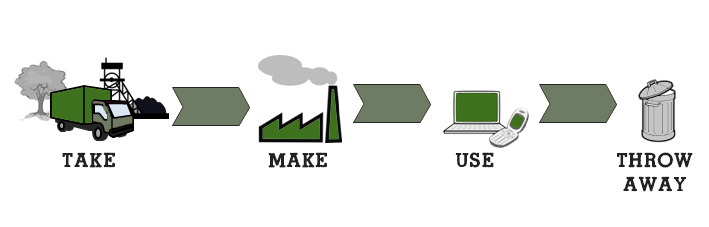
The linear economy model isn’t really an ‘economy’ at all, according to the definition of the word, so how do we build an economy that does fulfil that definition? Enter, the circular economy.
An Economy based on Nature
I insisted above that the circular economy rhymes with nature because it is inspired by nature. In nature nothing ever goes to waste. When a leaf falls from a tree, it breaks down and is used to fertilise the ground. A dead animal becomes food for another animal, which then dies and feeds another. There is no waste involved, and everything operates in a big replenishing cycle, or, you could even say, if you were feeling frisky, in a circle! That is basically how the circular economy works. It can be defined as, according to the world economic forum, ‘an industrial system that is restorative or regenerative by intention and design. It replaces the end-of-life concept with restoration, shifts towards the use of renewable energy, eliminates the use of toxic chemicals, which impair reuse and return to the biosphere, and aims for the elimination of waste through the superior design of materials, products, systems and business models.’ Wooof, sounds exciting doesn’t it? It sounds flipping necessary if we want to even mildly continue our addiction to ‘stuff’ without turning the planet into an un-habitable boiling soup bowl of melted plastic and glow in the dark fertiliser mountains. If you’re optimistic, the circular economy sounds like the future. But how would it work?
In nature nothing ever goes to waste. When a leaf falls from a tree, it breaks down and is used to fertilise the ground. A dead animal becomes food for another animal, which then dies and feeds another. There is no waste involved, and everything operates in a big replenishing cycle, or, you could even say, if you were feeling frisky, in a circle! That is basically how the circular economy works.
How does The Circular Economy work?
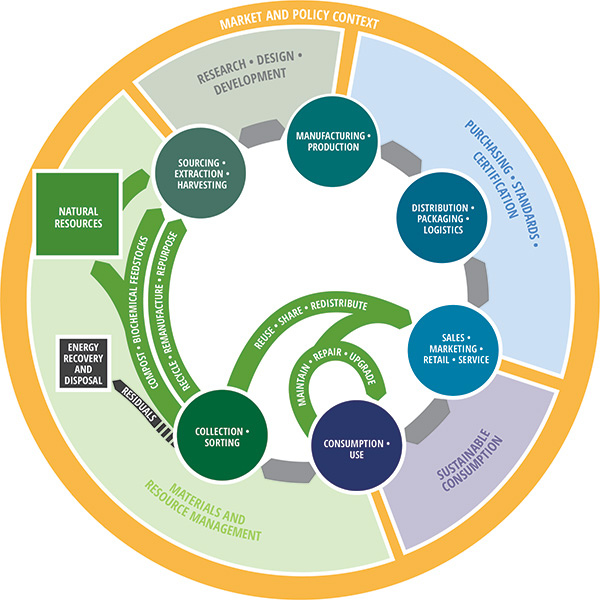
As complicated as the diagram above may seem, the Circular Economy is actually rather simple. There are three main attributes you need to remember, and I have been kind enough to ramble on about them all below.
1. Products are designed for Zero Waste
Around 80% of environmental impacts are determined at the design stage. The waste and pollution that results from our constant consumption of stuff isn’t just a freak accident, it’s a fault in the design! The circular economy aims to design out waste entirely by optimizing products for a cycle of disassembly and reuse. By making sure from the very start that every ounce of material in a product can be used again effectively when the product has been used, (You may be thinking ‘but isn’t that what recycling is for?’, but currently, taking plastic as an example, only 9% of what go’s into our products actually ends up being recycled, the rest ends up as waste) we can practically eliminate waste and ensure that once the raw materials have been taken from the earth to create some of our stuff, they never have to be taken again, and can be re-used in their entirety, again and again and again; just like nature. A beautiful continuous circle of planet saving design efficiency!
Around 80% of environmental impacts are determined at the design stage.
2. ‘Consumers’ become ‘Users’
I’ve always really quite despised how people are so often referred to as ‘consumers’. I think it sounds really disgusting, and kind of proliferates the hopeless idea that people are born to just work, fuck, work, consume, work, work, consume, work, and die, but in the linear economy model people are just ‘consumers’. That’s really just how it works. In a circular model, people instead become ‘users’. In order to ensure that people actually return products to the manufacturers when they’re finished using them, the manufacturer retains ownership over the products and the raw materials composing them, ensuring that the raw materials retain their value, and people just lease the products from the manufacturers when they need them. Now this may sound quite odd and awkward at first because, well, isn’t it just nicer and simpler if we actually own our nice comfy thick woolly jumpers and flat screen TVs instead of having to go to the bother of leasing them? But if you think about it, when do you actually need your nice big woolly jumper? Are you planning on wearing it to the boom boom pow pow pool pool party your work is throwing in July? And then dragging it along for the mid-summer weekend blow out in Vegas the following weekend? Probably not. Wouldn’t it make more sense if you could bring your big thick 100% turnableintosomethingelseable jumper back to the manufacturer when the weather gets warmer in February, (or May if you’re from anywhere near the west of Ireland) and swap it for six pairs of flowery swimming shorts and some flip flops? Safe in the knowledge that the manufacturer can then turn 100% of your well worn, winter torn jumper into a completely new product without having to use any extra raw materials? Hmmmm, maybe this leasing products business isn’t such a bad idea after all! I’m sure we could get used to it.
3. Clean energy is used wherever possible
This one’s pretty simple; elimination of fossil fuels. The circular economy would operate entirely by using renewable energy sources. Although this may not be 100% possible today, the aim is to utilise as much clean energy as possible right now, and to push the transition toward 100% clean energy infrastructure as rapidly as possible. The future is clean and it turns in circles!
When you learn about how the circular economy works it just makes so much sense on so many levels. It’s better for the planet, better for people, and it’s even better financially! (Which is good, because it’s finance that really get’s the ball rolling on these things.) Here are some of the benefits of going circular.
What are the benefits of a Circular Economy?

Saving the planet
Well, that was an obvious one.
Boosting the economy!
Using resources more effectively could increase the size of the global economy by $2 trillion by 2050, so the benefits of going circular really are economic as well as environmental.
Contrary to the idea that to save the planet we’ll have to completely demolish the economy and go back to living in the woods and gathering nuts and berries (which I actually think would be tremendous fun), going circular can actually boost local communities and local jobs, both through its potential to create new markets and products and its emphasis on creating local material loops and shortening supply chains. The International Resource Panel, part of the UN’s Environment Programme, says that using resources more effectively could increase the size of the global economy by $2 trillion by 2050, so the benefits of going circular really are economic as well as environmental.
Good for business
In a circular economy model materials are completely re-used, which is much more cost efficient than the linear method of extracting or purchasing brand new materials for every product produced, so the circular method brings with it financial benefits for businesses and manufacturers.
Good for Humans
A cleaner planet to live on, an economy that runs smoothly for us and for nature as well, cost-benefits from increased manufacturing efficiency, and the potential for always being able to ‘lease’ whatever product you may want or need at a given point in time, and then trade it in for a different one when you’re done with it. There are so many benefits from going circular, and the possibilities are endless. (Haha, that’s funny, because circles don’t actually have an end, they just go around and around and around and around, so maybe I should say, the possibilities are infinite. Aaaaaaaah, yes, that’s better.)
In my mind, the circular economy is the future, but what really does make me optimistic is that this isn’t just some distant theoretical concept that’s never actually going to happen, it’s already happening, and seems to be gathering speed as we speak! Here are just a few examples of how the economy is starting to turn in circles today.
Real World Examples
Construction Europe
Construction and demolition waste accounts for 25 to 30% of all waste created within European Union countries, which is quite a hefty chunk. Enter circularity. The Committee for European Construction Equipment (CECE), which represents the interests of over 1200 construction equipment manufacturers, is currently working together with other industry bodies in calling for a circular economy approach to construction. A total of eight construction industry organisations have signed a declaration entitled Construction in the circular economy: Towards circular materials, products and buildings. The organisations state that the industry needs an expert platform to develop a comprehensive strategy within the future construction policy initiative. This is an incredible example of the circular economy taking shape. This is not merely a greenwashing campaign or a corporate social responsibility stunt, it is an entire multi-nation spanning industry realising that the current way of doing things isn’t working and that a circular approach is the way forward. Circularity is going to happen, and is already happening, in one of the most raw materials heavy industries in the world.
Adidas
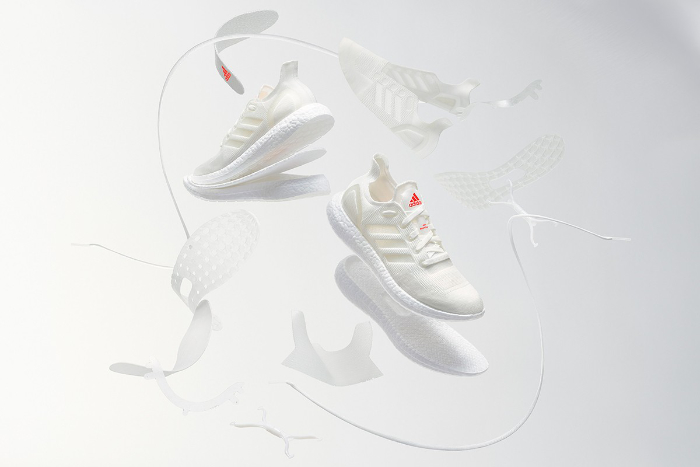
Adidas has created a running shoe, christened the ‘Futurecraft.Loop’, that can be 100% recycled, over and over and over again. Unlike traditional shoes, which are constructed from diverse materials, the Futurecraft.Loop is made entirely from TPU, from the sole to the laces, and its various elements are fused together with heat, so there’s no glue or stitching required. So once the shoe is worn out, or the person ‘leasing’ the show fancies a newer, shinier, prettier shoe, it can be broken down into pellets, which will then be used to make a brand new Futurecraft.Loop sneaker. This can be done over and over and over again, meaning that no new raw materials will be needed to create shoes in the future. The materials that make up the shoe you buy in 2021 when the shoes are released (obviously you don’t have to buy a pair, but it might be a good idea!) can be used repeatedly, meaning that you can keep running and running and running for years and years to come in brand spanking new beautiful shoes, but the actual raw material in the shoes will stay the same. Now that’s pretty nifty. This may seem like a small development right now, I mean it’s just one shoe design, but don’t underestimate the influence it is likely to have on the industry. Adidas are a big big player, and if this proves to be a financial success, which I really think it will be, circularity is likely to proliferate through the fashion industry as if it’s sprinting at top speed while wearing lightweight sustainably produced running shoes! (That one was bad, I know.)
Spotify, AirBNB, Uber etc etc etc
Spotify, AirBNB, Uber, all these kinds of companies that we’re well accustomed to using on a regular basis are all a part of the circular economy as well. Spotify has turned what was an incredibly raw material heavy industry into an entirely digital one, where we lease our music for a monthly fee instead of owning it, and the music is produced and distributed in a waste free manner. AirBNB (when it is used properly and not taken advantage of by greedy flipheads with too much time, too much money, and too much property) allows people to make use of homes and spaces that would otherwise be sitting idle, a demand altering phenomenon which may have already contributed to Jeramiah knows how many extra hotels and guesthouses not being built. And Uber and Lyft and apps like that have the potential to allow for car sharing and a reduction in private car ownership. These are all examples of how the circular economy can exist and prosper in today’s world, and there are plenty more examples out there if you look for them!
Into the Future
So that’s it then, I’ve said my bit, talked my shit, now it’s time to split. (I’ve still got the rhyming bug, after writing an entire article, interesting, it’s like I started with rhyming, wrote all the paragraphs in between, and now I’ve managed to come: full circle!) Goodness, I’ll stop now. Do spread the word though, the circular economy is the future.
As Buzz Lightyear would say if he was designed to be 100% recyclable, manufactured and distributed using only clean energy, and leased by his lucky owner for a short time before being traded in for the Spanish speaking version in a manner that requires no extra raw materials to be harvested;
to circularity, and beyond!
And if you’ve managed to make it this far, for one, I’m absolutely astonished, and for two, fair flooping play to you! As a reward, here’s a tremendously concise video that pretty much sums up everything it just took me 2500+ words to explain. I could have just put the video at the start of course, and saved you the bother, but where’s the hilarity in that? Enjoy, and Bon Voy.
About the Author
Adam Millett is a freelance writer, blogger, and published poet with an affinity for dressing up as Spiderman and writing about saving the planet. He likes to climb trees and stare at the stars in his spare time and likes to help sustainable businesses tell the world their stories while he’s working. Visit his website at wordchameleon.com if you want to tell the world yours.
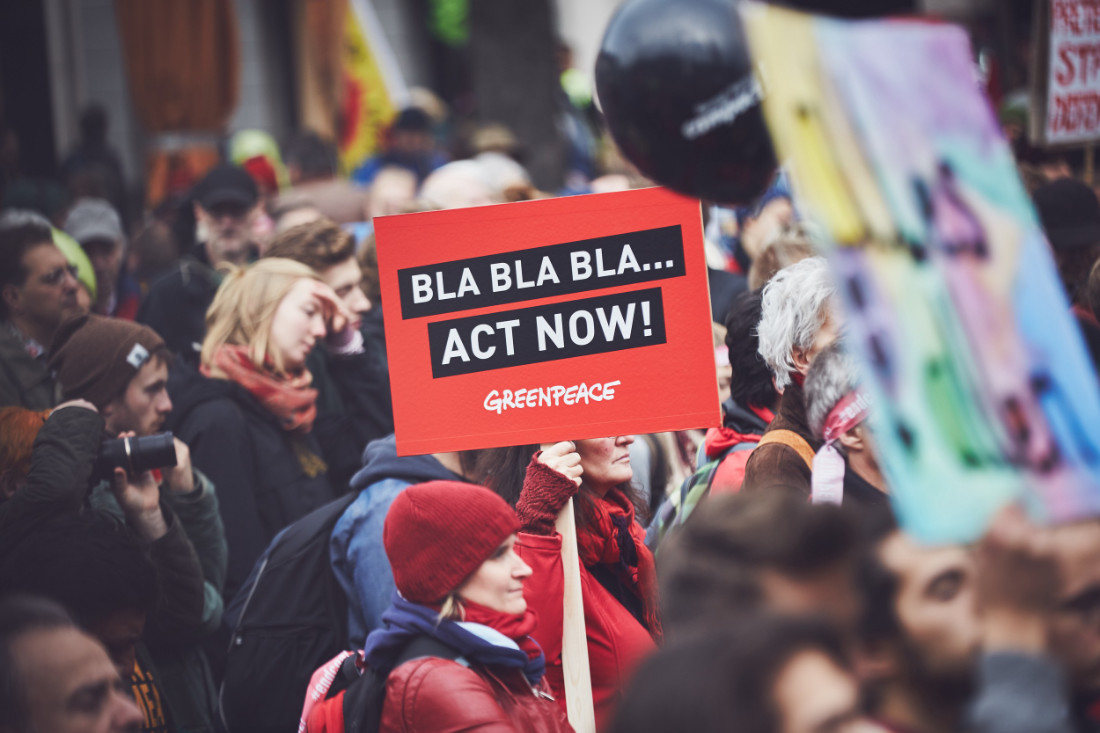
Time to wake up
I woke up this morning with the intention of writing a tribute post. I wanted to write a post to celebrate the success and effectiveness of the climate strikes that have been happening all around the world lately, and how amazing it is that the young people of the planet have banded together across borders to bring the climate crisis into the centre of the political discussion. I wanted to write about Greta Thunberg and what an inspirational figure she is and how she’s a shining beacon of hope for us all. I wanted to write about the bright new world this defiant generation are going to build where everyone works together for the good of the human race and the planet. But I feel like writing a tribute post would be missing the point, and would be doing them a disservice. More is needed.
We are in the midst of a crisis, there is no doubt about that, and we have to start acting like it.
This is a wall of hope, and the emergence of Greta Thunberg, the global climate movement she has ignited, and the rate at which it has spread is certainly a phenomenon that inspires, but it can only become a true driver of hope and progress if we actually start listening to what the protesters are saying. Really listening. It’s no good just reading the headlines and watching the videos of the protests and getting all warm inside with the notion that ‘the youth are going to save us’. In the words of Greta herself, ‘’We children are doing this to wake the adults up. We children are doing this for you to put your differences aside and start acting as you would in a crisis. We children are doing this because we want our hopes and dreams back.” It is clear, we need to fucking wake up. And fast.
Politicians, businesses, billionaires, famous musicians, footballers, backpackers, people. Everyone. Humans. We have to start paying attention, real attention, and we have to start now. Because we are in the midst of a crisis, there is no doubt about that, and we have to start acting like it.
Changing our Priorities
Greta continues, and these are all words from her speech to the UK parliament. “People always tell me and the other millions of school strikers that we should be proud of ourselves for what we have accomplished. But the only thing that we need to look at is the emission curve. And I’m sorry, but it’s still rising. That curve is the only thing we should look at. Every time we make a decision we should ask ourselves; how will this decision affect that curve? We should no longer measure our wealth and success in the graph that shows economic growth, but in the curve that shows the emissions of greenhouse gases. We should no longer only ask: “Have we got enough money to go through with this?” but also: “Have we got enough of the carbon budget to spare to go through with this?” That should and must become the centre of our new currency.”
These changes won’t be easy to implement, on any level. On a personal level it is extremely difficult to maintain significant alterations to our lifestyles. What we eat, what we buy, how we travel, how we live. These behaviours are so ingrained in our daily lives that leaving the comfort zone of our every day structures, rituals and routines can be very daunting. On a political level it can seem nearly impossible to implement any real change when so many of the available candidates have been corrupted by money and nothing significant every seems to get accomplished. On a societal level there is so much division, so many vastly differing beliefs and contrasting agendas that working together for the greater good can seem idealistic and completely unachievable. But we have to try. We absolutely have to.
If we don’t start laying the foundations right now for a better future, there will be no human future at all.
I started a wall of hope to find and explore reasons to believe that we can overcome this crisis, reasons for hope, but I think it’s very important that we direct our own actions to create our own hope as well as searching for it externally. The more we act in a positive way with regard to the emissions curve that Greta talks about, the more hope we will create, individually and collectively. Greta suggests that ‘avoiding climate breakdown will require cathedral thinking.’ That ‘we must lay the foundation while we may not know exactly how to build the ceiling.’ The future is unclear, and it can be scary to swap a trusted, familiar way of living for a completely new one, but what is perfectly clear is that if we don’t start laying the foundations right now for a better future, there will be no human future at all. So what can we do?
We can all make a difference
I think it starts with accepting personal responsibility for our actions. Deciding that we alone can make a difference, and that how we choose to live our lives bares significance for the world around us. It’s all well and good blaming the big bad corporations, and my goodness they do deserve a gargantuan portion of the blame, but that’s not going to do us any good if we don’t start setting the right example ourselves as well. Up until very recently I was of the belief that I couldn’t really make a difference, that one person couldn’t make a difference. One extra vote in the elections didn’t matter, one extra body in a climate protest didn’t change anything. One person fewer living a sustainable lifestyle had no significant effect in the bigger picture. I didn’t believe in voting, had never taken part in a protest, and hadn’t made any real effort to live in a more sustainable manner. I have started to try and change this.
It’s all well and good blaming the big bad corporations, and my goodness they do deserve a gargantuan portion of the blame, but that’s not going to do us any good if we don’t start setting the right example ourselves as well.
I am currently volunteering on a farm in Portugal as part of what’s called the ‘Wwoofing’ community, which is a worldwide movement that matches organic farms with curious volunteers and allows anyone who wants to learn about sustainable living and organic farming to offer their services in exchange for room and board and a whole lot of education, and I am learning plenty.
Everything on the farm is done as sustainably as possible; no artificial chemicals are used, efficient water conservation methods are utilised, the heating systems are solar powered, large wild areas are conserved to attract wildlife and increase biodiversity. The couple who run the farm are very passionate about being as friendly to the earth as possible, and I am learning loads about how to maintain a farm sustainably. But obviously, we can’t all be farmers, and it is the lessons regarding my own personal lifestyle choices that I feel are most important, as they will influence my effect on the emissions curve long after I am done volunteering on farms!
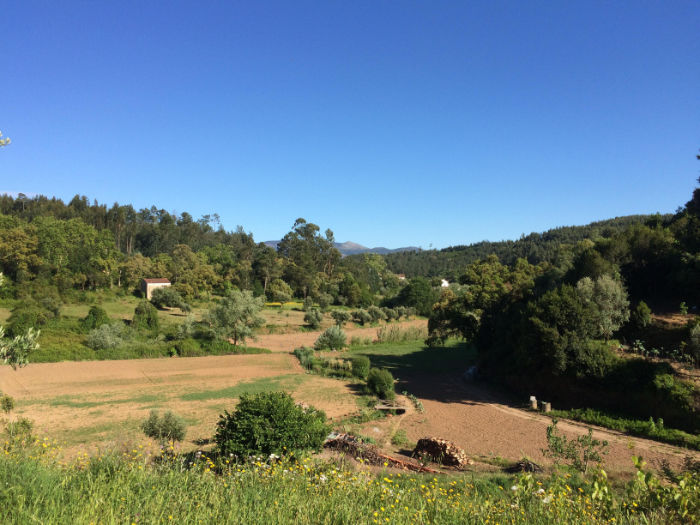
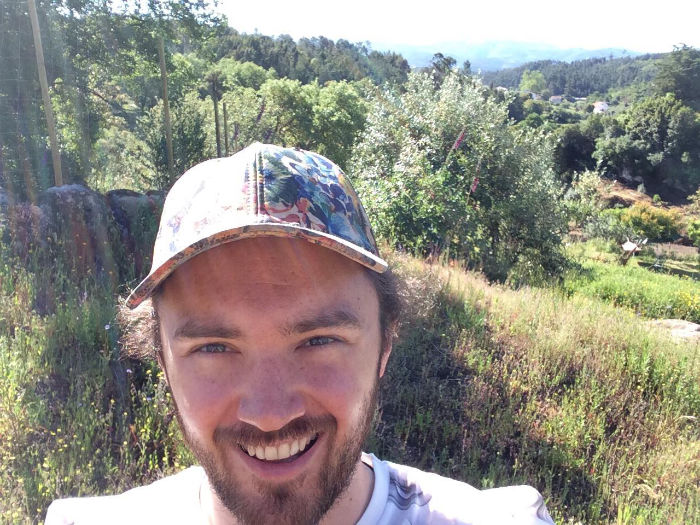
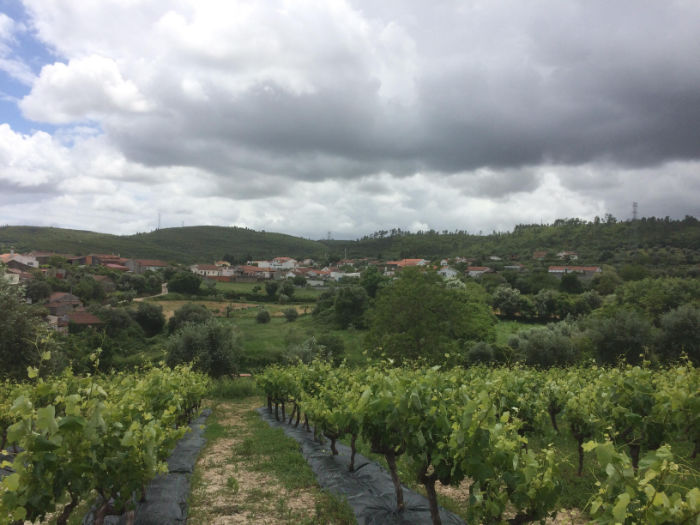
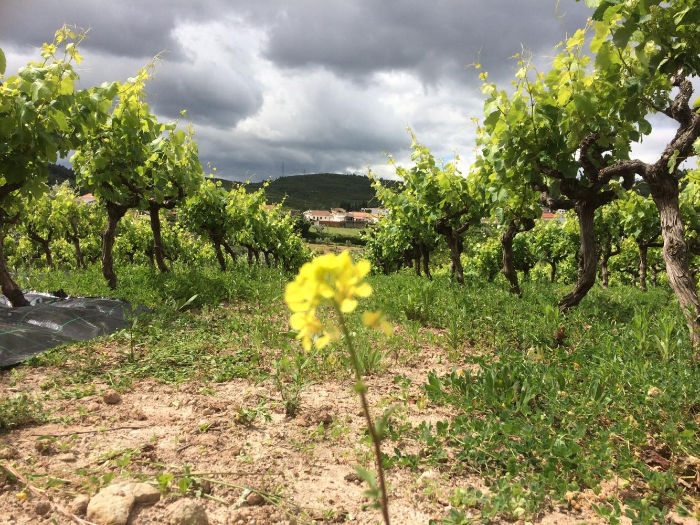
A few photos from the farm.
I’ve only been living on the farm for a week and a half but have already been inspired to commit to some simple lifestyle changes that will significantly lower my effect on the emissions curve, and hopefully encourage others to do the same.
I have decided to pay much more attention to labels when I go shopping, to not buy any products that contain palm oil, and to try and determine the source of the products I purchase to ensure that I’m choosing the options with the most desirable effect on the emissions curve. I’ve also decided to significantly cut back on my meat and dairy consumption, something I was already doing before I went farming, and to only buy from sustainable sources when I do consume meat and dairy. No longer buying bottled water, bringing my own bags when I go shopping, using public transport or walking and cycling as much as possible, not leaving chargers plugged into the sockets when they’re not charging anything. It all makes a difference.
I do understand that we require fundamental systematic and infrastructural changes on a universal scale, and quickly, if we’re going to significantly mitigate the effects of the climate crisis, but a lot of that is beyond my control, so I’ve decided to focus my energy on the changes I can make myself. It’s going to take time, effort, and constant research, but I am determined to do it. We are in a crisis after all, and solving a crisis isn’t supposed to be easy!
A more productive outlook
A failure to vote counts as one less opposition vote to all the hot-headed lunatic extremists out there, and every vote that opposes the oil-hungry rainforest demolishing climate change deniers is a vote worth casting.
So that’s me trying to live more sustainably, but I’ve also decided to start voting and taking part in protests. It was actually a recent conversation with the couple who run the farm I’m staying on right now that changed my mind with regard to voting. They convinced me that even though the political system is corrupted by money and corporate donations, and the options and candidates available are very limited in scope, and most of the promises made by politicians in the run-up to elections turn out to be false ones, that it is better to vote for the best available option, than to not vote at all. A failure to vote counts as one less opposition vote to all the hot-headed lunatic extremists out there, and every vote that opposes the oil-hungry rainforest demolishing climate change deniers is a vote worth casting.
I used to say to myself that ‘voting is a load of nonsense, there needs to be a ‘none of the above’ option, all the candidates are crapheads, and if nobody voted then we would break the system and the ‘powers that be’ would be forced to find a better alternative’. This was a lazy, wildly naive, responsibility shifting idealistic outlook, and I realise now that we have to utilise the system that’s already in place if we want to build a better one. Unfortunately, this gift of a revelation didn’t come to me in time to vote in today’s European elections, but I will be voting from now on. Better late than never.
With regard to the protesting, I don’t know why I’ve never taken part. Laziness, hopelessness, a mix of both maybe, but once I’m done working on the farm I will be joining in, and posting about it on the wall. So watch out for that one!
Building the Cathedral
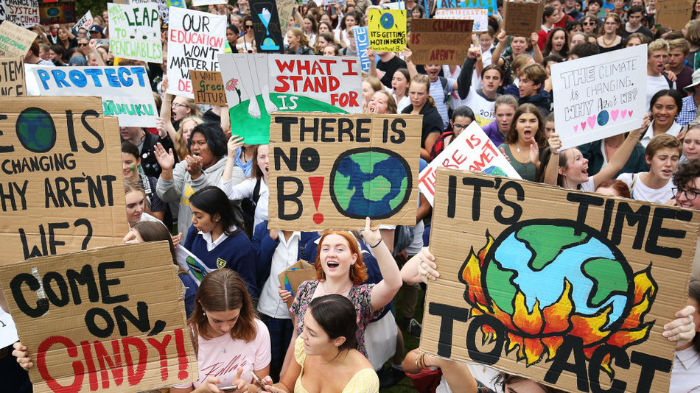
I am not writing all this to boast about everything I’m doing to save the planet. It’s not worth boasting about, and I know I can be, and need to be doing much more. I’m writing it to try and show that each of us can make a difference in the climate fight by altering our lifestyles in a way that lowers our impact on the emissions curve. Out of respect for Greta Thunberg, the climate strikers, and all future generations, we need to do more than just swoon at their courage and determination. We need to actually listen to what they’re telling us and try to do whatever we can to put their advice into practice.
Greta suggests that ‘cathedral thinking’ will be needed for avoiding climate disaster, that we have to ‘lay the foundation when we may not know exactly how to build the ceiling.’
We can only change what is within our control; our individual outlooks and personal choices and behaviour. That is the foundation we each need to lay without knowing ‘exactly how to build the ceiling’. If we all start by doing that, by trying to live our lives with the emissions curve as the primary instigator, with some luck and a whole lot of determination, maybe we can figure out how to build the whole cathedral.
There is dormant hope all around us, but we actually have to start acting if we want to bring it to life. I really hope we do.
About the Author

Adam Millett is a freelance writer, blogger, and published poet with an affinity for dressing up as Spiderman and writing about saving the planet. He likes to climb trees and stare at the stars in his spare time and likes to help sustainable businesses tell the world their stories while he’s working. Visit his website at wordchameleon.com if you want to tell the world yours.

A world of power
A simple truth; if we cover 1.2% of the Sahara desert with modern solar panels we can convert enough energy to power the entire world. That’s a fact.
This isn’t particularly new information. After excitedly blurting it out all over Facebook messenger immediately upon reading the headline somewhere online recently I was abruptly informed by multiple acquaintances (I used to consider them friends, hehe, Jay Kay) that this particular piece of hope shaped certitude has been doing the rounds for a few years now. But I didn’t know about it, and maybe you didn’t either, and my goodness me it nearly made me jump for joy while shouting ‘flaming hell people, cancel the Wednesday evening marketing strategy meetings and get your arses to the desert, there’s a planet needs saving!’….. So I’ve put it on the wall.

It’s a crazy statistic to read though, as my expression above underlines. It seems so simple, but let’s not be silly barking billy’s here, because nothing in this world is ever as simple as it seems. So here’s the lowdown.
In just six hours, the worlds deserts receive more energy from the sun than the entire human race consumes in a year. Six flaming hours! (quite literally flaming in this case) That’s just flaming madness! (again) It doesn’t sound real, but it’s true. Now that’s a whole lot of driving to work and driving back from work and driving to the shops and buying things in the shops and keeping the big lights on in the big massive shops for twenty four hours a day seven days a week and driving back from the shops and watching atrociously terrible TV programs for five hours every evening while also using your smartphone and your smartwatch and your oversized tablet and your laptop while being bombarded from all angles with a relentless stream of advertisements about what you should buy next from the big bright shops, from just six hours of sunlight. (Maybe harnessing this desert energy isn’t such a good idea after all?)
In just six hours, the worlds deserts receive more energy from the sun than the entire human race consumes in a year.
According to Mehran Moalem, a professor at U.C Berkeley and expert on nuclear materials and nuclear fuel cycle, the total world energy consumption in 2015 (it has gone up a little since then) was 17.3 Terawatts continuous power during the year. Also according to Dr. Moalem, by covering an area of the earth 335 km by 335 km with averagely efficient (does that make sense? I’m going with it) modern day solar panels, more than 17.4 Terawatts of power would be generated a year, which leaves a whole 0.1 Terawatts of power a year left over according to my calculations. Let’s have a Terawatt party to celebrate! Given that the Sahara desert has an area of roughly 3.6 million square miles, and the area required to achieve this magic Terawatt number is 43,000 square miles, and the Sahara is probably the bestest hottest most wonderful place in the world if you have a lifetime supply of factor billion sun cream and a large bottle of water that replenishes itself by magic, it can be calculated that covering just 1.2% of the Sahara desert in solar panels would be sufficient to cater for all of the worlds energy needs. Pretty astonishing stuff. So why haven’t we done it yet?

Stumbling blocks
Committing to such a significant initial financial outlay for a project with relatively low chance of immediate profit has proven to be quite the stumbling block so far.
There are a number of reasons. Cost, as always, is a big one. The estimated cost of such a project clocks up to the modest sum of around five trillion dollars, one time cost. Sounds like a lot doesn’t it? Well. It was reported that the cost to bail out the banks after they made a few minor, understandable, honest mistakes back in 2008 (I wonder what the opposite of sarcasm is? Because I was not being that just then) was around $700 billion. According to Forbes that number is actually closer to $4.6 trillion, rising to a projected $16.8 trillion when the mess has been fully cleaned up. The estimate for next years US ‘defence’ budget is projected to be over $750 billion, and will probably be a lot more when all the hidden costs are accounted for. Now nobody can be sure exactly how accurate these figures are, but the point is that there’s an absolute desert load of cash knocking around that we could be using for silly little things like saving the planet if we started treating money abuse as an addiction instead of something to aspire to and ensured that every millionaire, billionaire, trillionaire and zillionaire receives the treatment they so dearly need to kick their dreadful habit for good. But nevertheless, we live in a world where short-term profit rains supreme, so committing to such a significant initial financial outlay for a project with relatively low chance of immediate profit has proven to be quite the stumbling block so far.
There are also issues when it comes to the environmental impact of producing the solar panels, the technology surrounding energy storage and transport, and the frustratingly inevitable geopolitical challenges that are nearly guaranteed to arise whenever a project like this needs to be spread across multiple borders.
All of these concerns came to fruition in one way or another during a project known as the Desertec industrial initiative, a venture largely driven by the German private sector with the aim of providing around 20% of Europe’s electricity by 2050 through a vast network of solar and wind farms stretching across the middle east and north Africa. Now that was quite the energy pumped mouthful. Not quite powering the entire world, but an ambitious plan nonetheless.
Desertec
Kicking off in 2009 with 17 big name investors including E.ON, Siemens, and Deutsche Bank, the project seemed like it was destined for success, but by 2014, after encountering all sorts of problems, only three partners remained, and the dream seemed to be over. So what went wrong? Plenty went wrong. The Desertec plan called for a centralised power station that would deliver electricity across three continents, and transporting that much energy across such long distances isn’t an easy task. There are also issues with storing the energy. (you can’t just keep the energy in the sand until people need to use it.) So the technology is an issue that needs working out. On top of this, political instability in the Sahara, as well as issues surrounding natural resource rights (entirely justified issues, as the sunlight in these regions can be considered a natural resource just like oil and coal, and the exploitation of this resource by the ‘international’ private sector should be taken very seriously, and discouraged if done in a way that fails to provide benefits for local communities and economies) ended up discouraging most of the investors. A five fold fall in price for solar panels and wind turbines in the EU also severely dented the profitability of the whole exercise, and we know how important profitability is. So the project failed. Well, not quite.

The project has been downscaled significantly since, but still lives on under the guise of ‘The Nur Energie Sahara to Europe Solar Export Plan’, another energy pumped mouthful, which aims to export 4.5 gigawatts of solar power from the northeastern edge of the Sahara, mainly Tunisia, Morocco, and Algeria, to Europe. Of course there is no guarantee that this project will prove to be a success, there are still plenty of issues with the technology that need working out, but it’s a cause for hope that there are people and institutions in the world who are actively working to find solutions to these problems, and with a little more cooperation between people we might just get there. (Slowly does it, but not too slowly!)
Sustainability for everyone
Speaking of cooperation between people though it’s important to highlight some of the social issues around projects like this. Tunisia for example depends largely on its neighbour Algeria for it’s energy needs, and can often face significant power cuts, so if this ‘Solar Export Plan’ intends to exploit Tunisian natural resources entirely for the purpose of exporting solar energy to Europe while making a tidy profit, without also providing for Tunisia’s energy needs and giving back to the local communities, then there’s a big problem. If we want to power the world sustainably, it needs to be sustainable for everyone. Sharing is caring and caring is essential baby! So power Tunisia first, (or whatever country the energy is being generated in) then some of the countries surrounding Tunisia, then send anything that’s left over to Europe, take it from there, gradually improve the technology, and as it improves, power more and more of the world until eventually, everyone’s a winner. Sound good? Good. And you know, there are even more reasons to get as many projects like this going as possible.
If we want to power the world sustainably, it needs to be sustainable for everyone. Sharing is caring and caring is essential baby!
An added Incentive
Researchers have concluded that installing huge numbers of solar panels and wind turbines in the Sahara would have a major impact on rainfall, vegetation, and temperatures. “Our model results show that large-scale solar and wind farms in the Sahara would more than double the precipitation, especially in the Sahel, where the magnitude of rainfall increase is between 20mm and 500mm per year,” said Dr Yan Li, the lead author of a paper from the University of Illinois, US. “As a result, vegetation cover fraction increases by about 20%.” In the Sahel, the semi-arid region that lies to the south of the Sahara, average rainfall increased 1.12mm per day where wind farms were present, according to the study. This upturn in rainfall is generated by the mixing of air caused by the blades turning, where warmer air is mixed from above creating a feedback loop whereby more evaporation, precipitation and plant growth occurs. Solar panels contribute to an increase in rainfall by reducing the reflection of sunlight from the surface, a process known as ‘the albedo effect’, which leads to more solar energy absorption and surface warming, which in turn strengthens the Saharan heat low, (a thermal low, or heat low, is a non-frontal low-pressure area that occurs over the continents in the sub-tropics during the warm season) leading to more rising air and precipitation. Holy smouldering smokes I’m learning a lot today.

So not only will these initiatives go a long way to sustainably powering the entire gigawatt guzzling world, they will also directly combat the threat of desertification and dramatically increase the ability of some of the poorest, driest regions of the world to grow more food and improve biodiversity. I mean how absolutely wonderful is that? It’s very very absolutely wonderful, with an extra very on top in case it rains. (Let’s hope it rains.)
It’s all coming together nicely
Funnily enough I’ve already written a blog post about land regeneration in the Sahel region in Africa and how the farmers there are using natural methods to bring millions of hectares of land back to life and combat desertification and climate change. I followed that post up with a post about plants with superpowers that have been designed to absorb much more carbon from the atmosphere than regular plants and keep it there for longer as well. It struck me that both of these initiatives seem to compliment each other perfectly; the farmers in the Sahel are planting as many plants and trees as possible in an effort to combat climate change, and there are plants being designed to be more effective at combating climate change. Put both ideas together and the effectiveness only increases. And I swear I’m not actually choosing these blog posts strategically to fit them together, I’m choosing the topics randomly depending on what inspires me the most on the day, but add in some solar panels and wind turbines to the mix here, and they will actually increase the effectiveness even more. The farmers can regenerate their land using plants designed specifically to combat climate change, in an environment with significant increases in precipitation caused by the solar panels and wind turbines, meaning more of the plants will grow, and grow quicker, all while clean energy is being generated for the world to use.
Three separate initiatives, complimenting each other perfectly for the greater good of the planet. Sounds like some sort of human-made nature-friendly technological ecological ideological utopia or something! Sounds impossible.
If we can learn to work together and for each other, and move past all the political squabbling that’s been holding us back for so long, it’s really not.
About the Author
Adam Millett is a freelance writer, blogger, and published poet with an affinity for dressing up as Spiderman and writing about saving the planet. He likes to climb trees and stare at the stars in his spare time and likes to help sustainable businesses tell the world their stories while he’s working. Visit his website at wordchameleon.com if you want to tell the world yours.

Back to school
What was it they used to teach us in Biology at school? One of the very first things we learned when we opened up the chapter on plants and animals? I’m sure there was something in there about plants breathing in all that dirty smelly planet warming carbon dioxide that us animals like to expel while we’re frantically running around the place looking for our dinner? Or was I just dreaming? Maybe I was too busy turning all those funky looking lab taps upside down and spraying water all over the classroom to concentrate and I’ve mixed up my facts? Nope, I just googled it, and it’s true! Plants actually breathe in carbon dioxide, the gas most responsible for global warming according to National Geographic and a whole forest load of other respected scientific institutions around the world. There’s always time for puns right? Even if the world is burning? I mean, lighten up dude. Wait, was that another pun? Okay, let’s get back to it!
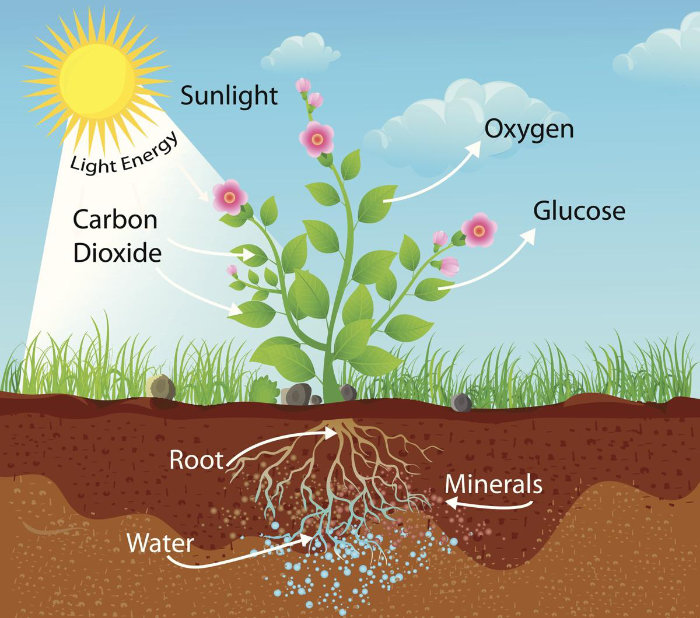
Nature to save nature?
In wake of this groundbreaking discovery that plants actually remove CO2 from the atmosphere, some absolutely batshit crazy people have been suggesting that the restoration of natural forests and coasts can simultaneously tackle climate change and the annihilation of wildlife, a concept that’s already being put into practice in the Sahel region in Africa as I discussed in my last post! Who would have thought it? Using nature to save nature; maybe humans should just stay out of it from now on? All jokes aside though, this is a very simple, incomprehensibly obvious, and heartwarming idea. Amongst all of the complex (yet still very welcome and inspiring) talk of building machines that suck carbon dioxide out of the atmosphere or the more outrageous (and considerably more questionable) notions of creating chemical clouds to block out the sun, the idea that simply by planting more trees and plants we can naturally bring down the planet’s CO2 levels and temperature while simultaneously saving all the beautiful animals is a pretty wonderful and accessible one, and you know what? It doesn’t stop there.
The restoration of natural forests and coasts can simultaneously tackle climate change and the annihilation of wildlife.
Super plants
So we already know that plants are magical wonderful beautiful life-giving creatures that turn sunlight into energy and produce the very oxygen we breathe, but what if they had superpowers? Enter Dr. Joanne Chory. Dr. Chory is an esteemed scientist, professor and director of the plant molecular and cellular laboratory at The Salk Institute (an independent, non-profit scientific research institute based in San Diego, California) and an all-round badass and figure of hope for us all. Perhaps the world’s leading botanist, and someone who has been advocating for climate action for some time, Dr.Chory is working on something that really has the potential to save our planet. She has figured out how to design plants capable of storing even more carbon in their roots. ‘Ideal Plants’ she likes to call them; I prefer ‘Super Plants’, but that’s probably just my obsession with all things ‘superhero’ shining through. Spider Plants? Maybe not, but whatever you choose to call them, they may very well keep us swinging around our ‘friendly neighbourhoods’ for some time to come! Seriously though, Spiderman often says that, ‘With great power, comes great responsibility’, and us humans have a whole lot of power don’t we? Jonas Salk, founder of The Salk Institute reckoned ‘our greatest responsibility is to be good ancestors’, a very noble and sensible way of looking at it. Inspiring quotes, but how do we put them into practice? Maybe these Ideal Plants can help.
Plants have evolved over time to be the perfect vehicle for carbon capture and storage. Through photosynthesis they remove CO2 from the atmosphere and convert it into oxygen and biomass. What Dr.Chory and the fine people over at The Salk Institute are doing is splicing the genes of regular crops and everyday plants like beans, corn, and cotton, with a new compound called Suberin that makes them absorb even more carbon. The roots then transfer the carbon to the soil and keep it there. ‘This approach essentially supercharges what nature already does’.
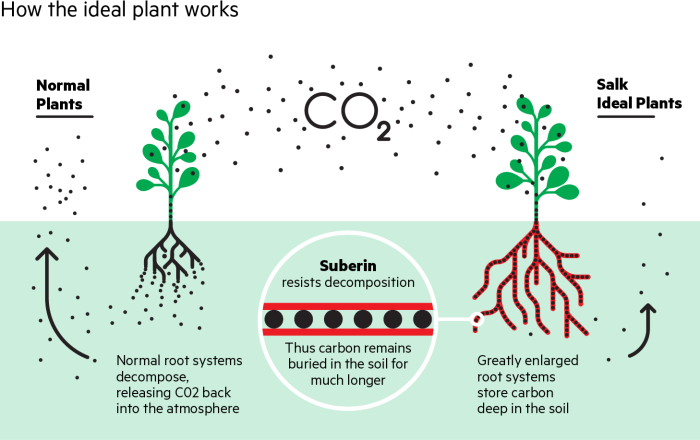
So following on from the idea of planting loads of plants and trees to extract CO2 from the atmosphere and combat climate change, imagine if it was these supercharged Ideal plants we were planting. And imagine if we planted like, millions of them? I mean it’s like a buy one get one free kind of situation here, only it’s plant one get one free. Plant one plant, get another plants worth of CO2 demolishing capability free; it’s plants on bloody steroids! And there are other benefits too. In addition to mitigating climate change, the enhanced root systems should help protect plants from the stresses caused by climate changes, and the additional carbon in the soil should make the soil richer, promoting better crop yields and more food for a growing global population. So that’s more food to go around, and all that dirty carbon in the ground. Sounds pretty flaming majestic to me, but can these plant shaped Avengers really save us?
Not only do ‘Ideal plants’ remove more CO2 from the environment compared to regular plants, they also store it in the soul for much longer.
Can they save us?
Right now, the institute is negotiating with seed companies and prepping tests on nine agricultural crops to introduce Ideal Plants on farms around the world, and they have received over $37 Million in grants and funding so far. A decent start; but time is short, and the world is hot! Each year, we produce 18 more Gigatons of CO2 than the earth can currently handle and fossil fuel use is predicted to rise in the short-term future, so my god we really do need to get planting!
But like with any real, beneficial, significant progress in this frustratingly preposterous world we call home, there are plenty of unknowns involved, and plenty of resistance. Receiving global buy-in from farmers is a big one, as money truly does make the world go around. The time it takes for the plants to reach maturity is another, as the clock really is ticking. And the general aversion people tend to have for anything ‘GMO’ is also a potential roadblock, as ironically, the very same people who don’t seem to mind pulverising the natural world with artificially produced chemicals and plastics via their undeterred tendency for purchasing heavily processed goods, tend to get a little bit antsy when our manipulation of what we consider ‘natural’ moves from the outer realms of pesticides and plastic lives to the inner world of DNA and gene editing. It’s not a very logical world we live in I know, but if promising gene related technologies like the Ideal Plants are to have any chance of saving our asses, people need to be convinced of their legitimacy and potential. And my great big giggling goodness, they’ve got potential!
Right now, the institute is negotiating with seed companies and prepping tests on nine agricultural crops to introduce Ideal Plants on farms around the world, and they have received over $37 Million in grants and funding so far.
The Salk Institute believe their solution can achieve as much as 46% annual reduction in excess CO2 emissions produced by humans. This, of course, is assuming that things go to plan, and that people take to the idea, something that’s far from guaranteed. But imagine if people do take to the idea, and imagine if the plants actually work. That’s nearly a 50% reduction in excess CO2 emissions! 50%! That’s basically half the problem sorted just by planting a few plants. And that doesn’t even take into account the positive effects the plants would have on biodiversity and crop yields. So can they save us? Nobody can be sure, but they can certainly give us a fighting chance!
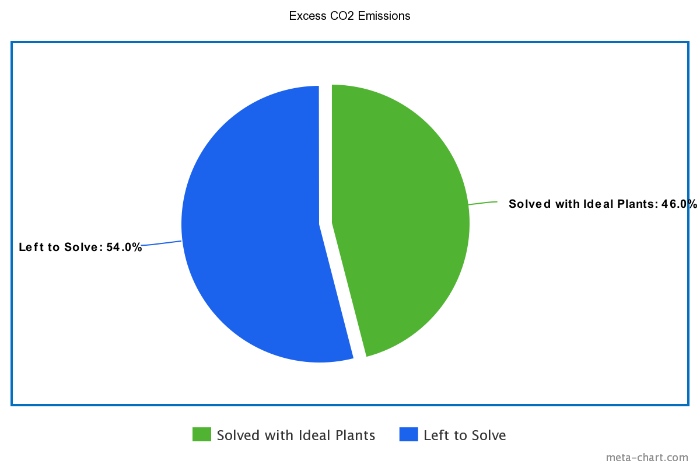
Spread the word!
The Ideal Plants can make a significant difference, but they’ll be much more effective if people know about them and support them.
There are loads and loads of wonderful people and ideas and technologies out there that are trying to get us out of this cruel hot mess we’ve found ourselves in and these plant based superheroes are one of them. In conjunction with the other solutions, solutions I intend to explore in detail on this blog, the Ideal Plants can make a significant difference, but they’ll be much more effective if people know about them and support them. So spread the word! Shout it out loud! ‘Ideal Plant’ and proud! Get these things in the ground! A brand new life saving planet raving queen of all things agriculture has been crowned! Potential benefits profound! From the hills to the underground! Or, you know, just share this post or something? Peace.
A living legend

(The super plant queen!)
I thought that was a lovely way to end the post, as plants are pretty damn peaceful you know? But since I’m in the business of hope, I felt I had to write a few words about the wonderful inspiration that is Dr. Joanne Chory. Not only is she a world renowned scientist dedicating her life to finding ways to save the planet, she’s also a woman in her 60’s who is currently battling Parkinson’s disease; but it doesn’t seem to faze her at all. “Look at me, I’m 64 years old. I’m not going to be around to see this project go to fruition, I’m not going to be working at Salk, probably. That urgency is there. The climate urgency is there. Every week there’s a new climate disaster. How can we get there? We can’t really get there any faster. I don’t know if we can do it, but I want to be part of the solution. I don’t just want to sit around and complain.” What a truly tremendous outlook. Even while staring her own mortality in the face she is striving to live in the present and determined to build for the future; a future she is unlikely to be a part of. We could all learn a whole lot from her, and I’m not just talking about science! So god bless her, god bless the future, and god bless the super plants! There is hope for us yet.
About the Author
Adam Millett is a freelance writer, blogger, and published poet with an affinity for dressing up as Spiderman and writing about saving the planet. He likes to climb trees and stare at the stars in his spare time and likes to help sustainable businesses tell the world their stories while he’s working. Visit his website at wordchameleon.com if you want to tell the world yours.
 A Wall of Hope