A Wall of Hope

To begin, it’s important to say, that just like all the articles I write for A Wall Of Hope, I am not being paid to write this article by Forest Green Rovers F.C or anyone else, nor am I a die-hard fan of the club or anything like that.
I am writing the article because I’m genuinely impressed by what this organisation is doing (I mean if you read the article you’ll know what I mean), and I believe they deserve a place on the wall.
Because come on, making football environmentally friendly? If that isn’t a cause for hope, then what the heck is?
Football, Sustainable, Really?
Football doesn’t seem like the most environmentally sustainable thing in the world does it?
One football club in particular sits top of the table by quite a margin when it comes to their sustainability efforts, and that club is little known (for now) Forest Green Rovers F.C.
I mean not the game of football itself of course; the sustainability of the game itself really depends on the fitness and willingness of the players playing it! Environmentally speaking, all you need to play a game of football is one small spherical piece of suitable material, a number of somewhat enthusiastic human beings, a couple of ‘jumpers for goalposts’, and a bit of space; hardly an earth-shattering combination in fairness.
But no, I’m talking about the football industry. Like many industries, the football industry certainly isn’t one that screams ‘ENVIRONMENTAL SUSTAINABILITY!’ from the stadium terraces to the commentator’s box. The resources required to keep the football industry running (and scoring?) at full tilt are actually quite substantial:
Great big stadiums often constructed at a monumental environmental and financial cost that require a gargantuan amount of energy to operate. Brand new replica kits and merchandise made from planet-pummeling materials like polyester (plastic) that always look pretty much the same as last year’s ones but are still released every year and shipped all around the world and sold for extortionate prices while usually being manufactured in ‘sweatshops’ by workers who get paid next to nothing. Football teams and fans travelling in their gas-guzzling cars, planes, boats, buses, trains, helicopters, yachts, and private jets to attend matches all around the world on a regular basis.

And then there’s the actual, physical footballs themselves, the football boots, shin pads, gloves, corner flags and all the other equipment required so that a professional game of football can take place. All of this equipment has a life-cycle and an environmental impact, and it all adds up.
Now of course the football industry is really no more environmentally damaging than any of a million other industries out there and probably doesn’t deserve to be singled out. And just like many other industries around the world, thank goodness, through encouraging initiatives such as Life Tackle, the football industry seems to be making some significant strides forward when it comes to limiting its environmental impact.
But one football club in particular sits top of the table by quite a margin when it comes to their sustainability efforts, and that club is little known (for now) Forest Green Rovers F.C, based in a small town called Nailsworth in Gloucestershire, England.
Haven’t heard of them? Well you probably will soon, but here’s a little look at the club’s substantial history before we get into all the great stuff they’re doing for the environment and their local community.
Who Are This Club? And Where Did They Come From?

Referred to by world football’s governing body Fifa as the ‘greenest football club in the world,’ Forest Green Rovers are currently competing in League Two, the fourth tier of professional English football. At the time of writing they sit 10th place in a table of 24 teams, four points off the top of the table. (It’s early in the season yet, only four games have been played so far, so anything is possible!)
Although the ethos of the club is distinctly modern, futuristic even, Forest Green Rovers is actually a very old football club with a long and storied history.
The club was founded all the way back in 1889 in Gloucestershire England, and since then has competed in various local and regional leagues and competitions, while changing names a number of times (Forest Green Rovers was their original name, which they reverted back to in 1992 after going by the name of Stroud FC for a short time), and winning multiple trophies along the way.
Despite such a substantial history however, it was only in 2017 that Forest Green Rovers gained promotion to the national English ‘Football League’ for the first time, and they have remained there since.
Significant to this recent rise to relative prominence was the willingness in 2010, with the club facing financial difficulty, of Dale Vince, founder of Ecotricity, to get involved with the club. Ecotricity is a British-based green energy company with a mission to incorporate sustainability throughout society wherever possible.
Forest Green Rovers is actually a very old football club with a long and storied history.
It is no surprise then that since Mr. Vince and Ecotricity have been involved with Forest Green Rovers, the club has been on the up. Now financially secure, environmentally aware, winning games of football on the pitch, and winning multiple business and environmental awards off it, it’s clear that in recent years, Forest Green Rovers F.C. has become a very special football club indeed.
But what is it, exactly, that makes Forest Green Rovers so special?
So What Makes Forest Green Rovers So Special?
To be honest, pretty much every aspect of Forest Green is worth a mention. It seems that environmental sustainability and community wellbeing is paramount to every decision the club makes, but let’s break it down bit-by-bit, starting with a big one, the stadium.
The Stadium
Operating a stadium can use up a whole lot of energy and other resources like water to keep the lights on, the turnstiles turning and the pitch trimmed and in good condition. If care is not taken, this can have a significant cumulative effect on the environment.
But with Forest Green Rover’s current stadium, ‘The New Lawn’, care is certainly taken! Here’s what they’re doing to ensure their stadium is as kind to the environment as possible:
- The pitch is irrigated using recycled rainwater, making it independent from the water mains, and saving a whole lot of water in the process.
- The grass on the pitch is cut using a solar-powered ‘robot lawnmower’ so no smelly petrol fumes will be seen anywhere near The New Lawn when grass cutting time comes around.

- The pitch is also ‘organic’, meaning no artificial pesticides or chemicals are used to treat the pitch.
- Solar panels have been installed on the roofs and around the stadium to generate fossil fuel-free electricity.
- Along with this self-produced clean electricity, 100% of stadium operations are powered using green wind and solar energy provided by Ecotricity, ‘the greenest energy company in Britain.’
- The stadium is also electric vehicle friendly, with EV charging points available for fans who need them.
- The club even runs what they call ‘Eco Trails’ ahead of every home match which are designed to educate anyone who’s interested about Forest Green Rover’s sustainability efforts.
All-in-all, it seems ‘The New Lawn’ is a pretty tremendous example of what should become ‘The New Blueprint’ for operating a sports stadium.
But what happens when the players get out there to play?
The Kit
The Forest Green Rover’s kits are made from 50% bamboo, with the eventual aim being to produce their kits from ‘100% sustainable high-performance material.’
Most football kits are made out of polyester and other forms of plastic. These materials are non-biodegradable, and like to stick around on this great green beautiful earth of ours for thousands of years, clogging up the oceans and rivers and animals and breaking down into microplastics that might even be causing damage to human cells!
So maybe it’s not the best idea to make football kits out of plastic? Well Forest Green Rover’s seem to agree with that sentiment, as currently, their kits are made out of 50% bamboo, with the eventual aim being to produce their kits from ‘100% sustainable high-performance material.’ Goodness I do hope the Manchester Uniteds and Real Madrids of this world pull their big bulging heads out of the bottomless money pit soon and start to follow suit. (Or follow kit?) (Couldn’t resist!)
The Forest Green kits manufactured by PlayerLayer, a British-based sports apparel company with a focus on eco-friendly materials and making products that last, are also deliciously beautiful.
The home and away kits, as you can see below, take their inspiration from nature, sporting a lovely looking ‘zebra pattern,’ as well as the Ecotricity sponsor logo on the front, and a logo for ‘Sea Shepherd’ on the back.

Sea Shepherd is an internationally-renowned marine conservation not-for-profit, and official partner of Forest Green Rovers. This wonderful organisation helps to protect marine wildlife all around the world, and if you purchase Forest Green’s third kit, available here, and also deliciously beautiful, 100% of the proceeds will go directly to Sea Shepherd, helping them carry out their essential work.
The third kit’s ‘camouflage design’ actually takes its inspiration from Sea Shepherd’s flagship vessel, the Steve Irwin.

Well when a football club has a kit that’s inspired by anything associated with a legend of a human like Steve Irwin, you know they’re doing something right.
Tremendousness all around I would say; the most beautiful kits in world football, in far more ways than one.
But there’s no point looking the part if you’re not actually the part? Right?
Well here’s a massive reason why Forest Green Rovers are actually the part.
World’s First Officially Certified Carbon Neutral Football Club
Slick, sustainable, sexy green kits are one thing, but they won’t do much good if the rest of the club’s activities are destroying our sexy green world. Luckily, it turns out, Forest Green Rovers is a slick, sustainable, sexy green football club from top to bottom, worthy of their sexy green kits. (Okay I’ll stop with this sudden obsession for the word sexy now.) (Sexy!)
Forest Green Rovers has now been certified carbon-neutral for over two years (standards must be maintained to retain certification), so it seems like their commitment to this cause is very serious, and a lot of work has gone in to constantly reducing their carbon footprint.
After signing up for the United Nation’s ‘Climate Neutral Now’ initiative in 2018, an initiative aimed at encouraging society to work towards a climate neutral world by mid-century, Forest Green have gone on to achieve official certification from the UN as ‘the world’s first carbon-neutral football club.’
Achieving this certification would have required the club to implement the following three actions:
- First, they would have been required to measure their total greenhouse gas emissions. (This would include everything from operating the stadium to merchandise-related emissions to team travel-related emissions.)
- The next step would have been taking action to minimise these emissions. (Things like installing solar panels, and powering 100% of stadium operations with wind and solar energy would have gone a long way to achieving this!)
- Finally, for any emissions that couldn’t be eliminated through direct action, emissions from fans travelling to attend games for example, the club would have been required to invest in UN certified emissions reduction projects to compensate. (This might involve the club investing in tree planting schemes for example, offering support to regenerative farming projects, or investing in wind and solar farms. The idea being that by investing in projects that reduce the greenhouse gases in the atmosphere, any emissions that the club couldn’t eliminate through direct action would be cancelled out.)
Forest Green Rovers has now been certified carbon-neutral for over two years (standards must be maintained to retain certification), so it seems like their commitment to this cause is very serious, and a lot of work has gone in to constantly reducing their carbon footprint.
In light of this unwavering commitment to environmental sustainability, Forest Green’s Chairman, Dale Vince, was appointed as a ‘Climate Champion’ for the UN in September 2018. Mr. Vince has since helped launch the ‘Sport for Climate Action’ initiative which aims to engage the world of sport in the fight against climate change. He has also been giving talks on climate action as an official UN ambassador.

This all points to a genuinely holistic commitment at Forest Green Rovers to becoming as environmentally sustainable as possible, and this commitment to sustainability can also be seen (or tasted?) in the club’s attitude towards food.
Meat pie and sausage roll while watching the game anyone? Maybe at most football clubs around England, but not at Forest Green Rovers F.C.
World’s First Officially Certified 100% Vegan Football Club
What’s on the menu at a football ground (or anywhere for that matter) might not be the first thing that comes to mind when you think about sustainability, but it can have a significant impact.
In 2017, Forest Green Rovers became the first football club in the world to be registered with the official Vegan Trademark.
According to United Nations statistics, livestock farming alone accounts for almost 15% of all human-related greenhouse gas emissions globally, which is quite a chunk. So those half time meat pies might actually be doing more damage to the environment than you think!
Now this is not to say that simply eating meat is bad for the environment. A great deal of global livestock-related emissions come from animal feed production, processing, transportation and things like that. So of course, eating low-quality processed meats that come from factory farms on the other side of the world is most definitely bad for the environment. But it is possible to eat locally-sourced meat that comes from ethical, organic, regenerative farms in your area, without worrying too much about the carbon footprint involved. And on ethically-run farms, animal welfare is also inherently a top priority, so by eating meat in this way you can be sure that the animals are well taken care of too.
Saying that, after doing a little digging on one of the most popular football stadium meat pie suppliers in the UK, Pukka pies, a staple in over 40 stadiums across the country, things don’t look too promising environmentally-wise. After quite a bit of searching around I was unable to find out who Pukka’s actual suppliers are (is that an alarm bell I hear ringing?), but often in these situations it’s about what isn’t said, as opposed to what is.
In the (limited) section about the environment on the Pukka website, there is no specific mention of who their meat suppliers are, and there is no mention of the meat coming from organic, or regenerative farms. These are the kinds of things that would almost certainly be mentioned prominently on the website if the company was actually doing them.
They do mention that all their meat is ‘purchased from suppliers who are accredited to the highest standards set by the British Retail Consortium and EU legislation.’ And while these standards are quite rigorous in terms of animal welfare (whether or not the standards are actually implemented is another matter), they do very little in terms of limiting emissions and environmental damage from livestock farming in the EU. So even if the meat in Pukka pies does live up to these standards, it would mean next to nothing in terms of environmental sustainability.
There is also no mention on the Pukka website of their meat being sourced locally, or whether it is even sourced from the UK for that matter, so chances are, this is probably not the case either.
So the likely reality at best is that the meat in Pukka Pies, and possibly other popular football stadium meat brands, does not come from environmentally sustainable farms, and may also be imported from outside the UK. This would point to quite a high environmental impact for these meat products.
(I have reached out to Pukka requesting information about their meat suppliers and will update this article accordingly with their response!)
But goodness goodness, I have significantly digressed. Back to Forest Green Rovers! So in response to this potential (probable) non-sustainability of popular meat-based football stadium dishes, and for a number of other reasons, Forest Green Rovers decided to remove all meat and dairy products from the match day menu back in 2015. And in 2017, the club became the first football club in the world to be registered with the official Vegan Trademark.

The club states that they were driven to become a 100% vegan club ‘because of the huge environmental and animal welfare impacts of livestock farming, as well as to improve player performance and give fans healthier, tastier food on matchdays.’
And so, since 2015, Forest Green have been using locally-sourced, plant-based ingredients to create award winning menus for their fans, and for the players. (It is actually forbidden for any of the players to consume meat-based products on the premises, and with some evidence suggesting that a strictly plant-based diet can be beneficial for athletic performance, maybe that’s not a bad idea!).
So if you ever find yourself feeling peckish, and you happen to be in the stands at ‘The New Lawn’ watching Forest Green Rovers (hopefully) win, expect to find anything from veggie burgers, vegan fajitas, vegan pizzas, salads, sweet potato fries, and all sorts of other locally-sourced vegan treats on the menu.
Apparently, after initial complaints from a small number of supporters about ‘the banishing of the meat,’ the vegan menu has been widely accepted and embraced by the fans, and has even encouraged some members of the community to go vegan full-time.
How wonderful it is when a football club works to have a positive effect on the local community.
Active in the Community
Forest Green Rovers is clearly very aware of this wonderfulness, as they seem to do all they can to give back to their community. Here are some of the main ways they are doing just that:
The FGR Community Trust

Through the FGR community trust, Forest Green is working with people of all ages in their community to use football as a medium for education, motivation, and inspiration.
The club is actively working with schools, community organisations and sports clubs to help run programmes relating to sport and education, health and wellbeing, inclusion and community cohesion, education, and environmental sustainability.
Sounds like the full community package if you ask me!
Fit2Last Programme
‘Fit2Last’ is an educational programme that Forest Green Rovers delivers to local schools.
Not only is this programme sports-related, it also puts an emphasis on humanities, technology, and science subjects, and provides information about healthy eating, and environmental sustainability. Certainly, the kinds of subjects I wish I was taught a little more about in school!
Soccer Camps
For kids aged 4-14 years old, the club also runs soccer camps where youngsters can build up their footballing skills.
The camp sessions are run by former Forest Green midfielder Rob Sinclair, and apparently players from the current squad also regularly drop by.
Free Shirts for Schools
Every year, the club hands out 400 free replica shirts for local children in year 3 (about 7 years old), as well as a free match ticket for each child.
The club even admits on their own website that this is somewhat of a ploy to encourage these kids to support their local team, but still, free football shirts for the kids, from a club that may well encourage them to learn about healthy living and taking care of the environment.
Not exactly a bad thing is it?
Ambassador’s Scheme
Forest Green Rover’s ambassadors attend matches, learn about the ethos of the club, sustainability, healthy eating, and the benefits of all these things, and then share these experiences with family, friends, teachers, and fellow students.
Each year, through the Forest Green Rover’s ‘Ambassador’s Scheme’, the club recruits a team of young people from about 50 schools in the local area.
These ambassadors then attend matches, learn about the ethos of the club, sustainability, healthy eating, and the benefits of all these things, and then share these experiences with family, friends, teachers, and fellow students.
The scheme also allows each ambassador to invite a Forest Green Rover’s player to their school to give talks, and at the end of each year awards are given out to reward the ambassador’s achievements.
Seems like a great way to communicate the benefits of sustainability and healthy living to young people in an inspirational way. Tremendous stuff.
Supporter’s Club
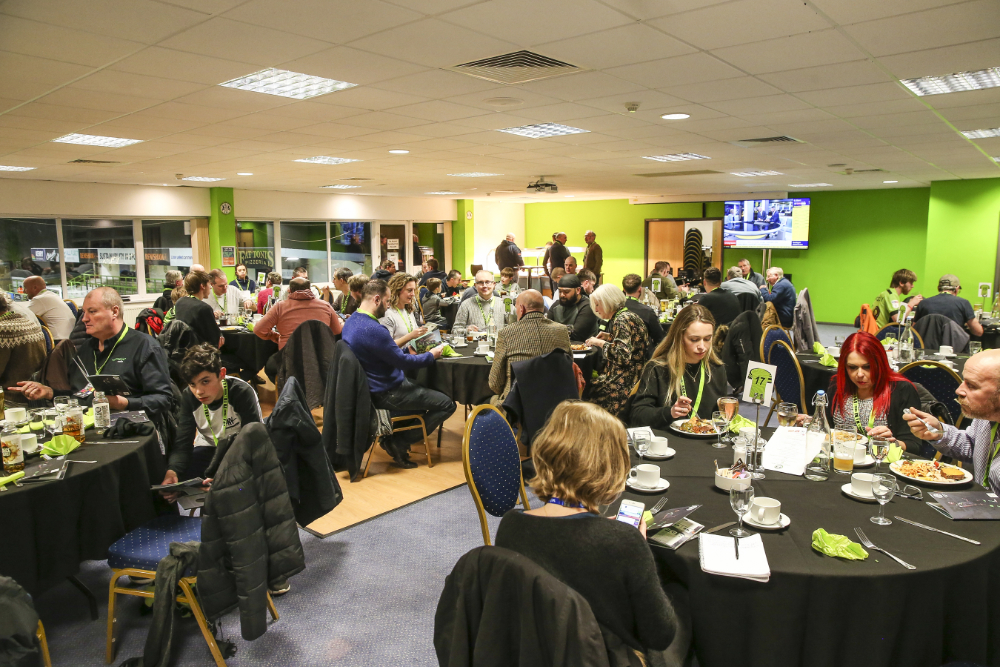
Like most football clubs, Forest Green Rovers also has an official supporter’s club, which offers subsidies to fans for away travel, as well as social events, and a say in how the football club is run.
An essential part of any football club that truly values its fans.
Indirect Benefits
It seems clear from all of the above that Forest Green is taking direct action to engage with their local community and give back as much as they can.
But it is also the indirect benefits like sourcing the ingredients for their vegan menu locally that can have a really positive effect on things. By sourcing ingredients locally, this will no doubt help provide jobs and economic income for local farms and producers, which is essential for any small community to thrive.
Apparently, local businesses have also benefitted from an increasing number of visitors to the area, brought about by the media attention generated around the club’s sustainability efforts.
You would swear that doing good things makes other good things happen! Well that’s exactly what seems to be going on regarding Forest Green Rovers.
And speaking of making good things happen, Forest Green’s partners aren’t doing too bad in that regard either!
Partnering with Positivity
Football is a team sport after all, isn’t it?
Now I won’t go into this in too much detail (I know I’m a devil for doing that!), otherwise we’ll be here all day! (We’ve already been here all day haven’t we?) But I’ll provide all the URL links so you can check out each one of these fantastic organisations in more detail if you so wish!
As I’ve already mentioned, two of Forest Green’s main partners are the green energy company Ecotricity, and the international marine conservation not-for-profit Sea Shepherd, but Forest Green also partners with other organisations who share their ethos like Quorn, Grundon, and EESI.
Football is a team sport after all, isn’t it? But what’s the point in playing if the results aren’t up to scratch?
Some Promising Results
Well Forest Green Rovers have certainly been getting pretty decent results on the pitch lately as can be seen from their continued presence in the football league, and off the pitch, they’re not doing so bad either.
It seems like all of Forest Green Rover’s sustainability efforts are paying off, and that the club is headed in the right direction both on and off the pitch.
According to a UN article from 2018, the club’s absolute carbon footprint (the absolute total amount of emissions created, regardless of GDP) had decreased by 3% since 2017, and the carbon footprint per spectator had decreased by 42% since the 2011/12 season. The club had also managed to recycle 8% of water used from the main water supply in 2016/17, and they decreased the amount of waste produced in the 2017/18 season by 14.7% compared to the season before.
There have also been some huge reductions in emissions and waste during the current season compared to last year, but comparing this year’s emissions statistics to last year’s is not really a valid exercise to be honest because of the COVID lockdown. As a result of everything shutting down for a number of months this year, it is to be expected that emission levels would have significantly dropped.
But still, the results so far are promising, and it seems like all of Forest Green Rover’s sustainability efforts are paying off, and that the club is headed in the right direction both on and off the pitch.
And what direction might that be now?
Always Moving Forward (Into The Greenest Football Stadium in the World!)


Above are concept images of Forest Green Rover’s proposed new stadium, Eco Park, which will be constructed almost entirely out of wood, and is touted to become ‘the greenest football stadium in the world.’ Well my goodness, it certainly looks the part!
We have already seen in detail above all the efforts Forest Green have made to ensure their current stadium, The New Lawn, is as environmentally sustainable as possible. But as the club grows bigger and attracts more fans, they are planning to take their stadium sustainability efforts to a whole other level.
After recently receiving the go-ahead from their local council earlier this year, the club is pressing ahead with plans to construct what they expect to be ‘the greenest football stadium in the world.’
This new stadium will be known as ‘Eco Park’, and will be made almost entirely out of wood, which is a world-first for a football stadium. Wood is a renewable resource with a low carbon impact, low embodied energy, and the ability to store carbon, and is considered a much more sustainable building material than stainless steel, concrete, and most other materials commonly used in stadium construction.
Eco Park will be built to accommodate up to 5000 fans, and as well being built from sustainable materials, will also be sited in parkland, where 500 new trees and 1.8km of new hedgerows will be planted.
Club chairman Dale Vince has suggested that the stadium will look like ‘the ribs of a prehistoric animal’, and as you can see from the concept images above, he’s not far off! (Maybe, soon, stadiums made from carbon-heavy concrete and stainless steel might become prehistoric animals too?)
Wood is a renewable resource with a low carbon impact, low embodied energy, and the ability to store carbon, and is considered a much more sustainable building material than stainless steel, concrete, and most other materials commonly used in stadium construction.
Construction is yet to start on Eco Park, and only preliminary details of the project have so far been released, but Forest Green Rovers insist that this stadium will ‘take their sustainable thinking to a new level entirely.’
I for one, am very excited to see what exactly they mean by that!
Sounds pretty inspirational if you ask me, and you know what? I reckon there’s plenty of folks out there who agree with me!
Inspiring Others
It’s clear that Forest Green Rovers has already become an inspiration to many.
“So many people feel there’s no solution to the world’s problems, but Forest Green are already doing plenty. I’m so excited to be part of the FGR family. I’ll be helping where I can, supporting people who want to change the world for the better.”
– Hector Bellerin, Arsenal FC Football Player
In their local community they have inspired young people through their various ambassador programmes and educational initiatives, and they have also introduced healthy eating and environmental sustainability to their fans, convincing some to adopt these concepts in their everyday lives.
And all of this fantastic work seems to now be inspiring people on an even larger scale. As just last month, Arsenal F.C. football player Hector Bellerin was confirmed as an investor in the club, becoming the club’s second-largest shareholder currently.
Bellerin, who himself adopted a plant-based diet back in 2016, stated after the deal was announced that “Forest Green are showing others the way”, and that “so many people feel there’s no solution to the world’s problems, but Forest Green are already doing plenty. I’m so excited to be part of the FGR family. I’ll be helping where I can, supporting people who want to change the world for the better.”

Bellerin will reportedly be working with Forest Green chairman Dale Vince to ‘raise the environmental agenda in football – among clubs, leagues and fans’.
So it seems that as Forest Green Rovers continues to grow as a club, they will continue to inspire others to follow their trailblazing, issue-raising, planet-saving lead.
But what happens if the club grows a little ‘too big?”
What Happens if the Club Grows ‘Too Big?’
Club chairman Dale Vince states in the club’s official environmental policy that ‘in any apparent conflict between the environment and money – we put the environment first.’
Being considered the ‘greenest football club in the world’ is certainly no mean feat. It’s clear from what we’ve seen in this article that the effort and commitment required to achieve this reality is substantial.
But I wonder if it is possible (or feasible) to maintain such levels of environmental integrity as the club continues to grow and grow? When it comes down to it, understandably, the main focus of a football club will always be to win football matches. Keep winning these matches for long enough, and the money, pressure, and attention will inevitably start to pour in.
If in 15 years time for example Forest Green Rovers somehow find themselves top of the Premier League, competing in the Champions League final every second year, and signing world-class footballers for millions an millions of pounds every summer, it is likely they will require a much larger stadium, will have fans flying in from all over the world, and will be selling their merchandise on a global scale. A reality that would be much more environmentally precarious than their current one.
This is an extreme (and unlikely) example of course, but I am curiously excited to see whether Forest Green Rovers can stay true to their environmental roots, as they continue to climb the increasingly money-focused footballing ladder.

Club chairman Dale Vince states in the club’s official environmental policy that ‘in any apparent conflict between the environment and money – we put the environment first.’
If they can remain true to that, and continue to progress in a sustainable manner while inspiring others to do the same, then hopefully before long Forest Green Rovers F.C. will no longer be considered ‘the greenest football club in the world.’
Hopefully, before long, there will be many more football clubs just like them.
About the Author

Adam Millett is a freelance writer for hire who specialises in sustainability and environmental issues. He believes the economy should be circular, businesses should make the world a better place, and that effective content is the best way to spread the word about sustainability. Visit his website at wordchameleon.com if you want to bring your vision of sustainability to life.

Oh What A Year
2020; the absolute opposite of 20/20 vision.
2020 hasn’t been the best year so far has it?
Corona has been a disaster for basically everyone who isn’t a billionaire.
The heatwaves seem to be getting worse. The wildfires, the hurricanes, the seemingly uncontrollable melting of the ice sheets; the climate in general seems madder than ever.
The deep-rooted systemic racism entrenched deep within our societies is clear for everyone to see.
People are protesting all over the world for one reason or another, and mostly with good cause. From Hong Kong, to Chile, to Belarus, to Lebanon, to the US, and all over the world; there seems to be inequality and injustice everywhere you look.
People have been violently turned against each other over something as harmless as having to wear a piece of cloth on our faces. Hatred and distrust seems to be spewing from all corners of the globe. The supposed shining light of international ‘democracy’ has become a despicably racist illiterate potato-head led totalitarian military dictatorship equipped with a weaponised secret police force and a licence to maim.
And honestly, sometimes it’s really hard to know what at all to think, because large sections of the media have clearly become more interested in spreading fear and generating clicks than reporting anything that even remotely resembles some form of reason or truth.
2020; the absolute opposite of 20/20 vision.

But 2020 has certainly not been a completely hopeless year:
For the first time since I can remember, the deep-rooted issue of racism in our societies is finally being discussed openly, and at length, with a view to actually taking action and doing something about it. Renewable energy has now become widely economically viable, and seems to be taking over from fossil fuels for good. Cities around the world have decided to ditch the cars and embrace the bikes. And the numerous random acts of kindness we have witnessed during the pandemic have been truly heartwarming.
Not only this, there have also been many unsung heroes of 2020. Just your ‘regular’ ‘everyday’ people who have done incredible, inspirational things, but who may not have gotten the air-time they deserve.
I’m sure there are inspirational people like this doing inspirational things all around the globe every single day, and that reality is something that can truly bring us hope. But since many of these stories are probably never even reported, and since I can’t possibly cover all of these ‘everyday heroes’ in one article, here are eight heartwarming examples I was able to find.
What a bunch of absolute legends!
The Unsung Heroes
1. Taco Bell Employee Sonja Frazier Saves Man’s Life in the Middle of the Drive-Thru
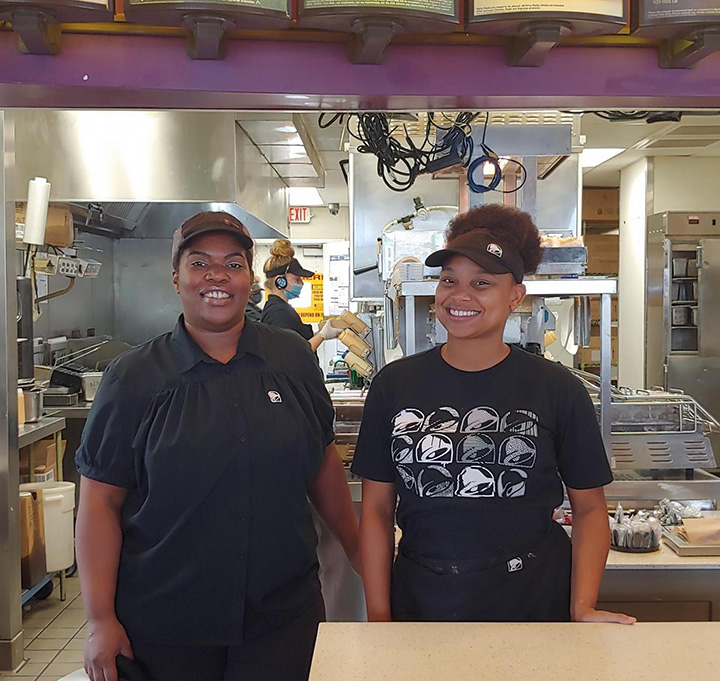
Imagine working at a fast-food drive-thru and finding someone passed out in their van with blue hands and barely a pulse. I reckon I’d probably panic in that situation myself, and I think a lot of people would probably do the same, but that wasn’t the case with 37-year-old Sonja Frazier.
Just last week, while working at a Taco Bell drive-thru, Frazier and her work colleagues noticed that something was stopping the queue of cars from moving forward. When they investigated what was causing the blockage, they found a man passed out in the driver’s seat of his van. Instantly, they called an ambulance, and pulled the guy out of the van and lay him down on his side.
“I don’t look at myself as a hero. This is what I was supposed to do. It doesn’t matter who he was or what skin colour he had. I knew I was there to save his life. But it really was overwhelming emotionally. After I just smoked a cigarette and cried.”
– Sonja Frazier
Instead of just waiting for the ambulance to arrive, Sonja was quick-thinking enough to check for a pulse, which she found to be very weak. The 911 dispatcher on the phone asked if anyone knew CPR, and Sonja who had previously worked for six years as a home healthcare worker, stepped forward.
She performed CPR on the man for roughly 11 minutes until the medical professionals arrived at the scene, and the man survived to tell the tale.
Of course it was the teamwork and quick-thinking of Sonja Frazier and her follow employees that ultimately saved this man’s life, but if Sonja hadn’t administered the CPR before the medics arrived, it’s likely that the man in question would not be alive today.
Looking back on the incident Sonja modestly confessed: “I don’t look at myself as a hero. This is what I was supposed to do. It doesn’t matter who he was or what skin colour he had. I knew I was there to save his life. But it really was overwhelming emotionally. After I just smoked a cigarette and cried.”
A well deserved cigarette if there ever was one. What could have been a real tragic story, turned out to be a happy one, all thanks to the heroics of Sonja Frazier and her colleagues. Legends!
2. 6-Year-Old Bridger Walker Saves His Little Sister From Vicious Dog Attack

Okay so you may well have heard about this one already, as the story did go viral not so long ago, but this guy Bridger Walker is far too incredible not to include in any article about inspirational people and heroes.
Just last month, while playing in a friend’s garden with his 4-year-old sister, 6-year-old Bridger Walker stepped between his little sister and a vicious dog who was charging towards her. The dog ended up biting Bridger repeatedly in the head, face, and cheek, and he required serious surgery and roughly 90 stitches as a result of the attack. Importantly for Bridger though, his sister was completely unharmed.
He was even quoted as saying after the attack that “If someone had to die, I thought it should be me.” A ridiculous showing of courage and self-sacrifice for someone so young, and surely an inspiration to us all.
This story has since gone viral, and Bridger has received many messages of support and gifts from folks around the world and from ‘Avengers’ Mark Ruffalo (The Hulk), Chris Evans (Captain America), Robert Downey Jr (Iron Man), and various other celebrities. Clearly Bridger Walker is the real-life superhero in this story.
Bridger has even been officially named as an ‘Honorary WBC Champion of the World’ by the World Boxing Council, and received an official belt from them, as well as other gifts and a call from Mike Tyson! A well-deserved honour if you ask me.
Unfortunately the dog involved in the attack has since been put down. This was against the wishes of Bridger who ‘didn’t want to see the dog hurt,’ which just illustrates even further the level of kindness and compassion in this little warrior’s heart. I was going to say I reckon this fella Bridger Walker will surely grow up to be a truly incredible human being, but it’s clear to see that he already is. What an absolute hero.
“If someone had to die, I thought it should be me.”
– Honorary WBC Champion of the World Bridger Walker, after saving his little sister from a vicious dog attack.
And to add even more layers of heartwarmingness and inspiration to this story, Bridger’s family took advantage of the worldwide coverage the story received to send this beautiful message of love and togetherness to the world:
“After Bridger’s actions, our family has settled on a simple request: may we each actively strive to bear one another’s burdens; stand up for and protect those that are weak, oppressed, or those whom the world might forsake; mourn with those that mourn, comfort those that need comfort, and love one another. May we follow Bridger’s example, approach the world as a child, and bring greater peace to our own homes, communities, states, and countries.”
Incredible words. I really hope one day we will all strive to live by them.
3. Teenager Hita Gupta Sends Care Packages to 23 Nursing Homes During Pandemic

Loneliness is a terrible, sometimes unbearable thing, and it is often most prevalent with elderly people. Unfortunately, because of the pandemic, issues of loneliness, boredom and anxiety within the elderly community have only gotten worse, as many vulnerable elderly folks and nursing home residents have been unable to receive visitors.
15-year-old Hita Gupta has long been aware of the isolation faced by many elderly people, and had been volunteering at a local nursing home for over a year before the pandemic hit. (What a kind kind soul.)
When she was no longer allowed to visit as a result of corona-related restrictions, she decided to go above and beyond to ensure that nursing home residents in her surrounding area were not without human contact and entertainment.
“Loneliness is now a bigger problem than ever with our pandemic and social distancing guidelines. We need to let nursing home residents know that they are not being forgotten, and that they are not alone. As a community, we need to work together to make seniors feel loved and valued.”
– Hita Gupta
Hita started putting together ‘care packages’ containing colouring books, puzzles, and handwritten notes from her and her little brother, and delivering these packages to all of the nursing homes in her area
She has so far sent packages to 23 nursing homes, and says she will continue sending them until the pandemic is over.
I can only imagine what a difference it must make to the folks in those nursing homes to receive the handmade packages. The amount of love, care and attention put into them must be clear to see, and I’m sure it lets everyone receiving the packages know that they are loved, and that they are not alone. What a wonderful thing that is.
As Hita says: “Loneliness is now a bigger problem than ever with our pandemic and social distancing guidelines. We need to let nursing home residents know that they are not being forgotten, and that they are not alone. As a community, we need to work together to make seniors feel loved and valued.”
Hugely important words, and what a special human being.
Also, after initially paying for all the supplies out of her own pocket, Hita has now set up a GoFundMe campaign, so if you fancy chipping in to help her on her wonderful mission, just click the link in the text above!
4. 96-Year-Old Giuseppe Paternò Graduates Top Of His University Class

Wow. I have to say this one really did impress me. The sheer determination and drive this guy has shown to achieve his dream when many would have long given up is truly inspirational. Really incredible stuff.
Just a few weeks ago, 96-year-old Giuseppe Paternò fulfilled a lifelong dream by graduating top of his class with first-class honours in philosophy from the University of Palermo. He has now become Italy’s oldest ever graduate.
Although being able to study was always Giuseppe’s ‘greatest aspiration,’ he was never able to do so as a child because he came from a large family and was ‘very poor.’ After working at his father’s brewery as a child, Giussepe then worked as a telegrapher for the Italian army during World War II, and went on to work for the state railway service after the war.
Giussepe recalls that while he was working for the railway service after the war he always had ‘an overwhelming desire to dive into books and read, study and learn,’ and at 31 he graduated high school as a surveyor after attending evening classes. (All the while working during the day and supporting his family!)
It wasn’t until 2017 that Giussepe finally found the opportunity to follow his dream and enrol in University. (Meaning he started a four-year University course at the ripe young age of 92!)
Incredibly, Giuseppe is now considering carrying on for a master’s degree, as he says: “my mother lived to be 100. If the numbers and the genetics are on my side, then I still have four years left.”
– Giuseppe Paternò
Fantastically, he proved that sometimes you don’t have to teach an old dog new tricks, as he completed all his assignments on an old typewriter!
Apparently, during his studies his neighbours used to ask ‘why all this trouble at your age?’ And he explains that ‘they couldn’t understand the importance of reaching a dream, regardless of my age.’
Giuseppe considers the day he graduated top of his class as ‘one of the happiest days of (his) entire life,’ and astonishingly, he is now ‘considering carrying on for a master’s degree.’ He says, “my mother lived to be 100. If the numbers and the genetics are on my side, then I still have four years left.”
What an incredible story, what an incredible human. Proof, that it is never too late.
5. 10-Year-Old Chelsea Phaire Has Sent Over 1500 Art Kits to Kids in Homeless Shelters and Foster Homes

Much like the story above about Hita Gupta sending care packages to nursing homes, 10-year-old Chelsea Phaire is doing something similar; sending art kits to children in homeless shelters and foster care homes.
After nagging her parents about wanting to start a charity since she was seven years old (my goodness, at the age of seven I was nagging my parents for nothing but sweets, Playstation games, and Spiderman toys; what a thoughtful, generous, mature soul this Chelsea girl really is), they finally helped her to launch ‘Chelsea’s Charity’ last year.
Chelsea’s charity began (or was born!) on Chelsea’s birthday when she asked party guests to donate art supplies instead of giving her gifts. She then began making art kits and sending them to children who really need them.
“I have definitely grown as a person because of this. Now my dream is to meet every kid in the entire world and give them art. Who knows, maybe if we do that and then our kids do that, we’ll have world peace!”
– Chelsea Phaire
Before the pandemic hit, Chelsea actually used to go with her mother to meet some of these kids in person to share drawing techniques! She has since sent over 1500 art kits to homeless shelters and foster care homes as she wants to ‘give children something uplifting to do when they’re feeling down.’ Amazing stuff.
Chelsea explains that “I feel good inside knowing how happy they are when they get their art kits.” And that “I have definitely grown as a person because of this. Now my dream is to meet every kid in the entire world and give them art. Who knows, maybe if we do that and then our kids do that, we’ll have world peace!”
Using the power of art and expression to unite the human family; I truly hope that Chelsea Phaire one day achieves her dream. What an inspirational soul she is.
If you would like to help Chelsea achieve her goals, you can donate to her wonderful charity here.
6. Trumpeter Shamarr Allen is Giving Free Trumpets to Young People in Exchange for Their Guns

Art is certainly something with the power to bring people together and to promote love and creativity over violence. Another thing that certainly holds that power is music.
Proving this to be the case, trumpeter Shamarr Allen is working to literally harness the power of music to reduce gun violence among young people by offering to give them trumpets in exchange for their guns.
To do this, Shamarr has set up a ‘gun-for-trumpet’ exchange program called Trumpet Is My Weapon. Although the program has only been active for one month, it has already collected four guns which have been turned over to police. That is four young people who now have a creative outlet in place of a violent weapon in the space of a month, incredibly encouraging news!
“People don’t understand that these kids are trying and wanting to do other things, but there’s just nothing for them to do.”
– Shamarr Allen
Shamarr was compelled to start the Trumpet Is My Weapon program after the tragic death of 9-year-old Devante Bryant from gun violence just last month. Shamarr has a 9-year-old son himself, so the tragic news of Devante Bryant’s death was even more cutting for him.
With some extra trumpets lying around, Shamarr posted on social media: ‘To all the youth in New Orleans, bring me a gun and I’ll give you a trumpet, no questions asked.’ The program is set up in such a way that any young person who wants to hand over a gun can do so with no questions asked, as Mr. Allen stresses how important it is that the kids who come to the exchange feel safe, and know that they won’t get into any trouble. The local police are also on board with this method, as they realise that the most important thing is to get the guns off the street.
What makes this program even better is that beyond providing these young people with trumpets, local musicians have also volunteered to offer free music lessons. As Shamarr put it, “People don’t understand that these kids are trying and wanting to do other things, but there’s just nothing for them to do.”
Well thankfully, now there is something for them to do!
Just imagine as this program progresses how many lives it might save. Imagine in ten years time we might have a world famous musician in place of another tragic story of violence and death on the streets. I feel like the butterly effect will be incredibly prevalent here, we can’t imagine all the good that will come from something like this. A truly amazing idea.
Here is the link for the Trumpet Is My Weapon GoFundMe page if you would like to contribute.
7. Michelle Brenner Makes Over 1200 Free Lasagnas to Feed Her Community

We’ve seen the power of art and music to comfort people and bring people together, but let’s not forget about the power of food!
Michelle Brenner certainly didn’t forget about the power of food. After being furloughed from her job because of the coronavirus, Michelle, like many people, was left with a lot of time on her hands. She began by using this time to help her neighbours out with their shopping, and after delivering some store-bought lasagnas to her neighbours she had an idea.
Apparently Michelle’s grandmother had given her a top-notch lasagna recipe, and being a ‘die-hard, full Italian lasagna lover’ herself, Michelle decided she would offer to make her grandmother’s lasagna for anyone in her community who wanted one.
“The world as we know it is falling apart, but my two little hands are capable of making a difference.” “I can’t change the world, but I can make lasagna.”
– Michelle Brenner, or, ‘The Lasagna Lady’
So she posted on her community Facebook page: ‘If any of you want some fresh homemade, no calorie counting lasagna, please let me know and I will gladly prepare it,’ and she started buying ingredients using her unemployment stimulus cheque.
Michelle began by funding the project herself, and initially offered lasagnas for people to collect in her front yard, but soon enough she was offered a community clubhouse kitchen to work in, and people started donating whatever they could while collecting their lasagnas.
She also started a Facebook fundraiser for the project, which is no longer active, and people ended up donating from all over the world. By the end of June Michelle had already made over 1200 lasagnas, and had been working eight hours a day, seven days a week feeding the hungry folks in her community! As a result of her efforts, she is now well known in her community as ‘The Lasagna Lady.’
In her own words: “The world as we know it is falling apart, but my two little hands are capable of making a difference.’ ‘I can’t change the world, but I can make lasagna.” Amazing what two little hands can be capable of!
Back at the end of June Michelle hoped to ‘be making lasagna for many months to come.’ And considering that she now has a dedicated Facebook page for the project which seems to be very active, it looks like she still is!
What a kind, generous, loving, inspirational human. I have to say though, I’m feeling pretty hungry after writing all that!
8. Dr. Zhang Hong Saves Man’s Life Mid-Flight With a Makeshift Catheter

The first real-life hero I included in this article was Sonja Frazier, who saved a man’s life just last week, and our final hero is also someone who saved a man’s life, at the very beginning of 2020. (I believe the incident actually took place near the end of 2019, remember those simpler times? But still, I’m including it because it’s a worthy story.)
Only seven hours in to a thirteen-hour flight late last year, a man with a history of prostate enlargement was in severe pain, and at risk of his bladder exploding.
Alerted to the situation, Dr. Zhang Hong was very quick to figure out a clever, if unusual solution, and he fashioned a makeshift catheter out of a straw, a syringe, and the plastic tube of an oxygen mask.
Following the incident Dr. Hong insisted that ‘saving lives is in his instincts and so the extreme nature of the intervention never crossed his mind.’
Dr. Hong then used this homemade (planemade?) contraption to suck urine out of the patient’s bladder over the course of over half an hour, surely saving the man’s life in the process.
Following the incident Dr. Hong insisted that ‘saving lives is in his instincts and so the extreme nature of the intervention never crossed his mind.’
Those are some pretty fantastic instincts if you ask me. If I’m ever in a similar situation to the man in this story, I really hope there is somebody like Dr. Hong around to help out.
A true, understated, lifesaving hero.
Here’s to a Better 2021 (I Realise It’s Still Only August, but Desperate Times and All That)

And so there you have it.
2020 has been a truly terrible year so far, and it seems like the worst of it isn’t over yet. But there is hope within the madness, light within the darkness, and calm beyond the flames.
It is ‘everyday’ people like the beautiful folks in this article that give me faith for a better tomorrow.
The courage, love, kindness, selflessness, and downright shining humanity displayed by all of these people really is something to behold, and an inspiration for us all.
And these are just a few stories. There are countless other examples just like these from all around the world if you go looking for them, and many more that have never been documented.
2020 has been a truly terrible year so far, and it seems like the worst of it isn’t over yet. But there is hope within the madness, light within the darkness, and calm beyond the flames.
If we can all take a little encouragement from the actions of these kind people, and try to incorporate a similar kindness into our own everyday lives and interactions with our fellow humans, we can create a beautiful butterfly effect, and you never know, maybe 2021 will be our best year yet.
Love, peace, prosperity, happiness, kindness, and friendship to all in these challenging times.
About the Author
Adam Millett is a freelance writer for hire who specialises in sustainability and environmental issues. He believes the economy should be circular, businesses should make the world a better place, and that effective content is the best way to spread the word about sustainability. Visit his website at wordchameleon.com if you want to bring your vision of sustainability to life.
I must be clear from the beginning that I do know the folks who run this salon (they’re wonderful folks), but I promise you I am not allowing that to cloud my judgement here. They are not paying me to write this article, aside from giving me a super groovy haircut which we will get to later.
I would happily be singing the praises of Salon Sassafras regardless of whether I knew the owners or not, and the salon absolutely deserves its place on A Wall of Hope. For me, it serves as a perfect example of how a hair salon, or any small business for that matter, should be run with environmental sustainability in mind. So with all that out of the way, go have a read of the article below and see what you think!
More than Just a Name
Ever hear about a thing called ‘sassafras’?
Sounds wonderful doesn’t it? Just rolls off the tongue like toilet roll rolls off the shelves during a pandemic.
Salon Sassafras has a really genuine, business-wide focus on environmental sustainability, minimalism, and a strong commitment to reducing waste as much as possible.
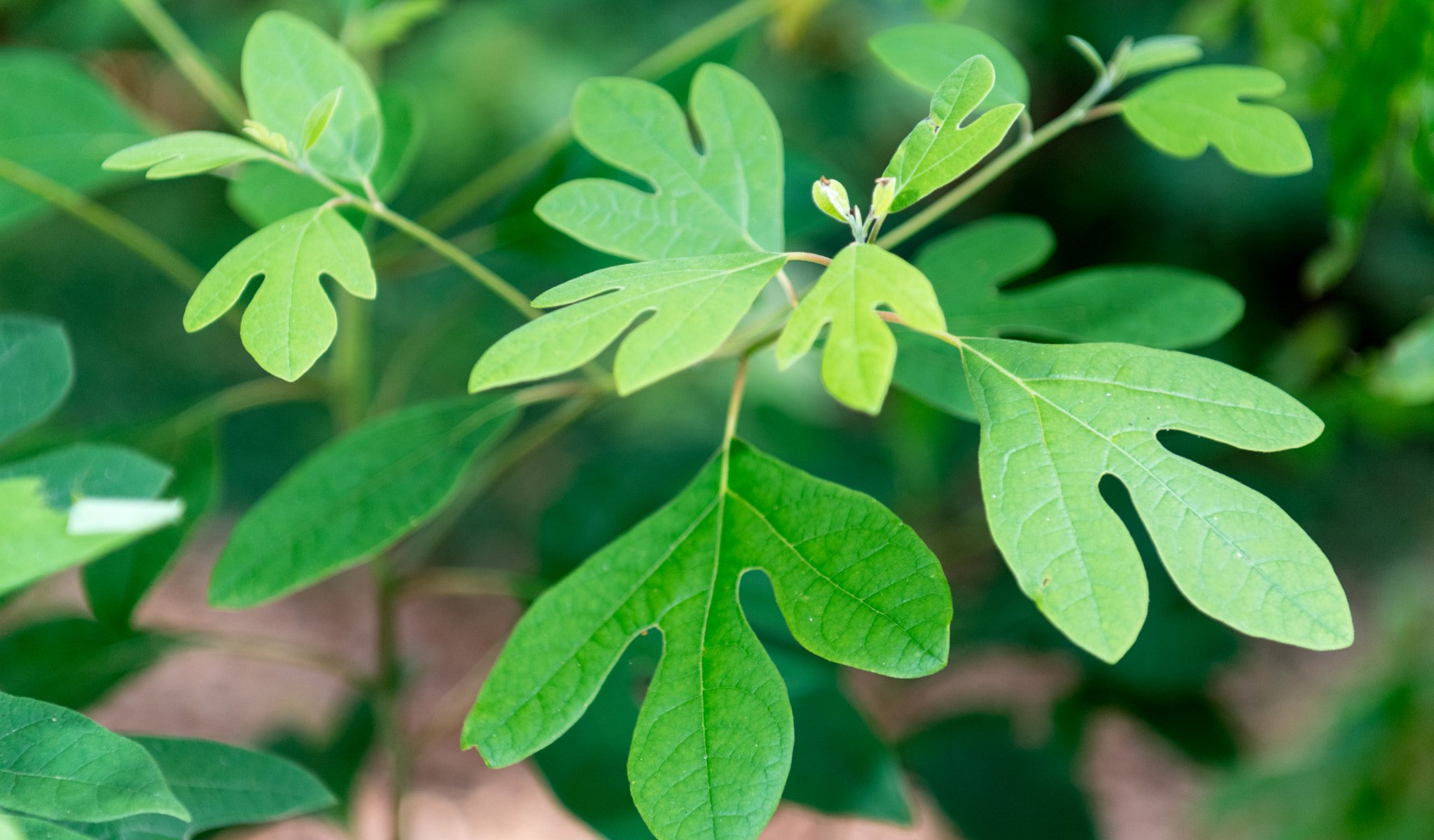
But not only is sassafras an incredibly pleasurable word to say, it is also the name of a very special type of tree. The sassafras tree is incredible because every single part of it can be, and has been used for something. Sassafras provides food for wildlife, its wood and bark has a variety of domestic and commercial uses, tea can be brewed from its roots, the leaves can be used for thickening soups, and the oil can be used in perfumes and soaps. Sassafras has many other reported uses as well, so in a way, you could call sassafras a kind of ‘zero waste’ tree.
This article is not about the sassafras tree however (although that could be a very good idea for a future article), because see, not only is sassafras an incredibly pleasurable word to say, and a very special type of ‘zero waste’ tree; sassafras is also the name of a very special new hair salon that’s recently opened up in the Bos en Lommer region of Amsterdam.

But what makes this Salon Sassafras in Amsterdam so special? Well just like the sassafras tree, this salon has more than a touch of the zero waste about it. Salon Sassafras has a really genuine, business-wide focus on environmental sustainability, minimalism, and a strong commitment to reducing waste as much as possible.
From running on renewable energy, to refusing to use single-use-plastic, to only working with the most sustainable brands around, Salon Sassafras really is a near-perfect (perfection is impossible really isn’t it?) example of how to incorporate environmental sustainability into a hair salon.
So here’s a look at all the things that make Salon Sassafras a true salon of sustainability.
Embracing the Circular Economy
Salon Sassafras was established from the very beginning with the circular economy, and therefore, the environment in mind.
If you haven’t heard of the circular economy you can learn all about it in this hilarious article I wrote a while back, but basically the circular economy is about making much better use of our raw materials. The circular economy is the economy of the future, where we build things to last, and we find a way to use the same raw materials over and over again instead of constantly extracting new ones and destroying the planet. And it is with this kind of ‘circular’ ethos that Salon Sassafras, the physical salon itself, was put together.
Basically, Salon Sassafras has been, and is being, put together in a way that removes it from the ‘consumer cycle’ as much as possible.
In true circular fashion, the majority of Salon Sassafras has been fitted and furnished with recycled, reused, and repurposed materials, or built by hand with locally produced and sustainably managed ones:
- The washbasin, chairs, mirrors and cutting stools have all been recycled or repurposed by finding high quality used pieces and ‘fixing them up’ to suit the salon.
- The reception pillows were handmade by repurposing leftover cushions and wrapping them in velvet fabric.
- The shelving, desks and counters were hand-built from elm tree wood, a tree that grows in abundance in the Netherlands. The wood was locally harvested to reduce travel-related emissions and to ensure the sustainability of the wood.
- The folks at Salon Sassafras even plan to decorate the place with hand made ‘natural-fibre’ macrame decorations by repurposing some old rope and twine, so even the bells and whistles at Salon Sassafras are circular bells and whistles! (I wonder if they could make some decorations out of actual bells and whistles? Could be a nice circular idea?)

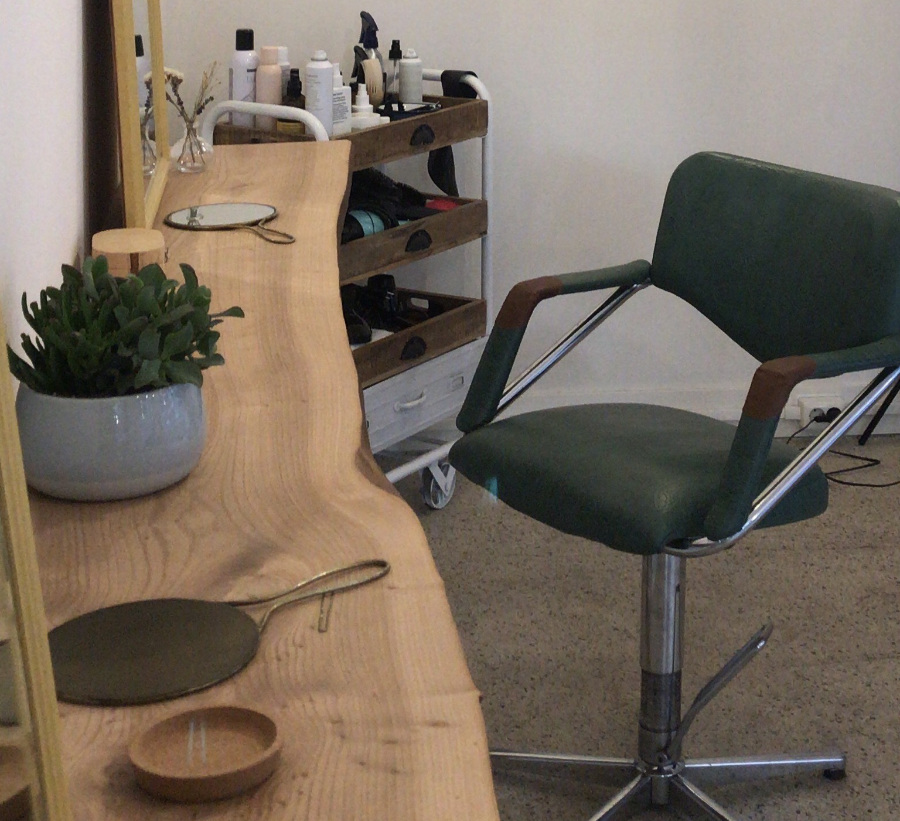
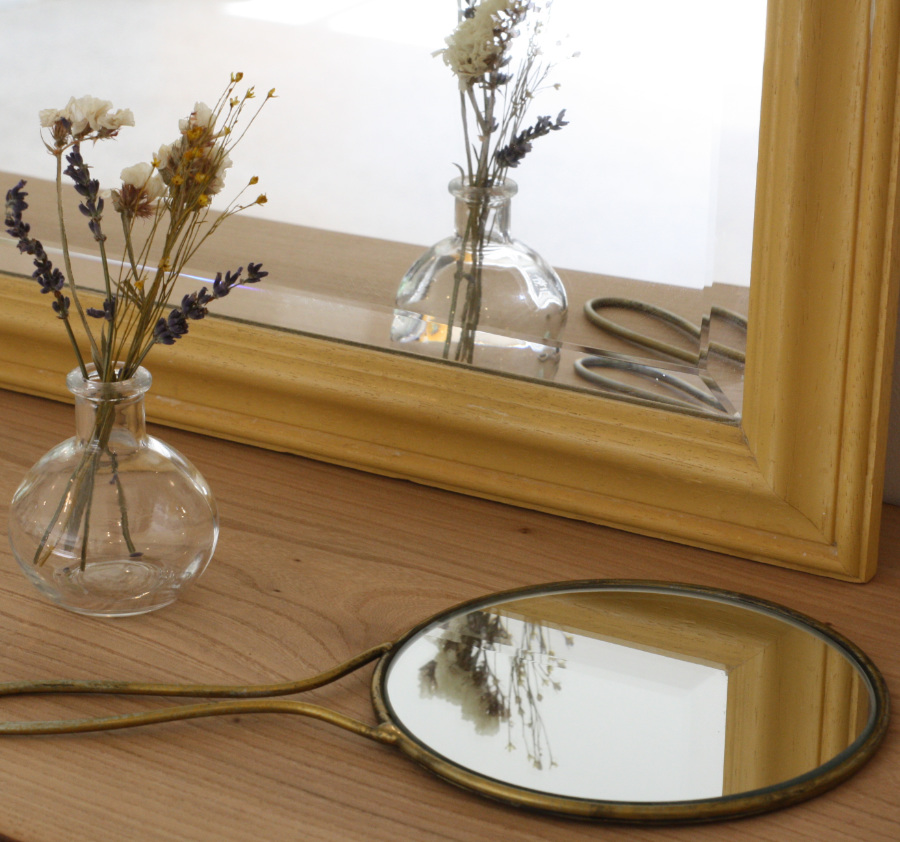

Basically, Salon Sassafras has been, and is being, put together in a way that removes it from the ‘consumer cycle’ as much as possible. They try to recycle, reuse, and repurpose wherever they can, and if they are ever forced to purchase any mass-produced furniture or appliances, they make sure to only purchase from brands with ‘solid environmental policies and a strong sustainability rating.’
Now just imagine if every business were to adopt this same level of commitment to respecting and making better use of raw materials. That, my friends, is how we can move towards a more circular, hospitable world.
But this commitment to circularity and sustainability does not begin and end with the procurement of raw materials, of course, it involves what we do with those raw materials once we have finished using them as well.
At Salon Sassafras, they take this very seriously.
A Constant Commitment to the ‘Zero Waste’ Journey
Creating absolutely no waste whatsoever is virtually an impossible thing to achieve, especially when running a business. But constantly striving to create as little waste as possible, to always choose the least wasteful option, and to always be on the lookout for new ways to reduce waste is about the best a business can do. Here’s a look at how they’re doing just that at Salon Sassafras throughout the salon experience:
Towels
Towels really seem like such an innocent thing. The truth is; as a hair salon customer you’re probably not overly concerned about the environmental sustainability of the towel that’s wrapped around your soon to be beautified hair. You are there for your hair, and I suppose that’s fair enough.
But if you’re running a business and you want to reduce waste as much as possible you need to consider absolutely every aspect of your operation, and in salons, that definitely includes towels! At Salon Sassafras it seems, a whole lot of consideration has been put into their towels.
Instead of using reusable towels, Salon Sassafras has opted to use disposable towels from a brand named Scrummi. Now on the surface, it may seem more wasteful to opt for a disposable towel as opposed to a reusable towel, but when you really look into it, that’s not necessarily the case.
Reusable towels are usually made from either cotton or synthetic microfibres (plastic). Of course, we all know why plastic towels are a terrible option; they take thousands of years to break down and are usually produced with all sorts of damaging and wasteful chemicals, but cotton is a highly unsustainable material as well. Cotton production involves an incredible amount of water use (and waste), and also requires all sorts of pesticides and herbicides which severely degrades soil quality and damages natural habitats.

So it turns out reusable towel production is more often than not, very wasteful, and very damaging to the environment. Add to this the fact that in a salon, each reusable towel must be washed at 60-90 degrees after every use, which uses a whole lot of water and energy on a regular basis, and you can see why reusable towels are not exactly the most sustainable option.
The disposable Scrummi towels in use at Salon Sassafras however, are a whole different story! These towels are 100% biodegradable and compostable, and will harmlessly dissolve back into the environment within 8 weeks. They are made from natural wood fibres, derived from Central European Forests that have been certified sustainable, so they are as kind to the environment as possible when it comes to raw materials used. The Scrummi towels are also produced without the use of synthetic chemicals, and 95% of the water used during the production process is recycled using a filtration system.
If you’re running a business and you want to reduce waste as much as possible you need to consider absolutely every aspect of your operation, and in salons, that definitely includes towels!
So all-in-all, it seems Salon Sassafras has made a very sustainable, waste-friendly choice when it comes to their Scrummi towels.
Coffee
At Salon Sassafras, even the coffee they serve you is as waste-free as possible!
Now while you’re sitting there in the salon with a super-sustainable towel wrapped around your head, becoming more glowing and more beautiful by the second, it might be quite nice to indulge in some tasty refreshments. How about a nice hot cup of coffee while you’re waiting?
At Salon Sassafras, even the coffee they serve you is as waste-free as possible! To save on energy and reduce waste, they use a ‘pour-over’ method of making coffee where they brew one big batch a day and then keep all the coffee hot in thermos flasks. This means energy is saved by not having to brew multiple batches, and the substantial amount of waste that comes from single-cup espresso coffee and pod-coffee is also avoided. (I’ve always thought those usually unrecyclable George Clooney pods are one of the most wasteful things the human race has ever created, I mean what the flaming goodness are we thinking?)
They also only serve fair trade coffee at Salon Sassafras, and they try to support the local coffee roasters as much as possible too, so you can enjoy your mid-makeover refreshments with a calm, planet-friendly state of mind.
Toilet Paper
Coffee often makes you need the toilet doesn’t it? Pretty sure it’s a natural laxative or something? Does the job for me anyways!
Funnily enough, much like towels, toilet paper also seems like a perfectly innocent thing, but some have estimated that roughly 10 million trees are used to wipe human bottoms around the world EACH YEAR! Which makes you realise that toilet paper can actually be an incredibly wasteful thing.
This has been considered at Salon Sassafras though. They always use eco-friendly, non-bleached, recycled toilet paper in the salon, and will soon exclusively be using toilet paper made by a company called ‘The Good Roll,’ who make their toilet paper from 100% recycled paper (so no new trees have to be cut down), and free from chlorine, colour or fragrances. So if the waste-friendly coffee runs through you at Salon Sassafras, you can go to the toilet safe in the knowledge that you’re doing your thing for the trees!
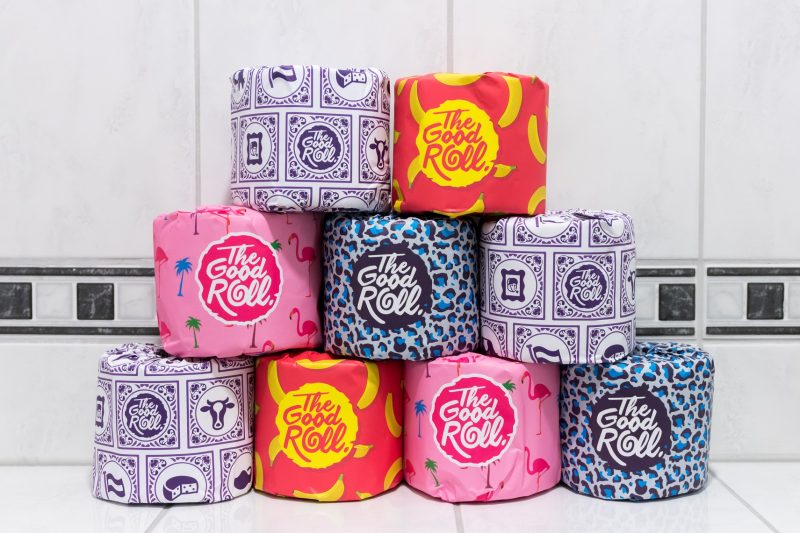
The Good Roll also donates 50% of its profits to building toilets in developing countries, so really, the toilet roll at Salon Sassafras isn’t just reducing waste and decreasing deforestation, it is also helping people in need too.
Who knew our choice of toilet paper could make such a difference?
Would you like a Receipt?
Toilet paper isn’t the only kind of paper that makes a difference. According to some statistics, up to 10 million trees are used each year in the US alone just for the production of paper receipts, and a whole lot of water is used too. While these statistics may not be entirely accurate, it’s not hard to imagine the vast amount of paper, and therefore trees that must be used to print paper receipts on a daily basis all around the world. It’s actually completely bonkers how wasteful that is when you think about it!
But Salon Sassafras has decided not to be bonkers, and to only offer digital receipts, which for me makes a whole planet’s worth of sense.
According to some statistics, up to 10 million trees are used each year in the US alone just for the production of paper receipts, and a whole lot of water is used too.
So you can walk out of there with your hair held high and your receipt on your phone, knowing the world is a slightly better place because of it.
Taking out the Trash (Without Taking out the Planet)
By the time you get home and you’re showing off your new look to everybody, it’s probably already clean up time at the salon. Surfaces need to be wiped down and empty containers need to be dealt with.
To do this in the least wasteful way possible, Salon Sassafras always uses non-petroleum based bin bags that are biodegradable, while recycling all plastic, glass and paper properly. They also stick to all-natural, chemical-free cleaning products wherever possible to minimise their environmental impact.
As I said at the beginning of this section; it is virtually impossible to completely eliminate waste, but by taking these measures while cleaning up and dealing with trash, and taking all the other measures mentioned above to reduce the amount of waste in the first place, Salon Sassafras seems to be doing all they can to limit their impact as much as possible.
How About a Bottle Refill Scheme?
Incorporating environmental sustainability and ‘zero waste’ into a business will always be a journey, never a destination.
To reduce their impact even further, although it is not active yet, there are plans being drawn up at Salon Sassafras to introduce a bottle refill initiative. This would involve having clients bring back their empty bottles (shampoo, conditioner etc) to be refilled in store, in order to reduce or nearly eliminate packaging waste.
A simple but sensible idea, and a great example of how Salon Sassafras is always looking for new ways to minimise their waste. Incorporating environmental sustainability and ‘zero waste’ into a business will always be a journey, never a destination. It’s all about constantly trying to move in the right direction, and the folks at Salon Sassafras are clearly committed to doing just that.
And speaking of businesses moving in the right direction…..
Working with Sustainable Brands and Suppliers
For a business to be truly committed to sustainability, it’s important that it chooses to work with brands that share this commitment. Whether it’s suppliers, contractors, B2B Customers, decorators, whatever it is. What’s the point in building a salon out of repurposed materials and pursuing a zero-waste policy if you stock that salon with brands that are destroying the planet?
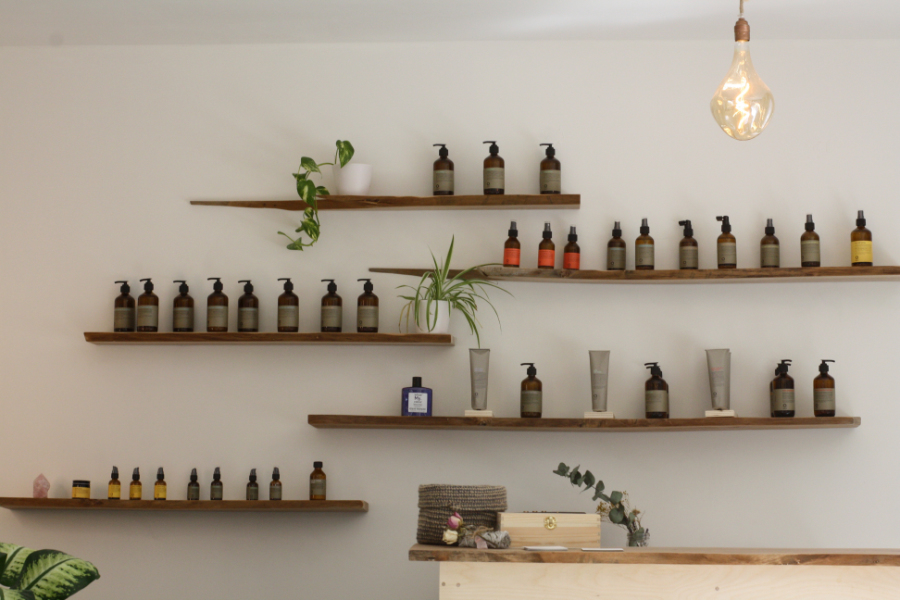
By choosing to work with brands and suppliers that truly value sustainability, it not only makes your own business more sustainable, it also increases the demand and pressure for other businesses to embrace sustainability; thereby enabling a much wider ecosystem of sustainable business practice. As Salon Sassafras has only been open a few weeks, they are still figuring out the most sustainable brands to work with, but they are already making plenty of progress:
- To minimise plastic use, they have decided to only work with brands that come in glass or metal containers whenever possible.
- When they are forced to work with plastic products (as sometimes alternatives simply are not available), they will look for brands that use post-consumer plastic only, and they will always make sure that the plastic is recyclable.
- To further reduce packaging waste and water usage, they are currently testing out a range of solid products that require little or no packaging. They hope to bring a line of professional standard solid products into the shop very shortly.
- Salon Sassafras only works with brands that are certified cruelty free, and are not tested on animals.
- Basically, at Salon Sassafras there is a real commitment to only working with brands and suppliers that take sustainability seriously. They are only interested in working with brands and suppliers that make a genuine effort to: Offset their carbon footprint, give back to the community, reduce their plastic usage, reduce their packaging waste, and minimise or eliminate harmful chemicals from their products.
They also do their research at Salon Sassafras. All potential brands are fact-checked extensively to make sure they are not greenwashing, and that their sustainability efforts are genuine. (I can absolutely ensure you that this is true; I spent a few hours in the salon the other week and overheard the girls discussing the environmental pros and cons of a particular shampoo/conditioner brand they were thinking of using, and my goodness, it was a fiery, in-depth conversation. It’s clear that they don’t make any decision lightly, and that environmental sustainability really is at the heart of every decision they make. The passion for sustainability at Salon Sassafras runs deeper than the roots of a sassafras tree!)
By choosing to work with brands and suppliers that truly value sustainability, it not only makes your own business more sustainable, it also increases the demand and pressure for other businesses to embrace sustainability; thereby enabling a much wider ecosystem of sustainable business practice.
And since we’re on the topic of working with brands and suppliers that take sustainability seriously, isn’t the most important supplier of all, the one that actually powers your entire operation?
Powered by Renewable Energy
Salon Sassafras’s entire operation is powered by Greenchoice, which generates all its energy from local wind, sun, or biomass sources, as well as ‘forest-compensated’ gas. Greenchoice works to provide energy from renewable sources wherever possible, and when gas does need to be used, they invest in forest restoration and protection projects around the world to help compensate for any emissions. They have also established their own projects where they plant new forests, and have so far planted over 2 million trees, offsetting 100% of their customer’s gas consumption in the process.
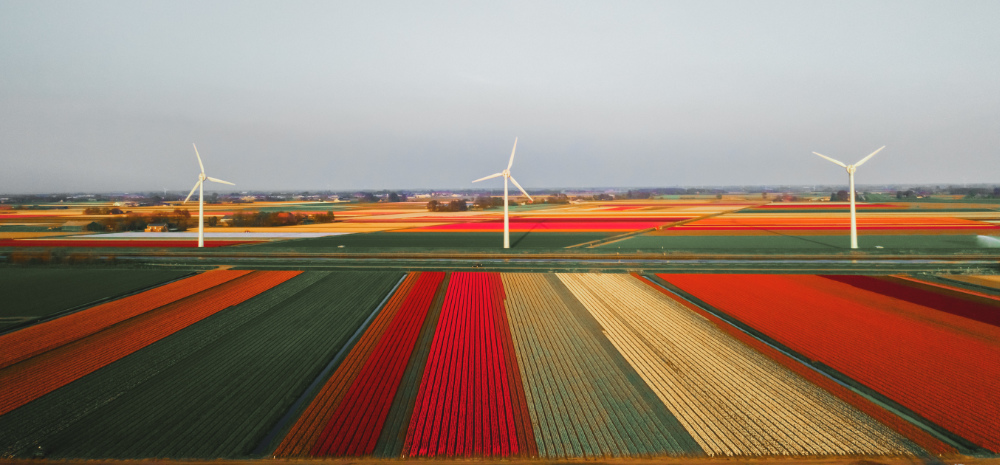
So it’s pretty safe to say that everything that happens at Salon Sassafras is powered in a way that respects the environment. They also use LED lighting in the salon, and only buy appliances with an A++ energy efficiency rating in order to reduce their energy consumption even further.
Amazing how simply by switching your energy supplier you can make your entire business so much more ‘planet-friendly.’ And there’s another very simple way you can do that too!
Saying No To Single-Use-Plastic
Single-use-plastic is a material built to last for over 1000 years, yet one that is only ever intended to be used once, and is often never recycled. It clogs up the oceans, beaches, rivers, lakes, parks, forests, cities, ANIMALS, and even our own bodies and brains when it breaks down into microplastics.
Not a whole lot needs to be said about this one really, but it deserves to have a separate section with a big bold title because it’s such an important thing to do regarding sustainability, and such an easy thing to implement.
Salon Sassafras refuses to use any single-use-plastic products, and there’s no reason why every single business on earth shouldn’t try to follow suit.
Single-use-plastic is a material built to last for over 1000 years, yet one that is only ever intended to be used once, and is often never recycled. It clogs up the oceans, beaches, rivers, lakes, parks, forests, cities, ANIMALS, and even our own bodies and brains when it breaks down into microplastics.
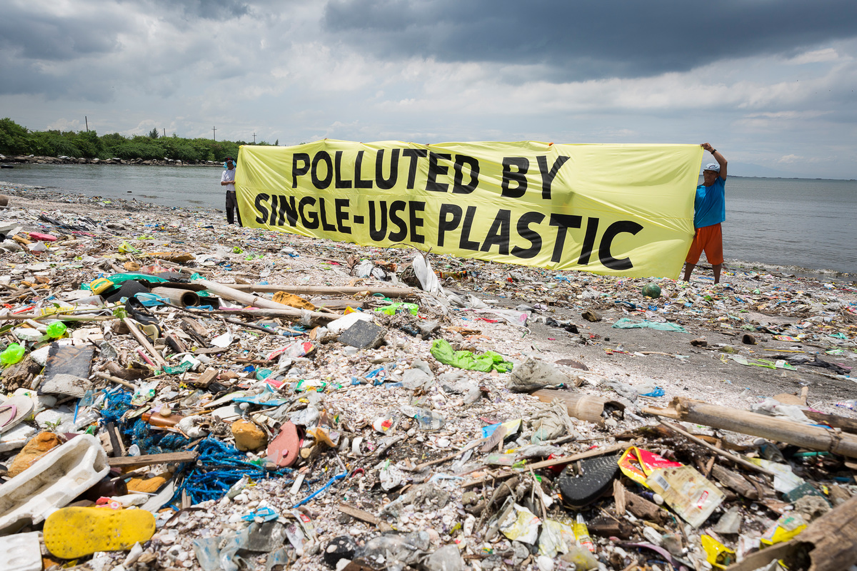
Salon Sassafras says NO to single-use-plastic, and we should all try and do the same. Here’s an article I wrote a while back about alternatives to single-use-plastic to give you an idea of the other, better options out there. There are many!
Bringing Barter Back?
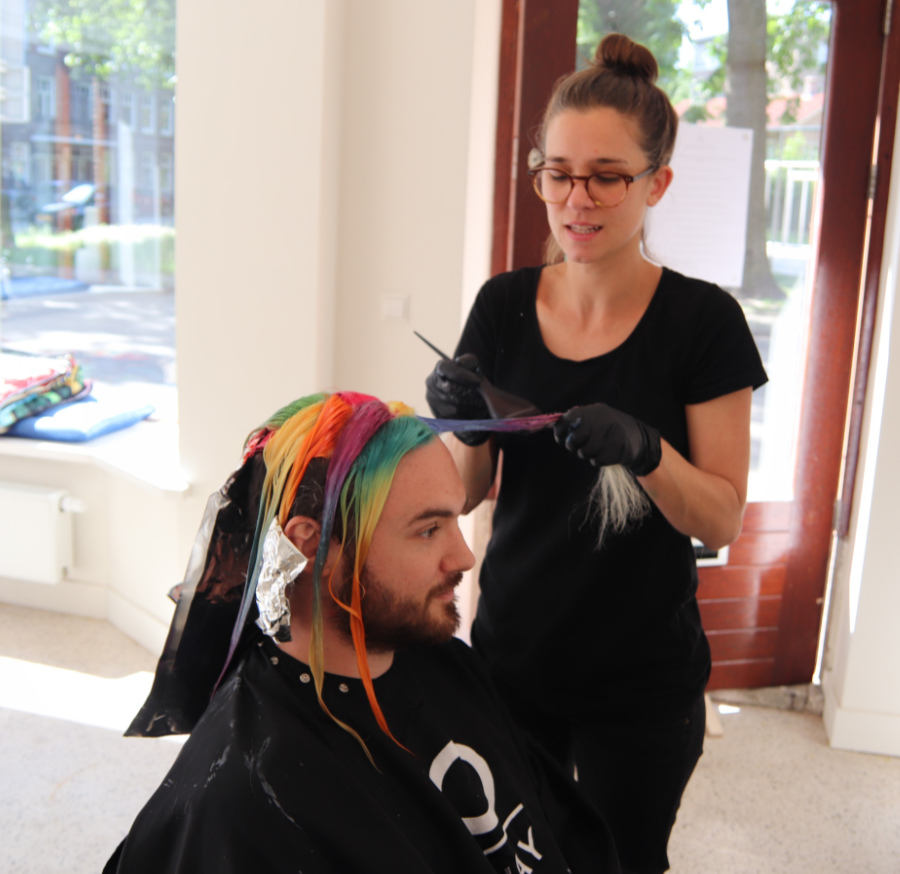


So I mentioned in the blurb at the top of the article that I did get a super-groovy haircut at Salon Sassafras, and here it is in all its wonderful glory. I reckon they did a pretty good job in fairness? I was certainly over the rainbow with it. (Couldn’t resist)
Now of course this wasn’t exactly an act of barter. My mates had just opened up the new salon, and I’d always wanted rainbow hair, so I asked if it would be possible, and they were happy to do it for free if I let them use me as a ‘model’ for their portfolio. (The photoshoot was actually a whole lot of fun)
It’s like sharing is caring and caring and sharing can help save the world? And even better than that, the products used to create my rainbow hair are helping to save the world too. (Or at least make it a little less toxic!)
And after spending a full 8 hours in the salon it became very clear that this was exactly the kind of business I would usually write about on A Wall of Hope. It is a business with a genuine commitment to sustainability, and one that is leading the way in their field and acting as a kind of blueprint for sustainability that hopefully other businesses in their field can emulate.
So I decided to write about them, and I think it’s pretty cool that I got some wonderful rainbow hair, and they got some genuinely deserved exposure without any money having to exchange hands.
It’s like sharing is caring and caring and sharing can help save the world? And even better than that, the products used to create my rainbow hair are helping to save the world too. (Or at least make it a little less toxic!)
Cutting Out the Chemicals
As we’ve already discussed, Salon Sassafras is very committed to only working with brands that are as kind to the environment as possible, and this commitment remains strong when it comes to colours and chemicals.
The colouring products used to dye my hair are from a brand called Organic Way, or Oway. These products contain fairtrade and organic ingredients grown on biodynamic farms in Italy, where no pesticides or toxic chemicals are used. Obviously there must be other more chemical-based ingredients involved as well, (I can’t find a full ingredients list so it’s hard to know exactly), but it seems like these Oway products are some of the most natural, and least toxic hair-colouring options available for hair salons today.
That is why Salon Sassafras has chosen to use them, and the salon takes the same approach of choosing the least toxic, least chemical-based options for all the other products they use as well.
Circular, Zero Waste, Minimalist, Sustainable: Sassafras
It is impossible to be absolutely perfect when it comes to sustainability, but the constant endeavour for perfection regardless is probably the most important part of the blueprint.
So there you have it, Salon Sassafras, a near-perfect blueprint for how to run a hair salon sustainably:
- They furnished and fitted the salon from the very beginning with the circular economy in mind.
- They are constantly committed to the zero waste journey, and to pushing their boundaries and altering their processes to minimise their impact.
- They only work with the most environmentally friendly brands and suppliers available.
- Everything they do is powered by renewable energy sources.
- They refuse to use single-use-plastic.
- And they do all they can to eliminate as many chemicals from their business as possible.
They also take a minimalistic approach in general, only replacing old supplies when absolutely necessary, and only ever buying what they need. They even encourage their clients to bring in any unwanted plants to the salon so they can give the plants a loving home. (I would imagine that is a policy that any self-respecting sassafras tree would approve of!)
It is impossible to be absolutely perfect when it comes to sustainability, but the constant endeavour for perfection regardless is probably the most important part of the blueprint. I’m sure the folks at Salon Sassafras would be the first ones to tell you, there is always room to improve.
And it is that mentality and desire for constant improvement that ensures, without doubt;
Salon Sassafras, lives up to its wonderful name.
Contact Details for Salon Sassafras Amsterdam
Website: https://www.salonsassafras.com/
Instagram: https://www.instagram.com/salonsassafras/
Facebook: https://www.facebook.com/salonsassafras
Twitter: https://twitter.com/salonsassafras
About the Author
Adam Millett is a freelance writer for hire who specialises in sustainability and environmental issues. He believes the economy should be circular, businesses should make the world a better place, and that effective content is the best way to spread the word about sustainability. Visit his website at wordchameleon.com if you want to bring your vision of sustainability to life.

I am one of the extremely lucky ones. I have a safe roof over my head, food to eat, a bit of an income, work to do, and I don’t know anyone who has been critically ill because of the coronavirus.
I say thank you from the bottom of my heart to all the heroes working to keep people safe during this crisis, all the heroes working to find cures and solutions to the many problems we now face, and all the heroes who have remained kind and loving to their fellow humans and creatures throughout these challenging times.
Even more than that, I feel I was pretty much built for self-isolation. Before anyone had even heard of the coronavirus, I had been working from home for months as a freelancer because I couldn’t stand working in an office. (And I wanted the freedom to move around at will without having to find a new job each time, but we won’t get into that one right now!) I had even been exercising from home before coronavirus hit because I don’t like going to the gym.
So you could say the lifestyle changes I have had to make as a result of the lockdown have been pretty minimal. (Haha, that probably makes me sound like a bit of a nutter, but you know, who actually cares?)
As far as the evenings and weekends go, I absolutely love getting out and about and meeting folks, and I do miss the pints and the laughs and the odd yoga class here and there, but I’m usually just as happy with long bouts of horizontalism on the couch as well; something self-isolation makes very possible indeed. And at least I have a couch to be horizontal on in the first place.
So the lockdown hasn’t directly affected me nearly half as much as it has a lot of others, and for that reason it’s probably quite easy for me to write this article and try to tell everyone it’s all going to be okay.
But the truth is, we don’t know if it’s going to be okay; I suppose we never did. People are really suffering through this, many are dying, and the economic and social ramifications of the crisis are yet to be fully known.
For those who are working on the front lines, those who have lost loved ones because of this, those who are really struggling financially and may have lost jobs or businesses, those who are struggling mentally and psychologically through the lockdown, those who are suffering from domestic violence and abuse, and anyone else who has been deeply affected by this crisis, the things I cover in this article may be of little consolation.
The coronavirus is a fucking disaster when you take it all into account. It is causing unimaginable pain and suffering in so many ways to so many people.
I say thank you from the bottom of my heart to all the heroes working to keep people safe during this crisis, all the heroes working to find cures and solutions to the many problems we now face, and all the heroes who have remained kind and loving to their fellow humans and creatures throughout these challenging times.
We need to try and remain positive, together, if we’re going to get through this, and it is virtually impossible to do that without finding at least some cause for hope. So here are a few things that have happened since coronavirus hit that I think offer some reason for hope and optimism.
Nature is Making a Comeback
The lockdown has given us absolute proof that our current way of living is incompatible with nature, and that we need to make some changes moving forward if we’re to have a prosperous, sustainable future.
Many of us have probably seen the pictures and heard the stories, and some of us have maybe even witnessed it first-hand. As people are forced to stay inside, nature seems to be flourishing.
The canals in Venice have gone crystal clear for the first time in years. The fish have become visible and the swans have returned. Goats, wolves, deer, monkeys, coyotes and all sorts of animals have decided to wander further than normal into cities around the world in the absence of humans. Wildlife is filling up open spaces in Yosemite park in the US that would normally only be occupied by tourists.
The list goes on! In the absence of big cargo ships the oceans are now quieter, which is helping whales and marine life communicate more effectively and navigate their habitats better. Endangered sea turtles in Florida are now thriving and laying more nests than usual due to the lack of humans and harmful waste near the beaches. The Himalayas have even become visible in parts of India that haven’t seen them for 30 years because of air pollution, and geoscientists have found that the Earth’s crust is actually vibrating less due to reductions in human activity.

The examples of nature thriving while the human world has been on lockdown go on and on, and on top of all this, living in a city where you normally can’t see them, I’m nearly sure the stars are much more visible than they were before corona!? Or maybe that’s me going a little mad?
The point is, nature seems to be thriving in our absence, and while some would see this realisation as a great big horrifying spotlight that reveals how damaging our current way of life is to the world around us, I would see it as a gift, and an opportunity. To change our ways.
The lockdown has given us absolute proof that our current way of living is incompatible with nature, and that we need to make some changes moving forward if we’re to have a prosperous, sustainable future.
And you know what? It seems we’re already starting to change for the better, in a really big way!
Renewable Energy is Taking Over
During the lockdown, it has become quite clear (in more ways than one) that air pollution is a huge problem for us normally, and for nature.
Amazingly, according to the Centre for Research on Energy and Clean Air, during the month of April, in Europe alone, there have been 11,000 fewer deaths than normal from pollution as a result of the lockdown and subsequent reduction in fossil fuel-related emissions. And that’s just for one single month in Europe. The worldwide number since the lockdown began is sure to be much larger.
‘The authors of the report say the response has offered a glimpse of the cleaner, healthier environment that is possible if the world shifts away from polluting fossil fuel industries.’ And it seems we are already starting to do just that.
Solar and onshore wind power are now the cheapest new sources of electricity in at least two-thirds of the world’s population.
In January and February in the US, renewable energy sources produced 10.6% more electricity than coal, with solar-generated electricity expanding by 32% compared to the same period of 2019, and wind growing by 19.8%. Wind power produced 32.5% of Ireland’s electricity in 2019, compared to 29% the previous year, and just this week, Britain has broken its record for coal-free power generation, going over 20 days so far without using any coal at all to produce electricity. And these are just some of the examples.
A report this week by BloombergNEF stated that ‘solar and onshore wind power are now the cheapest new sources of electricity in at least two-thirds of the world’s population, further threatening the two fossil-fuel stalwarts — coal and natural gas.’ A report from the International Energy Agency this week even suggested that ‘the outbreak of Covid-19 would wipe out demand for fossil fuels’ and that ‘the steady rise of renewable energy combined with the collapse in demand for fossil fuels means clean electricity will play its largest ever role in the global energy system this year, and help erase a decade’s growth of global carbon emissions.’
The evidence of this can already be seen as just this week, the oil company Shell ‘has slashed its shareholder dividend for the first time since the second world war and warned it is facing a “crisis of uncertainty” following the collapse of global oil prices.’
And while all this has been going on, solar cell technology has smashed three big efficiency records in the last few months, becoming more productive and cost-effective than ever before.
So it seems clear we are on the brink of a world that runs on clean, renewable energy, where air pollution is reduced for good, lives are saved, and nature can finally breathe again. And importantly, it now makes more financial sense to use renewable energy over fossil fuels, and we all know money makes this world go around; so the transition to renewables is pretty much a sure thing.
But what was that I said about nature breathing again??
The World is Going Tree-Crazy
Fortunately, it seems, the trees are unable to catch coronavirus, and will continue to grow while we all stay inside!
Although most of us have been stuck inside these past few months, many great organisations around the world have been trying their best to continue regenerating the earth by strategically planting trees and implementing carefully designed re-wilding projects.
Organisations like Justdiggit, Mossy Earth, Ecosia, Eden Reforestation Projects and so many others have been sharing updates and promising results from projects initiated before the lockdown began, as well as working on plans to implement new land regeneration projects once the lockdown is over.
Because these projects are very carefully designed, and involve planting only native trees and implementing interventions that specifically benefit the local environments in question, they are helping to increase biodiversity worldwide, improve air quality, and ultimately, cool down the entire planet! Fortunately, it seems, the trees are unable to catch coronavirus, and will continue to grow while we all stay inside!
In other treemendous news, in order to provide income for workers who lost their jobs in Pakistan as a result of the coronavirus-lockdown, the government there has offered unemployed day labourers work planting trees as part of their ‘10 Billion Tree Tsunami Programme.’ Officials say the move will create more than 60,000 jobs, and is seen as ‘an example of how funds that aim to help families and keep the economy running during pandemic shutdowns could also help nations prepare (for climate change).’ The aim is to plant a ‘10 billion tree tsunami’ throughout Pakistan over the course of five years.
And if that’s not enough trunk for your junk, they’ve also recently announced in Wales that they’re going to build a national forest that will run the entire length of the country, ‘in hopes of preserving nature, improving biodiversity, and sequestering carbon from the atmosphere, among other goals.’ Now that’s a whole lot of trees!
And I’m sure there are plenty of other tree-related projects going on around the world right now that I haven’t mentioned if you ‘do a little digging’ yourself, haha, so basically it seems that a lot of wooded areas are flourishing during the lockdown.
But what about urban areas?
Cities are Going Car-Free
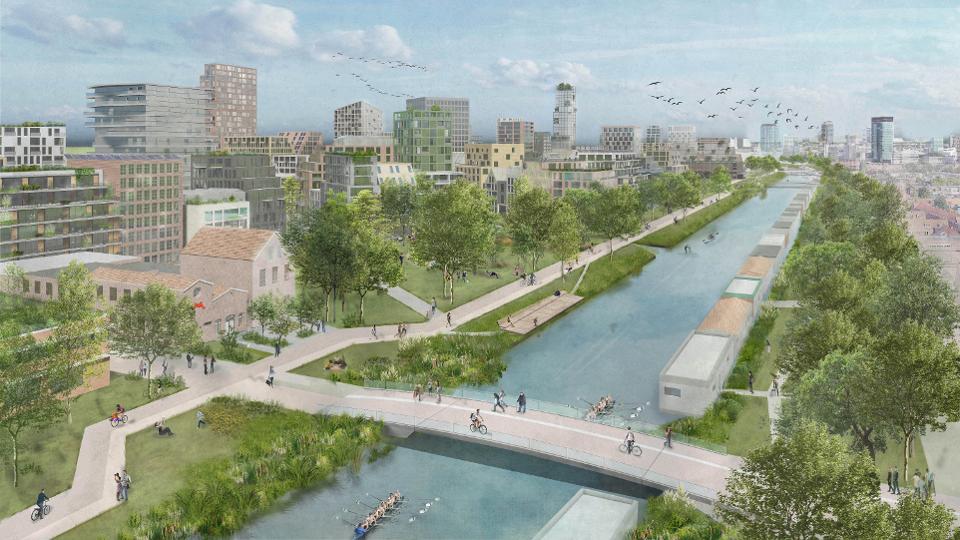
Well it seems like a lot of city-centres could be cleaning up their acts too post-corona.
After witnessing air pollution and traffic congestion drop dramatically during the lockdown, the city of Milan in Italy ‘is to introduce one of Europe’s most ambitious schemes reallocating street space from cars to cycling and walking, in response to the coronavirus crisis.’ The city has announced that 35km of city streets will ‘be transformed over the summer, with a rapid, experimental citywide expansion of cycling and walking space to protect residents as Covid-19 restrictions are lifted.’
It seems like we could be moving towards a world where even city centres have clean, healthy, breathable air.
This is a very encouraging example of how humans are already planning major, positive changes to our behaviour in response to the environmental truths the corona crisis has bestowed upon us.
And these changes aren’t just happening in Milan. The city of Utrecht in the Netherlands announced plans in January for a completely car-free neighbourhood at the centre of the city which will house 12,000 residents, and is to be constructed over the next couple of years.
Combine these examples with the many other cities around the world that are working to eliminate cars from their streets in different ways, and it seems like we could be moving towards a world where even city centres have clean, healthy, breathable air.
Now if you ask me, that sounds like something worth celebrating.
Airport Expansions are Being Denied
It has seemed for so long in this world that the financial bottom line always wins, but from these examples of community, people, and common sense triumphing over the money men, it could be that the old, ‘profit-over-all-else’ reality might well be starting to change.
Something else that’s always worth celebrating is a win for the little guy, and there have been plenty of those going around in the last few months when it comes to local residents and environmentalists campaigning against airport expansions in the UK!
London Heathrow, London Stansted, and Bristol airport in England have all had major expansion plans rejected since January because the environmental and societal impacts of these proposed expansions outweighed the economic benefits.
It really can’t be stated what a massive result this is for anyone who values human wellbeing and environmental health over relentless and unsustainable economic growth. It has seemed for so long in this world that the financial bottom line always wins, but from these examples of community, people, and common sense triumphing over the money men, it could be that the old, ‘profit-over-all-else’ reality might well be starting to change.
And if it’s examples of the little guy triumphing over the tyrant you’re looking for, what about a peach grower winning a huge lawsuit against an all-powerful multinational corporation?
Even Monsanto is Taking a Beating
Well that’s exactly what happened in the US back in February.

I don’t know if you’ve heard about Monsanto, the American agrochemical company acquired by German multinational pharmaceutical company Bayer in 2018, but it’s a pretty infamous name.
Monsanto has been ridiculed for years for producing harmful pesticides and herbicides, and it has recently been revealed through the release of internal documents that Monsanto was ‘aware for years that their plan to introduce a new agricultural seed and chemical system would probably lead to damage on many US farms.’
The documents also revealed how Monsanto ‘opposed some third-party product testing in order to curtail the generation of data that might have worried regulators,’ and that they downplayed risks ‘even while they planned how to profit off farmers who would buy Monsanto’s new seeds just to avoid damage.’
According to industry estimates, several million acres of crops in the US are thought to have been damaged by Monsanto’s dicamba-based herbicides.
Monsanto was ‘aware for years that their plan to introduce a new agricultural seed and chemical system would probably lead to damage on many US farms.’
So it was really great to see Missouri-based peach farmer Bill Bader taking Monsanto’s new owners Bayer to court earlier in the year, saying his ‘1000-acre orchard was irreparably harmed by herbicide that they produce,’ and winning the case.
Mr. Bader was granted ‘$15 million in actual and $250 million in punitive damages’ as a result of the court case, and herbicide providers Bayer and BASF will face ‘at least 140 similar cases’ in US courts later this year. (Or whenever the lockdown is over)
A truly massive win for the little guy, and hopefully a warning to big corporations in the future that they can’t just continue placing financial profits over everything else moving forward.
Scuba Divers are Planting Coral Reefs in Australia
Coral reefs are an essential component of underwater ecosystems, as they support biodiversity by providing habitats and shelter for marine animals.
Speaking of folks who reckon there are more important things in this world than just making money, without any paying customers during the pandemic, instructors working for Australian scuba diving tourism company Passions of Paradise have been using their free time to plant coral in the great barrier reef.
They have so far planted over 1,000 pieces of coral on Hastings reef near the city of Cairns in north-eastern Australia, and are working to bring as much life back to the reef as possible while the lockdown continues.

Coral reefs are an essential component of underwater ecosystems, as they support biodiversity by providing habitats and shelter for marine animals. Hopefully, with more efforts like this beyond the pandemic, we can work together to ensure that coral reefs stay healthy around the world for years to come.
Rival Gangs call a Truce in South Africa
This one is really quite astonishing.
Since social-distancing restrictions were implemented in South Africa, violent crime has gone down by roughly 75% across the country. But going a step further, in one of the most dangerous neighbourhoods in the country, two rival gangs have called a truce, and have actually started working together to help distribute essential goods throughout the community.
Some of the gang members involved have ‘expressed hope that this current ceasefire in gang violence could be permanent in the post-lockdown future,’ while a local pastor who works with some gang members in the community has stated that “what we’re seeing happen here is literally a miracle.”
Well if not an actual miracle, then certainly this is an incredible cause for hope. You would imagine that by working together, and becoming familiar with each other as humans, that these violent gang members might start to see the similarities in each other, and the common struggles that they all share. We are all human, after all.
And surely if it is possible for opposing gang members who have directly hated each other and murdered each other for years to put their differences aside, for the greater good of their community in a time of crisis, it might be possible for all of us, as a species, to put our differences aside and call a collective truce, in order to build a better world for everyone after this pandemic is over?
This beautiful truce in South Africa would suggest that it is possible for us to come together and love each other.
Surely if it is possible for opposing gang members who have directly hated each other and murdered each other for years to put their differences aside, for the greater good of their community in a time of crisis, it might be possible for all of us, as a species, to put our differences aside and call a collective truce, in order to build a better world for everyone after this pandemic is over?
If that is going to happen though, we will need to start being kind to each other, and as it turns out, there has been plenty of kindness going around during this pandemic.
There’s Been a Kindness Pandemic too
It has become very apparent in the past few weeks and months, that in times of shared crisis, human beings can be tremendously beautiful creatures.
This pandemic has really highlighted the human capacity for kindness, and there is no better example of this than the pure and distinguished selflessness and bravery being shown by front-line health professionals around the world.
From a small corner shop in Scotland spending £2000 to give away free protective equipment to vulnerable pensioners, to an anonymous donor giving every household in an IOWA town $150 in gift cards for food, to a San Francisco man serving free coffee from his window to essential workers, to an Irish hotel delivering free meals daily to elderly and vulnerable locals, to a 16-year-old pilot flying much needed medical supplies to rural hospitals in Virginia, to a Georgia bar owner removing nearly $4000 worth of bills stapled to the walls of her bar to give to employees, to a Youtube gamer helping to raise nearly $660,000 for Covid-19 relief efforts, to a Brooklyn landlord cancelling rent for hundreds of tenants because he ‘didn’t want residents to stress about payment’ during the pandemic, to people across the US stocking ‘little free libraries’ with food and toilet paper to help their neighbours, to Sikh volunteers in Australia sending over 1.5 tonnes of free food to people struggling during the lockdown, to people in Italy using ‘suspended shopping’ to pay-it-forward and anonymously help pay towards groceries for people in need, to even multi-billionaires showing real generosity with Twitter CEO Jack Dorsey donating $1 Billion, about 28% of his wealth, to Covid-19 relief efforts, it is clear that the coronavirus pandemic has also released a kindness pandemic across the world.
There are so many people being kind to each other and helping each other as best they can during this crisis. If the examples above aren’t enough for you then there are plenty more here, here and here’s some more and there are countless other examples out there if you look for them.
This pandemic has really highlighted the human capacity for kindness, and there is no better example of this than the pure and distinguished selflessness and bravery being shown by front-line health professionals around the world.
Thankfully, regular people around the world are also being kind enough to show their love and appreciation for these real-life superheroes.
Essential Workers are Finally Being Appreciated
These people deserve our utmost respect, and finally, that seems to be happening on a widespread scale. But they also deserve to be able to do their important jobs in the comfort that they are financially stable, and that their working conditions will always be maintained at an acceptable level.
I can’t imagine what it’s like to be on the front lines of this war our species is currently fighting. All I’m doing is sitting at home being useless.
But there are incredible super-humans out there risking their lives, their health, and I’m sure their sanity every day to help keep us all safe, and save as many lives as they possibly can.
The thing is though, they have been doing this long before this pandemic started, and they will be doing it long after it finishes. These people make so many sacrifices, and dedicate their lives to maintaining the health and wellbeing of their fellow humans.
More so than actors, musicians, athletes, celebrities, and all the kinds of ‘famous’ people we tend to idolise in this world, it is the healthcare workers, the firefighters, the teachers, the honest police officers, the delivery people, the folks working the bin lorries, the shop workers; the people who keep our society actually functioning that we should be praising and idolizing.
There have been many beautiful examples around the world of police officers showing their appreciation for healthcare workers, New York residents applauding healthcare workers from their windows, people in Spain and Italy doing the same, and many other examples too, and this really is a beautiful thing to witness. The people who do the most important jobs in our society, starting to receive some of the credit they deserve.
But we must not forget, in non-crisis times, the reality is that essential workers are rarely ever given the financial or social compensation they deserve, and this is something that must change once the pandemic is over.
These people deserve our utmost respect, and finally, that seems to be happening on a widespread scale. But they also deserve to be able to do their important jobs in the comfort that they are financially stable, and that their working conditions will always be maintained at an acceptable level.
Hopefully, once the pandemic is over, we will realise how much we owe these wonderful people, and this will start to become the new reality.
We Have Been Given a Chance to Change our Ways

We will get to go outside again. We will get to hug and embrace each other again.
There are plenty of incredible minds working on vaccines around the world as we speak, and some reports have suggested that a vaccine could be available for limited use by the end of the year. Human trials have already begun.
Of course, things will not be exactly as they were before when ‘normal’ life does finally resume. People are suffering all over the world, and it’s hard to tell what the world will really look like when all this is over.
People will have lost loved ones, lost businesses, lost jobs. The global economy will take a huge hit. There is nothing but uncertainty ahead of us.
But with uncertainty, comes opportunity. It’s hard to argue that we were heading in a generally prosperous direction before this pandemic began, so maybe we should try our best to see all of this as an opportunity to reset. Reset as individuals, and as a collective.
In a world torn to shreds by cultural and political division, war, environmental destruction and financial inequality, this coronavirus crisis which has affected us all, has the potential to become the great equaliser.
The coronavirus lockdown has shown us that by changing our ways it is possible for us to work together, with nature, and with each other, to create a cleaner, healthier, better world for all.
In a world torn to shreds by cultural and political division, war, environmental destruction and financial inequality, this coronavirus crisis which has affected us all, has the potential to become the great equaliser.
If we all allow it to be. Surely, if anything, that is at least, a cause for hope.
Places to Donate and Contribute
If you’re interested in donating financially to the fight against Covid-19, or to people in need during the coronavirus crisis, here are some useful links:
A place to buy groovy posters where all the proceeds go to women and children in need.
A Forbes list of ways you can donate to people during the Corona crisis.
A collection of non-profits and companies helping to fight the pandemic.
Donate to World Health Organisation efforts.
A list of charities who are offering relief during the pandemic.
Thank you, and goodness love bless you all. ❤
About the Author
Adam Millett is a freelance writer for hire who specialises in sustainability and environmental issues. He believes the economy should be circular, businesses should make the world a better place, and that effective content is the best way to spread the word about sustainability. Visit his website at wordchameleon.com if you want to bring your vision of sustainability to life.

What Does It Even Mean Anymore?
‘Sustainability’ is becoming nothing more than a nonsense marketing term.
Sometimes I feel like the word ‘sustainability’ has been shoved in our faces so much lately that it’s beginning to lose all sense of real meaning. Sustainability this and sustainability that. ‘Sustainability’ is becoming nothing more than a nonsense marketing term. Nike or H&M or Procter & Gamble or Coca Cola has just launched a new ‘sustainability range’, so no need to worry; the planet is saved.
Coca Cola has recently started making a very small number of its plastic bottles from recycled ocean plastic. Not entirely from recycled ocean plastic mind you, only 25% of each of these ‘sustainable’ plastic bottles is comprised of recycled ocean plastic, the rest is just brand spanking new indestructible regular plastic. So basically, in the name of ‘sustainability’, Coca Cola has committed to taking a very small amount of plastic out of the oceans, only to turn it back into plastic bottles, and likely send a lot of it hurtling right back into the oceans.
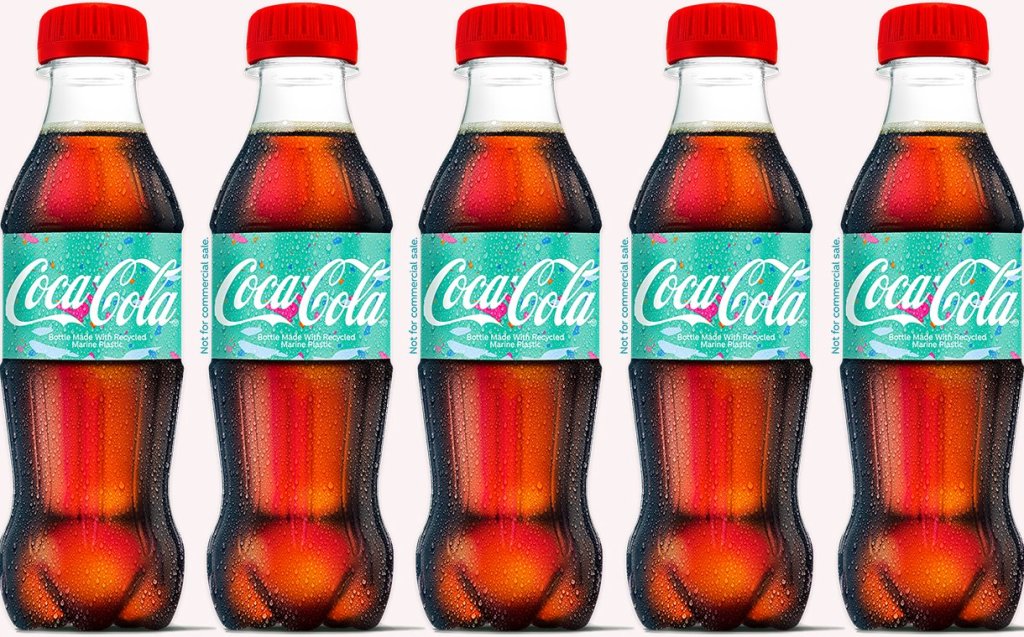
Sounds very sustainable to me. I’m sure all the turtles and sea horses and whales and fish will be delighted to hear that the ‘recycled plastic’ soon to be choking them to death was once taken out of the oceans to be swiftly turned back into brand new marine-life murdering weapons designed to wreak havoc on their unsuspecting stomachs and throats.
Making more plastic bottles out of ‘ocean plastic’ can never be the answer while the global recycling system remains dysfunctional and roughly 91% of plastic never gets recycled. Until Coca Cola start taking full responsibility for ensuring their plastic doesn’t end up as waste, by significantly investing in worldwide recycling infrastructure and offering financial incentives for people to recycle their products, and not just printing ‘please recycle me’ labels on their bottle caps and shifting responsibility to consumers, the majority of their bottles, made from ‘recycled plastic’ or not, will continue to end up in our oceans and rivers and landfills.
Making more plastic bottles out of ‘ocean plastic’ can never be the answer while the global recycling system remains dysfunctional and roughly 91% of plastic never gets recycled.
Coca Cola is currently the world’s biggest plastic polluter, and is likely to remain so even with their recycled bottles and please recycle me labels. But hey, at least they’re committed to ‘sustainability’ right? Left.
With such monstrous groups of simple-headed money-grabbing idiots like the people who run Coca Cola constantly running the word ‘sustainability’ through the greenwashed muck, it can be hard to remember what the word actually means. To help me remember the true meaning of the word, I only had to look as far as my Dad.
A Real-Life Beacon of Sustainability
Dad has always said that ‘there’s a right way and a wrong way of doing everything, so you may as well do it the right way’. He is an absolute master at fixing anything, and has always tried to fix things as many times as possible before buying new. He actually has a little corner in our utility where we can all leave anything that’s broken and magically, a few hours later, it will be fixed.
For Dad, the true meaning of sustainability is about valuing what we’ve got, making things last as long as possible, treating everything with care and consideration, and keeping everything in moderation by only ever using what we need.
Dad recently bought a new lawnmower. The old lawnmower was 35 years old, and had been fixed so many times it had a pink umbrella handle as the throttle trigger. The word sustainability can be defined as ‘the ability to be maintained at a certain rate or level.’ (I’m assuming that rate or level is never supposed to include millions of tonnes of plastic waste in our oceans!) And more than anyone I know, Dad certainly has the ability to maintain things. He’s a harsh critic of the modern ‘throwaway society’, and the more I think about it, the more I realise; Dad is a true living beacon of sustainability.

If Dad was CEO of Coca Cola, he would probably shut them down, and use all their money to run ‘how to do things the right way’ workshops around the world so we could all learn a thing or two about genuine sustainability. For Dad, the true meaning of sustainability is about valuing what we’ve got, making things last as long as possible, treating everything with care and consideration, and keeping everything in moderation by only ever using what we need.
Now imagine if the Coca Colas of our world started adopting that kind of attitude towards sustainability? The difference would be astounding. But since there’s very little we can do to stop the Coca Colas of the world besides boycotting their products, here are some of Dad’s best tips for making a difference at home, adopting true sustainability, and maybe even saving a little cash along the way:
Saving Money by Adopting True Sustainability at Home
1. Be Efficient With Your Heating/Air Conditioning
If you’re going to be spending the entire evening in the living room, then there’s no need to have the heating on in the halls, kitchen and bedroom all evening as well.
There is a lot of energy, and a lot of money to be saved by using your heating or air conditioning sparingly. Instead of blasting it on full whack throughout your entire home at all times, it might make more sense to only use your heating/air-con in the rooms you’re currently occupying. If you’re going to be spending the entire evening in the living room, then there’s no need to have the heating on in the halls, kitchen and bedroom all evening as well.
Keep the heating/air-con on in whatever room you’re in while you’re there, turn it off when you leave, and maybe flick it on in the bedrooms for an hour before you go to bed or something like that. And obviously turn all heating/air-con off whenever you leave the house. This will save a massive amount of unnecessary energy being used, and will also save you bucket loads of cash on your bills.
There’s also a lot to be said for wearing less/more clothes if your home is a little too hot or too cold, and forgoing the heating/air-con altogether. Nothing like wearing two jackets and a scarf while watching TV to save the planet right? I’m not entirely joking.
2. Unplug ‘Phantom Devices’
When the family is home for Christmas, or New Years, or just for the weekend, Dad tends to go around the house most evenings before he goes to bed to check that we’ve all plugged out whatever devices we were using, and for good reason too!
Even when you turn off most electronic devices in your house, they will still consume energy while plugged in. It’s been suggested that roughly 10% of your electricity bill could be coming from these ‘phantom devices.’ Toasters, kettles, laptop chargers, Playstations, televisions, lamps. Even when you switch them off, if they’re still plugged in these devices are sucking up energy and costing you money, so what can you do about it?
Even when you turn off most electronic devices in your house, they will still consume energy while plugged in. It’s been suggested that roughly 10% of your electricity bill could be coming from these ‘phantom devices.’
Well it’s quite simple really; unplug these things when you’re not using them. For any devices that are difficult to unplug, or that might return to factory settings or something like that after being unplugged, you can plug them into a ‘power bar’, which are usually quite cheap and can be used to stop the flow of electricity to your devices at designated time periods. This will ensure that your devices are costing you, and the planet absolutely nothing while they’re not being used.
Another thing to consider; does anyone really need Wi-Fi while they’re asleep? Unplugging your Wi-Fi modem before you go to sleep is another way to save a little extra energy and cash.
3. Lights Off!
This is quite an obvious one, but can still be easy to forget. When you leave a room, turn off the lights, and there’s also no need to use a ceiling light and a lamp in the same room at the same time. Use only the lights you need, when you need them, and the planet will thank you.

Your bank balance will thank you too, as some research has suggested that in the UK alone, £4.4 Billion is wasted every year just from people leaving lights on at home when they’re not needed. This equates to over £800 per person, and is the equivalent in emissions to taking over 60 flights around the world. Madness!
So maybe stop worrying about flights, and just turn off the lights? Ok probably best to worry about flights as well, but, you know what I mean.
4. Wash Your Clothes Economically
Your washing machine will use roughly the same amount of energy and water no matter how full it is, so best to put that energy to maximum use and wash as many clothes as you can at a time.
When it comes to washing your clothes, assuming you’re using a washing machine, there is energy, money, and water to be saved by washing full loads instead of just a few garments at a time. (You could also try washing by hand if you really wanted to save energy)
Your washing machine will use roughly the same amount of energy and water no matter how full it is, so best to put that energy to maximum use and wash as many clothes as you can at a time. Washing on a lower temperature is also advised, as this uses less energy as well. 30 or even 20 degrees should be ideal for any clothes that aren’t caked in dirt.
Reports on sustainable clothing, as well as unofficial reports from my Dad, have also put forward the idea of ‘only washing when necessary,’ instead of after every wear. People have a tendency to think that once they’ve worn something once, even if it’s not particularly smelly or dirty after use, that they just have to wash it. I know from my own experience that sometimes after wearing a t-shirt or a shirt for half a day or so it still seems perfectly clean, so I don’t wash it, and I wear it again the next day. Now you might think that’s a smelly thing to do, but you’re wrong, it’s a trendy thing to do. It’s the new vogue baby!
For many garments it’s possible to air them to freshen them up instead of washing them straight away. Stick them out on the line outside or on your drying rack/clothes horse for a few hours and they’ll be as fresh as new without any need for a wash.
And speaking of the washing line/drying rack/clothes horse, these are far more economical ways to dry your clothes once they have been washed, instead of using a dryer, which burns through a tremendously ridiculous amount of energy.
Best to let the wind do the work if possible.
5. Use as Little Water as Possible
A lot of us might think of water as an infinite resource. We think about the water cycle, and decide that we can use as much water as we want because it will return to us as rain for us to use it again. It does come out of the taps after all!
According to National Geographic, ‘By 2025, an estimated 1.8 billion people will live in areas plagued by water scarcity, with two-thirds of the world’s population living in water-stressed regions as a result of use, growth, and climate change.’
And it’s true, there is roughly as much freshwater on earth currently as there always has been; but our population has exploded, and is growing exponentially. Water is becoming scarce. According to National Geographic, ‘By 2025, an estimated 1.8 billion people will live in areas plagued by water scarcity, with two-thirds of the world’s population living in water-stressed regions as a result of use, growth, and climate change.’
The problem with relying on the water cycle is that the water which returns as rainfall might fall in a place where it is difficult to abstract, might fall in the ocean making it unusable for drinking, and will usually need to be treated and filtered to become drinkable again, which requires a lot of energy, and therefore tax money. A lot of energy is also used for pumping water from central facilities to our houses, so basically, using as little water as possible is very important, and will only become more important as the climate crisis becomes more prevalent.
There is also the added incentive of saving money on your water bills by using less water. So turn off the tap while you’re brushing your teeth, take short showers, put down the super soakers when the sun comes out, and generally start treating water like the increasingly precious resource that it is!
6. Use Old Toothbrushes for Cleaning Stuff
It’s always better to fix something, or find another use for it than throw it away, and toothbrushes are a great example of this.
Whether you use bamboo toothbrushes or plastic ones, once you’re done with them, they make very effective little cleaning brushes and are great for getting into hard to reach spaces like tile grouting or the spokes on a bike. They’re also very useful for cleaning your football boots, as Dad was so keen to show me when I was a youngster.
I wasn’t much good at actually playing football, but hey, at least my boots looked good!
7. Make a List Before You Go Grocery Shopping
When we throw away food, it’s not just the food we’re throwing away. We’re throwing away all the energy, all the resources, all the emissions, and all the effort that went into growing, preparing, packaging and transporting that food, so it couldn’t be more important that we only buy what food we need, and that we use all the food that we buy.
I used to always go shopping and just buy what I fancied, or buy what I thought I needed. I was a crazy young spontaneous lunatic and lists were for chumps! But often I would get home and put the peppers in the fridge, only to find that I already had peppers in the fridge. This would inevitably lead to peppers being wasted, as well as money. (This didn’t just happen with peppers!)
Recently though, following Dad’s advice, I’ve been checking what I already have before I go shopping, and making a list of what I need. It’s actually quite shocking what a difference this can make. I end up buying less, saving money, eating the same, and far less food ends up being thrown out.
Another nice idea here is to get some whiteboard markers or post-it notes and actually write on the front of the fridge which items are going out of date, and therefore which ones need to be used first. This cuts down on food waste, and makes choosing what to have for dinner a whole lot easier. Just find whatever items are doing out of date, and there’s your recipe!
Culinary innovation at its finest.

8. Keep Food Fresh by Putting Clothes Pegs on Open Food Packets
Cookies, crisps, bread, snacks. You eat half the packet, leave it sitting out and uncovered, and you come to it the next day and it’s gone from delicious to disgusting. Such a tragic but avoidable shame. See there’s a very simple solution to this problem; clothes pegs!
By using clothes pegs to stop air from entering open packets, the food stays fresh much longer. Another way to reduce food waste and save money by making your food last.
9. Cover Uneaten Food with Plates Instead of Cling Film
Like everything in this world, cling film costs money. It might not be the most expensive thing, but it all adds up, and cling film is also a form of plastic so the less of it we can use, the better.
So if you’ve already munched down half your big bowl of pasta with nearly expiring tomatoes and peppers that should have been used yesterday, and you’re putting the rest in the fridge for tomorrow (or 2 hours time if you’re like me), try putting a plate over it instead of using cling film. The plate will keep the food fresh, and you’ll save money and reduce plastic pollution by not using any unnecessary cling film.
10. Make the Most of Your Leftovers
Dad often says something along the lines of ‘take as much as you want, but eat whatever you take,’ which makes a lot of sense. But if you do have some food left over after your meal, throwing it out is the very last thing you should do. You can always use it for something.
Have it for lunch the next day, have it as a midnight snack, feed it to your dog, or you can even turn many of your leftovers into completely new dishes just by adding a few extra ingredients. Here’s an incredible and completely free cookbook for turning your leftovers into new dishes, and there are also many great cookbooks you can buy which are dedicated specifically to leftover recipes.
If you do have some food left over after your meal, throwing it out is the very last thing you should do. You can always use it for something.
When we throw away food, it’s not just the food we’re throwing away. We’re throwing away all the energy, all the resources, all the emissions, and all the effort that went into growing, preparing, packaging and transporting that food, so it couldn’t be more important that we only buy what food we need, and that we use all the food that we buy.
11. Squash Down Your Bins (And Recycle)
A turtle has less chance of getting its head trapped in a squashed bottle!
Sometimes, a bin might look like it’s full, but it’s not full! There is always some extra space in there if you squash it down a little. I’ve often seen Dad actually standing in the big bin outside to squash down the contents, and it really does work. You can usually fit at least twice as much into a bin if you squash down your rubbish, and individually squashing each bottle and tin makes a big difference too.
By squashing your rubbish down and making it as small as possible, you can fit more into each bin bag. This saves money on bin bags, means that fewer bin bags need to be produced, and also ensures that if your trash does somehow end up in a landfill or the ocean (because as we discussed, recycling doesn’t always work like you think it will), animals are less likely to get caught in it.
A turtle has less chance of getting its head trapped in a squashed bottle! (Obviously it’s better to avoid plastic bottles altogether, but it can be difficult to do this 100% of the time, so when you do have plastic rubbish, it’s best to squash it.)
12. ‘Empty’ Containers are not Always Empty!
When things like toothpaste or tomato ketchup are ’empty’, you can cut the end off the containers with a pair of scissors and scoop out the product at the bottom. Often there is still some left. When things like shampoo or soap are nearly empty, adding just a little water can help you get a few extra uses from these products. Honestly sometimes I’ve put a little water in the bottom of a shampoo bottle and it’s lasted another week! And I have a lot of hair as well!
These might seem like small savings, but they all add up. Financially, and environmentally. If 100 Million people were to save one shampoo bottle a year by doing this, that’s 100 Million fewer empty shampoo bottles left clogging up the planet!
And speaking of clogging up the planet……..
13. Boycott Coca Cola

Okay so this one’s a bit of a bonus tip to fit in with the overall theme of the article, but it still makes sense. The fewer products we purchase from reckless, negligent, planet-destroying brands like Coca Cola, the more sustainable our home lives will be.
Avoiding things like Coca Cola will also do wonders for our personal health, and the health of our wallets.
Don’t Stand There With the Fridge Door Open
So there you go.
Inspired by my Dad’s natural and consistent ability to embrace true sustainability in his everyday life, to value what he has, to make things last as long as possible, to treat everything with care and consideration, and to fix just about anything, I leave you with these nuggets of knowledge. I hope they’re as useful for you as they have been for me.
And I’ve probably left loads of stuff out so if you think of any other good tips like these please do let me know in the comments.
Goodness bless you all, may true sustainability be the future, and may Coca Cola be the past.
And as Dad always says, ‘don’t stand there with the fridge door open.’
About the Author

Adam Millett is a freelance writer for hire who specialises in sustainability and environmental issues. He believes the economy should be circular, businesses should make the world a better place, and that effective content is the best way to spread the word about sustainability. Visit his website at wordchameleon.com if you want to bring your vision of sustainability to life.
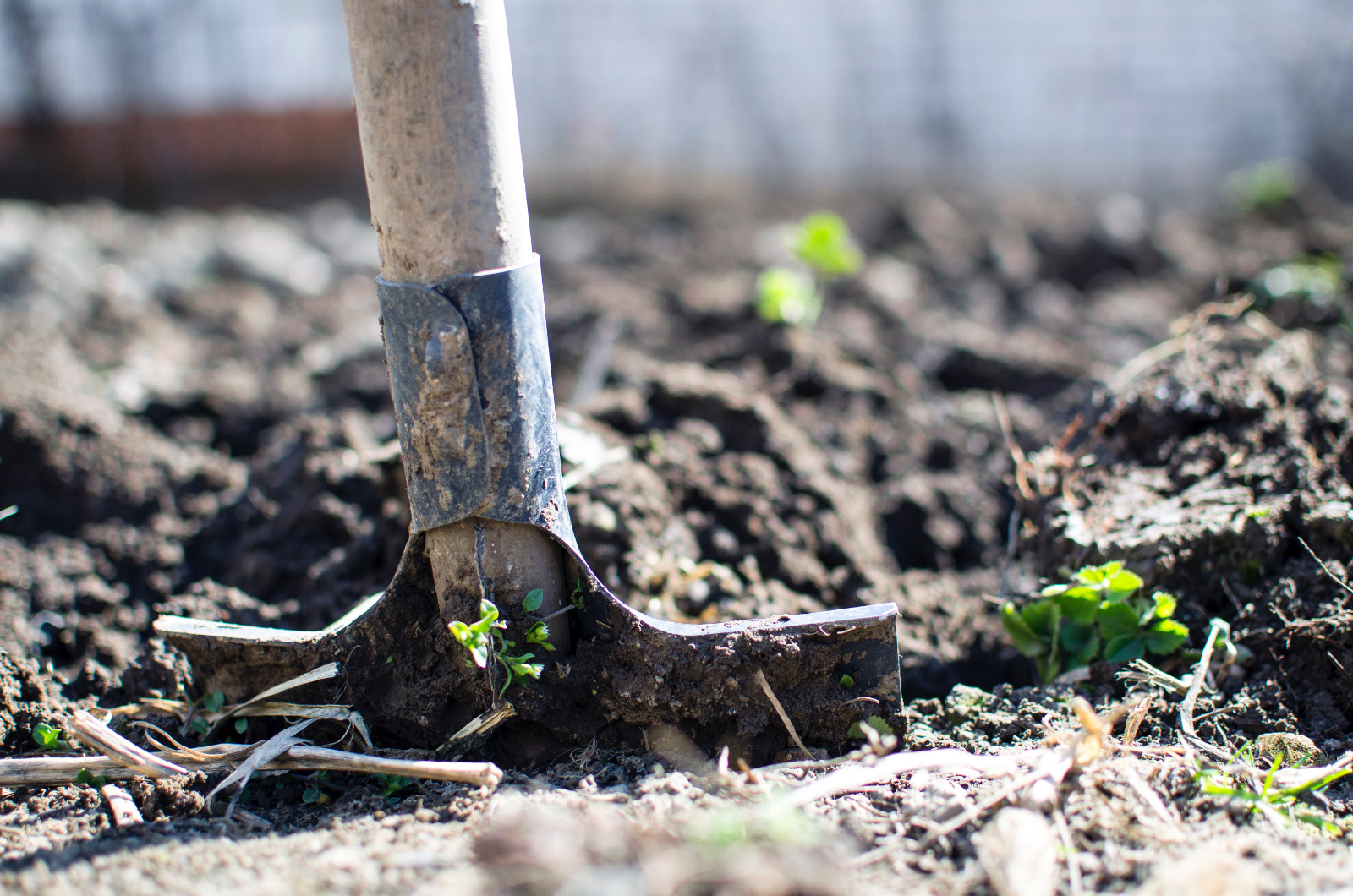
I was inspired to write this article after seeing a video about the incredible work Justdiggit is doing to help re-green the planet. Speaking in that video was Wessel van Eeden, the Global Marketing Director of Justdiggit, so I reached out to him and he enthusiastically suggested that we should have a call.
After talking for some time about the state of our planet, the good things, the bad things, and how we can fix it, I could tell that Wessel has a very genuine passion for the great work Justdiggit is doing.
This article is based on what I learned from our call, with a great deal of other research involved as well! It’s important to state that Justdiggit is not paying me to write this article, I just think they’re a genuinely brilliant, planet-improving, inspirational organisation that deserves a place on A Wall of Hope.
All views are entirely my own, and all facts are entirely the facts! But that’s enough of my rumbling and rambling; it’s time to start digging!
Digging Ourselves out of a Hole
We’re in a bit of a hole aren’t we? I mean we’re not literally in a hole, unless the entire universe is some sort of bottomless black hole or something like that, but metaphorically, we’re in a hole. A great big climate crisis shaped hole.
Our planet is getting hotter by the second, our deserts are expanding, crops are failing, millions of people may soon have to leave their homes due to extreme weather conditions. At times the situation can seem quite hopeless, but you know what? There is plenty of hope. There are so many effective solutions out there, and some of the best ones come straight from nature.
The name ‘Justdiggit’ comes from the work they do in Kenya, where they work with locals to dig crescent-shaped holes or ‘bunds’ in the ground to help the soil absorb more rainwater and gain fertility. It’s pretty crazy really; just by digging holes in the ground we can bring a huge area of supposedly barren land completely back to life.
By cleverly utilising things like rainwater and natural vegetation we can cool down the planet, bring barren land back to life, and rejuvenate impoverished communities in the process. One Amsterdam based organisation doing this right now is Justdiggit, and the work they’re doing is truly inspirational.
Justdiggit works in areas with severely degraded land to bring the land back to life. They use a grassroots approach, working with local communities and empowering them to take ownership of the land regeneration projects and carry them forward. The techniques they use are simple but effective, and are strategically designed to not only improve the health of the land, but to cool down the regional climate as well. This has major benefits for the environment and biodiversity, as well as the economic and social wellbeing of the local communities.
The name ‘Justdiggit’ comes from the work they do in Kenya, where they work with locals to dig crescent-shaped holes or ‘bunds’ in the ground to help the soil absorb more rainwater and gain fertility. You can see from the image below how effective this simple technique has been for regenerating the land.

It’s pretty crazy really; just by digging holes in the ground we can bring a huge area of supposedly barren land completely back to life.
So maybe all we have to do to get out of this climate crisis shaped hole we’re in is just, well, dig? As you’ll see in this article, it’s not always as simple as that, but Justdiggit is very good at finding suitable solutions no matter what the situation. All in all, this Justdiggit bunch are some pretty wonderful folks, but where the heck did they come from?
Justdiggit: Founded through a Shared Optimism
Justdiggit was founded to show the world that we do have practical solutions to our greatest problems.
The Justdiggit story began in 2009 when Dennis Karpes, social entrepreneur and co-founder of the international youth-empowering initiative Dance4Life, met the late Peter Westerveld, founder of the Westerveld Conservation Trust, and a man who dedicated his life to fighting the effects of climate change and desertification.
When Peter showed Dennis the positive results of his own landscape restoration projects, a shared shovel of hope and optimism was lifted, and Justdiggit was founded to show the world that we do have practical solutions to our greatest problems.
Since then Jusdiggit has thrived. With a core team based in Amsterdam, they work with small local teams, local and international partners, and dedicated volunteers to create a major impact wherever they work.
So far they have focused their efforts in Kenya and Tanzania, where they have managed to breathe (or dig) life into lifeless land, invigorate local communities, and foster a growing local knowledge of suitable land management techniques that will remain for year and years to come.
Pretty incredible, awe-inspiring, hope-renewing, land-resurrecting, optimism-injecting, jaw-droppingly encouraging stuff! But how exactly do they do it?

How is Justdiggit Helping to Reverse Climate Change?
Justdiggit is in the business of solving problems, and right now they’re working to solve possibly the biggest problem of all; climate change. They’re doing this by going to areas where the land has dried up, and bringing the land back to life.
On a large enough scale the increase in vegetation that results from doing this will stimulate more rainfall, lower regional temperatures, reduce drought and reverse desertification, and eventually, begin to cool down the entire planet! Here’s a rundown of how they do it.
The Problem – Wasted Rain!
The rain comes and goes but the land can’t manage to take a drink!
In most areas with degraded land there is rain, usually concentrated in a few heavy downpour events, but the hard top layer of dried out soil causes most of the water to flow away. The heavy rain is unable to penetrate the surface of the land, and instead washes away the top layer of fertile soil, causing erosion, loss of soil fertility, and flooding downstream.
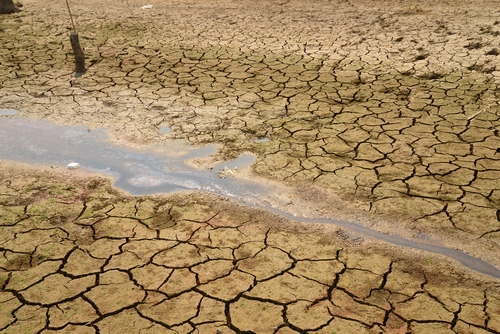
So the rain comes and goes but the land can’t manage to take a drink! Just imagine being really really thirsty, lying on a bench in 40˚c heat, with a big (reusable) bottle of fresh, cold delicious water next to you, but being too dehydrated to open your mouth and take a drink. Now that’s what it’s like for this degraded land. The bottle of water is there, but the land can’t take a drink.
Luckily, Justdiggit knows how to help.
The Solution – Working with Nature
By using natural rainwater harvesting, soil conservation and re-greening techniques, Justdiggit is able to improve soil conditions and bring back vegetation to degraded landscapes. The specific way they do this depends on the area they’re working in, discussed below, but here’s a generalised run through of how they bring the land back to life!
- Natural techniques suitable for the local area are used so the land can retain rainwater. This prevents erosion, and allows vegetation to grow.
- The increase in vegetation is complemented with the planting of trees, and improved agriculture and agroforestry. This attracts all sorts of wonderful creatures to the area, and so, biodiversity increases.
- As the plants and trees grow they bring more moisture to the air, which helps to create clouds and therefore, more rain.
- Renewed root systems in the ground make the soil more porous, so the rain can infiltrate more easily. This causes vegetation to spread.
- As the vegetation spreads, the whole cycle of land restoration continues. Soil quality in the wider area improves, which brings more vegetation, which brings more rain, which brings more vegetation, and suddenly the whole area is thriving with life. A beautiful, natural, sustainable cycle of habitat restoration, all brought about through a few simple interventions. Tremendous.
- By doing this on a large enough scale Justdiggit creates what they call ‘hydrologic corridors’, which are large scale areas of restored land. Implemented in strategically chosen locations, these corridors can impact (and cool down) the regional climate. Now that’s pretty damn cool if you ask me! Literally.
As the vegetation spreads, the whole cycle of land restoration continues. Soil quality in the wider area improves, which brings more vegetation, which brings more rain, which brings more vegetation, and suddenly the whole area is thriving with life.
And what might happen if we cool down loads and loads of regional climates across the world? And not just cool them down temporarily, but alter them in a way that they become self-cooling? Hmmmmm. Maybe we can cool down the entire planet? Bingo! That’s ultimately what Justdiggit is aiming to do, and they’re doing a pretty good job so far.

But they’re not just bringing land back to life and cooling down the climate. Probably my favourite thing about what Justdiggit is doing is the way they work in partnership with local communities. They really listen to what people have to say, and that’s what makes the Justdiggit projects truly sustainable.
A Bottom-Up Approach: Working with the Locals
“If Justdiggit leaves now and don’t do anything, I can assure you that this is a concept that will be escalated further. It will be used further by the community because they believe in it, and it is within their thinking framework.”
“Justdiggit didn’t bring a solution, they came and asked what the problem was and intervened.” – Benson Leyian, general manager of the Amboseli Ecosystem Trust.
Mr. Leyian was speaking in one of Justdiggit’s documentaries (more on those later) about one of their projects in Kenya, and it sums up the grassroots approach that Justdiggit takes.
Before deciding which interventions to use in a particular area, Justdiggit works in close collaboration with local communities, and takes social conditions and land use into account as well as climate and soil conditions.
The aim is to create sustainable solutions that bring social and economic benefits to the communities as well as environmental ones. This ensures that the communities will embrace the interventions in the long-term.
Mr. Leyian continues – “If Justdiggit leaves now and don’t do anything, I can assure you that this is a concept that will be escalated further. It will be used further by the community because they believe in it, and it is within their thinking framework.”
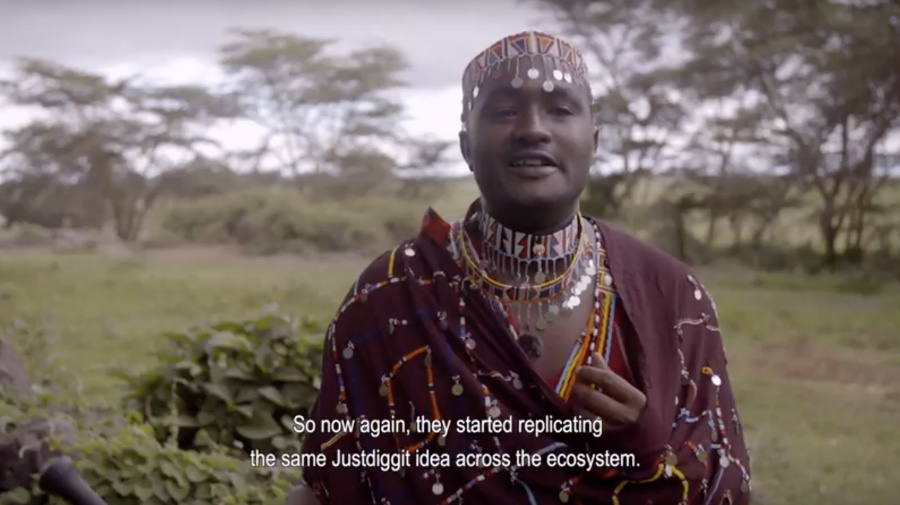
Now that sounds pretty sustainable to me! Justdiggit has even taken advantage of ancient local techniques in some of their interventions to bring locals on side, which is very interesting. Let’s have a look at some of the specific techniques they’re using in each of their project areas.
Justdiggit Projects in Kenya
By managing livestock and digging some holes in the ground, Justdiggit has already managed to regenerate thousands of hectares of beautiful Kenyan land.
At the Olgulului-Ololarashi group ranch in Kenya, home to a large community of Maasai pastoralists, the land has become severely degraded by drought and overgrazing. Together with the African Conservation Centre, the Amboseli Ecosystem Trust, and the local communities, Justdiggit has formed a programme to restore the degraded areas, and improve the livelihood of the local Maasai people. Here are some of the main techniques being used.
Grazing Management (Olopololi’s)
The use of Olopololi plots is an ancient grazing technique used by the Maasai people in the past. The technique involved fencing off areas of fresh grass, which were used as grazing sites for calves and weaker cattle that could not make the long nomadic journeys. (The Maasai people used to be nomads!) In the years since the Maasai people have settled in one spot, this technique was forgotten.
Bringing old traditions back to life to create a better future, Justdiggit has convinced the Maasai people that embracing this technique again can help them restore their degraded land. Olopololi plots have been created and marked with large white poles, and cattle grazing is only permitted in these areas during specific periods. Land restorations efforts are then implemented in these areas, with the lack of grazing giving vegetation the chance to regenerate.
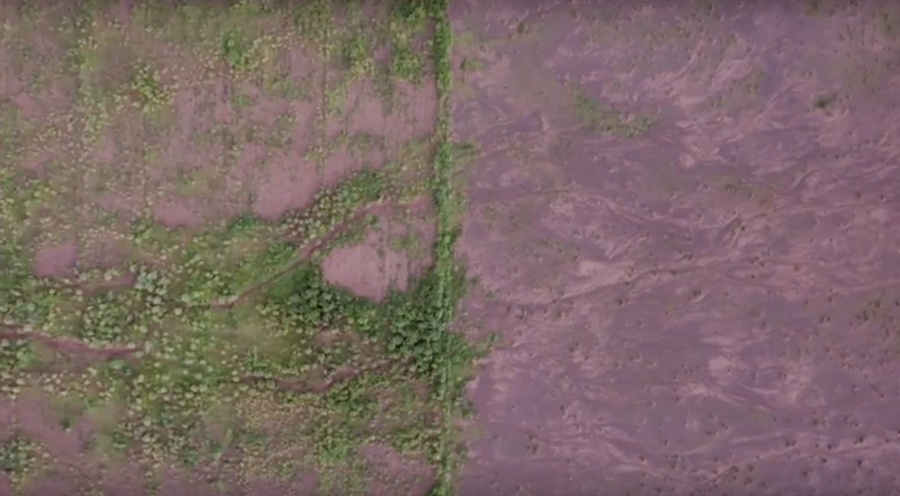
Through training and education, Justdiggit has also helped the locals set up grazing committees, so they can set up a grazing management plan together, and monitor the areas so the vegetation has a chance to grow back.
Water Bunds
To give the vegetation and even better chance of growing back, a series of half-moon shaped pits have been dug in the ground which capture rainwater and prevent loss of soil fertility and erosion. The increased soil moisture resulting from this allows vegetation to naturally recover.
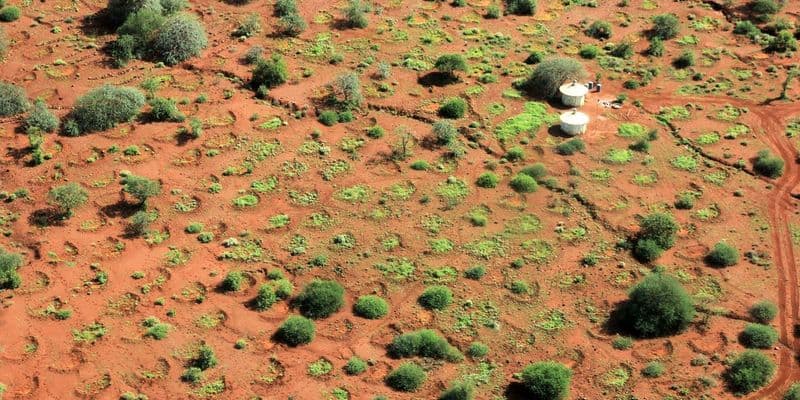
So amazingly, just by managing livestock and digging some holes in the ground, Justdiggit has already managed to regenerate thousands of hectares of beautiful Kenyan land. A wonderful achievement.
To learn about all the other techniques Justdiggit is using to bring Kenyan land back to life, you can go here! But what about Tanzania?
Justdiggit Projects in Tanzania
Below the earth’s surface, the root systems of many living tree stumps still reach the fertile part of the soil. In Tanzania, there are millions of these living tree stumps, and they all have the potential to re-grow into living trees. If they are managed properly!
In the Dodoma region of Tanzania local communities have survived for years in the face of increasing desertification, land degradation and climate change, but in some areas lately, it has become too extreme. In partnership with the LEAD Foundation, MetaMeta, and the local communities, Justdiggit has come up with a set of interventions to help the situation, and they’re quite different to the ones being used in Kenya! Here’s some of the main ones.
Farmer Managed Natural Regeneration (Kisiki Hai)
Below the earth’s surface, the root systems of many living tree stumps still reach the fertile part of the soil. In Tanzania, there are millions of these living tree stumps, and they all have the potential to re-grow into living trees. If they are managed properly!
Farmer Managed Natural Regeneration, known as ‘Kisiki Hai’ in Tanzania which means ‘living stump’, is a tree management technique originally developed in Niger. (With an incredible amount of success) It involves carefully managing these living tree stumps so they grow back into full-sized trees. Once they grow back, these trees help to prevent soil erosion and increase soil fertility, boosting the natural re-greening of the degraded landscape. They also provide food, fuel, and firewood for local communities.
Collaborating with the LEAD Foundation, Justdiggit is training locals to become ‘Kisiki Hai Champions.’ Once trained in the green arts of Kisiki Hai, these ‘facilitators’ then train other farmers about how to regrow trees on their farmlands, who in turn train even more farmers, creating a beautiful green wave where knowledge spreads trees and trees spread life and the whole wider area becomes a more fertile place as a result. What a beautiful way to regreen the land.
Fanya Juu and Fanya Chini
After mastering Kisiki Hai (I really love these Tanzanian words) farmers can learn about other methods such as Fanya Juu and Fanya Chini. These techniques involve digging different shaped contours on the farm to maximise the effectiveness of the rainwater. You can learn the details of these methods here.
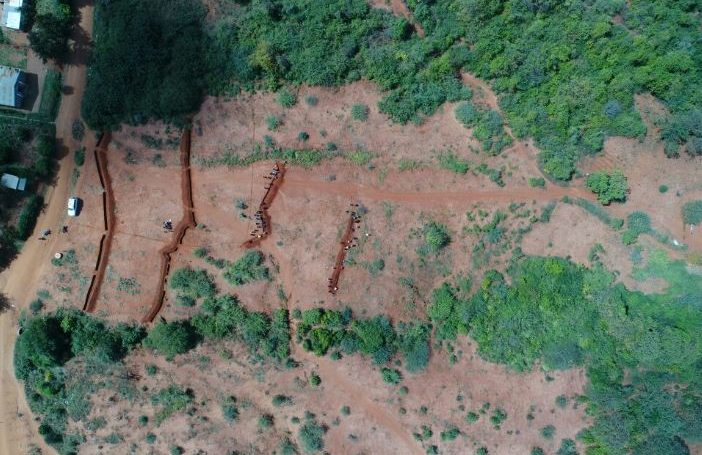
And speaking of details, if you’d like to learn more about other land regeneration methods being used in Tanzania, you can do that here!
So that was just a little taste of what Justdiggit is doing in Kenya and Tanzania. I reckon it’s pretty groovy how they tailor their interventions to work with the land and also with the local communities. The idea is to create techniques that can be adapted and applied anywhere in the world, and by doing that we can begin to reverse the global issue of climate change.
I suppose that’s the obvious benefit of doing this; reversing climate change. But what are the other main benefits?
Justdiggit Projects: What are the Main Benefits?
The work Justdiggit is doing doesn’t just come from an obsession with the colour green. I mean obviously green is a beautiful colour, and I’m sure the folks at Justdiggit absolutely love green, and want to see as much of it as possible, everywhere! But there are plenty of real-life benefits that come from these projects, for those of us who happen to live on the land being restored, and for those of us who don’t.
Helping Local Communities Thrive
Well managed land restoration projects provide many economic and social benefits for the local communities involved. The projects create employment and increased income, which can lead to improved health and education in the area.
In this Justdiggit documentary a mother in Kenya talks about how money from the Justdiggit project has allowed her to take her children to school for the first time, and to feed them well. It’s hard to imagine a more significant, transformative social improvement within a community than the possibility of having healthier, better-educated children. A really incredible result!
Empowerment
And when the projects have been completed, the farmers retain the knowledge of how to manage the land. The restored land provides resources for the community like fruits, firewood, animal feed, and seeds etc. These resources can be used, traded and sold, ensuring the community remains financially independent moving forward, and continuing the trend of improved health and education.
When the projects have been completed, the farmers retain the knowledge of how to manage the land.
So much like the way regenerated land is empowered with the ability to increase rainfall and maintain its regenerated state, the rejuvenated local communities are empowered with the knowledge and resources to remain rejuvenated. Sustainability at it’s finest!
A Flourishing Local Climate
As we’ve already discussed, regenerating degraded land improves the health of the soil and brings back vegetation. Combined with the planting of trees this increases the moisture in the air, improves biodiversity, and increases rainfall in the area. The increased rainfall brings more vegetation, and eventually the whole process has a cooling effect on the regional climate. Basically, bring the land back to life, and soon, the whole area will thrive!
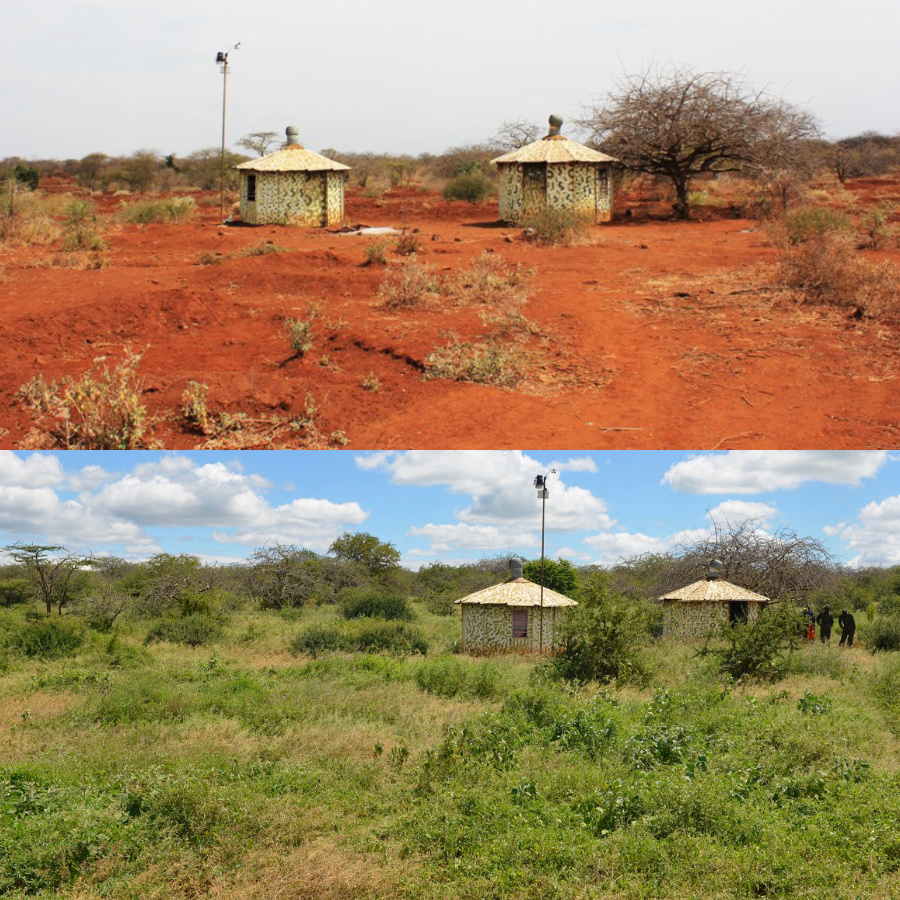
A Cooler Global Climate
Regenerate enough land around the world, cool down enough regional climates, and we might have a shot at cooling down the planet.
Now for all you folks sitting at home with your water on tap and your refrigerated food and your air conditioning, you may not worry too much about your luscious front lawn becoming a desert right now, but unfortunately, with a planet getting hotter by the day, that’s eventually the way it’s going.
Land regeneration projects like the ones Justdiggit is working on have the potential to stop that from happening. Regenerate enough land around the world, cool down enough regional climates, and we might have a shot at cooling down the planet. (And saving your luscious front lawn!) (You probably live in the city don’t you?) (Don’t we all?) (Sigh)
But to make it work, people have to know about the magic of land regeneration! Luckily, Justdiggit are pretty savvy with the communication side of things as well!
Education Should Never Stay in Your Pocket: Spreading the Word about Land Regeneration
“Education should never stay in your pocket, you have to share it with others.” – Mzee Agustino Sagalagwe, Kisiki Hai Champion Farmer from Lupeta village in Tanzania
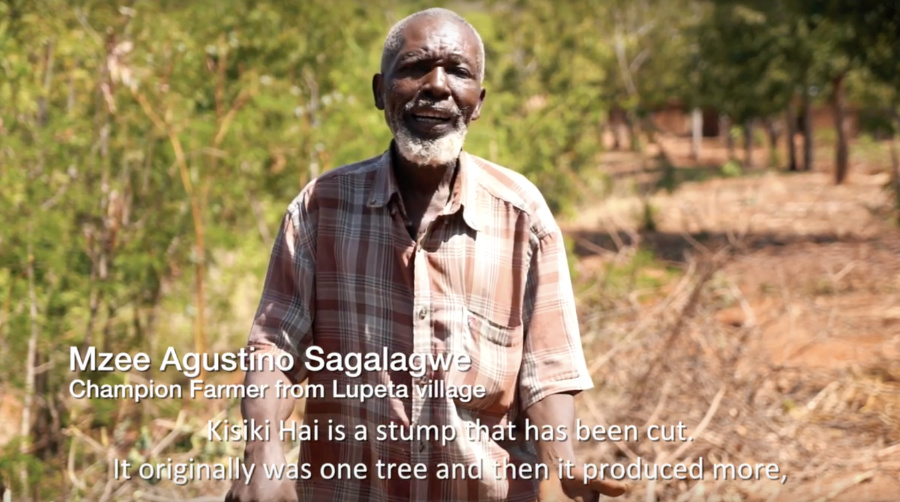
Another great quote from a Justdiggit documentary, Mr. Sagalagwe imparted this beautiful wisdom while teaching a young farmer about the Kisiki Hai technique, encouraging him to pass on the knowledge to others as well.
This spreading of knowledge to other farmers is absolutely essential if these techniques are to be a success, because if nobody knows about them, what use are they at all? It’s also important for people around the world to know about the potential of land regeneration for cooling down the planet, so they can show their support for these projects through donations and by volunteering.
Justdiggit seems to realise this need to spread the word, both to the farmers and to the wider world, and they’ve come up with some really innovative ways of doing it.
The Video Caravan
We’ve already discussed how Justdiggit is training local farmers, and encouraging them to pass on the knowledge to other farmers, and this word-of-mouth knowledge transfer is a great way to spread the word. But they go a step further with ‘The Video Caravan’, which uses the art of cinema to spread knowledge to local communities in Kenya and Tanzania.
By showing interviews with local farmers who have already had success using the land regeneration techniques, the documentaries offer convincing evidence to the folks watching that the techniques are worth implementing.
As I’ve mentioned a few times in this article already, Justdiggit makes some pretty nifty videos and documentaries about the work they’re doing. These documentaries are centred entirely around the local farmers and communities in Kenya and Tanzania, and they highlight the environmental issues facing these communities, and discuss potential solutions like the “Kisiki Hai’ technique.
Justdiggit then works with local partners to drive around to different villages in ‘The Video Caravan’, and play the documentaries for the locals in an outdoor cinema kind of set up. They tend to create a big carnival kind of atmosphere for these events with dancing and singing and dude’s on microphones to maximise the effect, and it definitely seems to get people interested!
By showing interviews with local farmers who have already had success using the land regeneration techniques, the documentaries offer convincing evidence to the folks watching that the techniques are worth implementing.
It’s a really nice, creative way to spread the word and convince local farmers to adopt the new techniques.
Justdiggit College
Educating future generations about the importance of things like land regeneration is vitally important. It might inspire so many young people to get involved in these projects from an early age, and that can only be a good thing for the future health of our planet! Justdiggit College aims to do just that.
The programme covers topics like soil, water, biodiversity, CO2, and Justdiggit, and can be adapted by teachers to suit their class’s needs.
Justdiggit College is an education programme that primary school teachers in the Netherlands can access for free and incorporate into their teaching curriculums. The programme covers topics like soil, water, biodiversity, CO2, and Justdiggit, and can be adapted by teachers to suit their class’s needs.
Spreading that open-source environmental knowledge far and wide to the bright minds of tomorrow! Very encouraging indeed.
The Raindance Project
What if we could use music to raise awareness about issues like land degradation and the power of re-greening projects to reverse climate change? Wouldn’t that just be extra beautiful? Music brings people together as they say.
Well that’s exactly what Jusdiggit is aiming to do with The Raindance Project. This is a series of worldwide musical events aimed at showcasing the potential of landscape restoration to the world. They have already held three simultaneous events in 2019, which took place in Kenya, Tanzania, and the Netherlands. The events were connected with a live satellite connection, to remind people that we are all in this together!

From 2020, similar simultaneous events will be held across more and more countries every two years, with the eventual aim of holding the events all around the world. This really is an absolutely astonishing initiative to get the word out there about the power of re-greening, and as the events become more widely known, so will the potential of landscape restoration.
The Raindance Project is a series of worldwide musical events aimed at showcasing the potential of landscape restoration to the world.
I see no reason whatsoever why all the most popular musicians in the world today shouldn’t drop their tools and offer to perform at these events for free. It makes so much sense! So if you happen to know any famous musicians, ring them right now and let them know, it’s time to make it rain!
Marketing Campaigns
Justdiggit also reaches millions of people every day with their super slick, always positive marketing campaigns on TV, cinema, radio, online and on billboards and stuff. I’m not going to go into detail on these because I’d be here all day! But they’re very entertaining, well thought out campaigns and you can check them out here if you’d like.
So clearly, Justdiggit knows a thing or two about spreading the good word, but they’re not the only ones! They’ve got plenty of planet-loving partners and ambassadors who share their mission for a greener world.
Justdiggit Partnerships
Justdiggit has loads of partners. Loads and loads of fantastic partners all around the planet who are all working to make the world a better place. If you want to learn more about all of them, you can find a list here! But for now, here’s a quick look at some of the main ones.
Timberland
Before I even knew about Justdiggit, I had heard the news that Timberland plans to plant 50 million trees around the world over the next five years, a fabulous initiative. It was only later I found out that 10 million of those trees will be in partnership with Justdiggit in Tanzania. And yes, you guessed it! Instead of planting new trees Justdiggit will work with Timberland and local farmers to restore existing tree stumps using the Kisiki Hai method. 10 million tree stumps! There’s just no getting away from the magic of Kisiki Hai it seems!
Timberland plans to plant 50 million trees around the world over the next five years
It also seems that Timberland is a genuine company that takes environmental sustainability very seriously, and it’s great to see such a big brand teaming up with planet-altering initiatives like Justdiggit.
Green Up to Cool Down
The Green up to Cool Down movement is a ‘moonshot endeavour to reverse climate change.’ The aim is to unite all the worlds largest NGOs, corporates, organisations, and key global stakeholders behind the common goal of using nature-based solutions to save our planet.
Great organisations like Concern Worldwide, Oxfam, Conservation International, and of course Justdiggit and many many more have already signed up, and hopefully it’s the start of something really special. If all these organisations are even half as committed to re-greening the planet as Justdiggit is, we’re in with a real shot.
UN Environment
The United Nations Environment Programme is the leading global environmental authority within the United Nations system. With the UN recently declaring 2021-2030 as the ‘decade of ecosystem restoration,’ it makes sense that they have partnered with Justdiggit. Together, Justdiggit and UN Environment will work to launch a ‘worldwide re-green revolution.’ Well, there’s only one thing I say to that; Viva La Revolución!
Together with all these wonderful partners, I reckon Justdiggit is going to be part of something big. Something really big. Something ‘save the whole wide wonderful world’ big!
The future looks bright. The future looks luscious. The future looks green! But what kind of success have they had so far?
Success so Far
So far, Justdiggit has focused efforts in Kenya and Tanzania, and they have made plenty of progress in both locations!
In Kenya:
- 123,130 bunds (crescent shaped holes in the ground that facilitate absorption of rainwater) have already been dug, re-greening over 2000 hectares of land in total. As you can see from the image below, the lasting regeneration of the local habitat is quite astonishing.
In Tanzania:
- 5,143 bunds have been dug.
- 145,339 farmers were practicing Kisiki Hai in 2019.
- 279,188 farmers were trained by champion farmers in 2019.
- 195 champion farmers are currently practicing Fanya Juu/Chini.
- Stage three of ‘the video caravan’ reached 136,865 people in 247 villages.
- 2,392,509 trees were protected using Kisiki Hai in 2019.

These are pretty astonishing numbers, and incredibly encouraging stuff! You can see from the image above the effect this work is having on the land in Kenya, and just imagine the future benefits that will come from all those farmers in Tanzania teaching, learning and practicing these land regeneration techniques.
2,392,509 trees were protected using Kisiki Hai in 2019
Millions of trees have been protected in one single year, and thousands of hectares of land regenerated, and they’ve barely even started. It’s incredible to think what might be achieved in the future. Well. Speaking of the future!
To a Greener Future
The potential exists to re-green our planet on a scale large enough to reverse the effects of climate change globally. All we have to do, is act.
With such major success stories in Kenya and Tanzania, there is no reason why Justdiggit’s methods can’t be applied anywhere in the world. Morocco, Burkina Faso, Benin and Ethiopia have already expressed interest in these programs on a government level.
Globally, roughly 2 Billion hectares of our planet’s degraded soil is restorable. This amounts to an area spanning twice the size of Europe. So the potential exists to re-green our planet on a scale large enough to reverse the effects of climate change globally. All we have to do, is act.
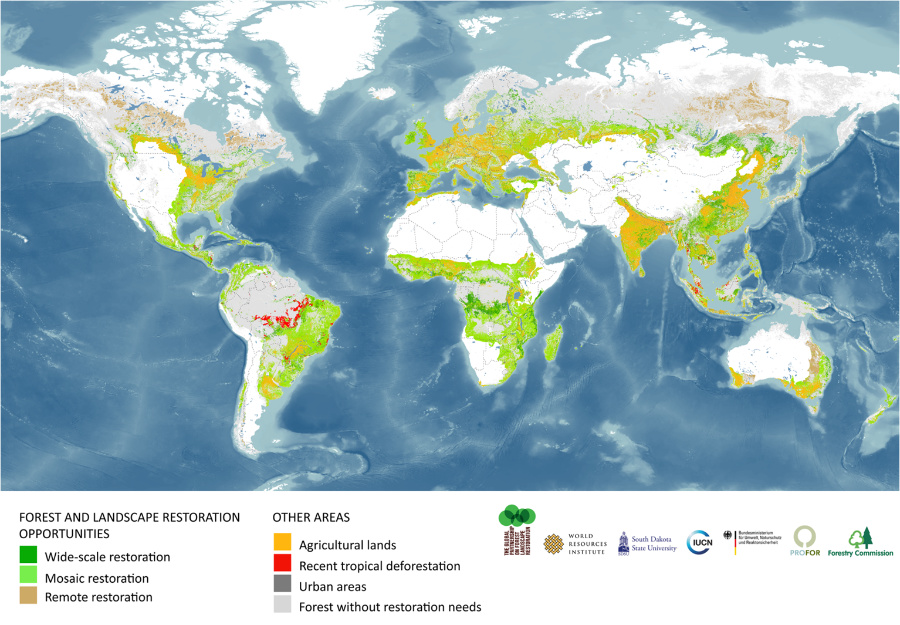
With their easy to implement, grassroots restoration projects on the ground, incredible communications campaigns and events all around the world, and their education programs in the classroom, Justdiggit is doing everything they can to create a future where the earth is green and the climate is friendly. I’m sure that’s a future we all want to see become a reality.
And it turns out, we can all help make it happen!
How We All Can Help
There are many ways that we can help spread this message of hope and rejuvenation.
We all have a role to play if we want to make the world green again. We can help spread the word about wonderful initiatives like Justdiggit simply by telling people about them. We can share the stories on social media, talk to our friends about land restoration, shout ‘Kisiki Hai’ through a megaphone repeatedly on a crowded street! There are many ways that we can help spread this message of hope and rejuvenation.
To help Justdiggit specifically you can make a financial donation here, or you can register on their ‘re-greening platform’. This platform allows people to directly support African farmers in re-greening their land by buying ‘bunds.’

Remember those ‘bunds’ we talked about earlier? The little crescent-shaped holes being dug in the ground that allow the soil to absorb moisture? Well on this platform you can create an account, choose the number of bunds you want to have dug, and basically invest in cooling down the planet and supporting local farmers in Africa. The farmers are paid per bund via the app, and you even receive a photo of the final result. An absolutely brilliant way of using technology to bring people together in the fight against climate change. We can all do our part.
But after all of this, the question still stands. Can we get ourselves out of this climate crisis shaped hole we’re in by just, digging?
Combined with all the other great work Justdiggit and similar organisations are doing around the world, and with the help of people like you and me, the answer to that question is, a regenerative, yes.
We can.
About the Author
Adam Millett is a freelance writer for hire who specialises in sustainability and environmental issues. He believes the economy should be circular, businesses should make the world a better place, and that effective content is the best way to spread the word about sustainability. Visit his website at wordchameleon.com if you want to bring your vision of sustainability to life.

Single-Use-Madness
It’s actually quite amazing how many different materials can be used instead of plastic to replace some of the items we use every single day. It would make you wonder why on earth we ever resorted to plastic in the first place.
You use it for a fleeting moment, and then it remains as a scar on nature for the rest of conceivable time. The oceans filled, the landscapes stained, the animals strangled, a world gone insane.
Single-use-plastic is one of the most ridonkulous, disgusting, absurd, and unnecessary evils our crazy crazy consume-as-much-as-possible-and-then-consume-some-more-just-for-the-laugh-focused world has ever dared to dream up, but thankfully, people are beginning to see sense.
Even better than that, people are beginning to take action, and I’m not just talking about taking action as ‘consumers’. People have jumped over to the production side of the crazy coin and started coming up with innovative ideas and launching companies that offer alternatives to single-use-plastic. Alternatives that respect the planet instead of polluting it.
It’s actually quite amazing how many different materials can be used instead of plastic to replace some of the items we use every single day. It would make you wonder why on earth we ever resorted to plastic in the first place. Sigh.
But anyways, enough with the problematic plastic past and on to the fortifying fabulous future!

Here are five fantastic emerging companies who are leading the charge against single-use-plastic, and for the purpose of outlining the sheer number of alternative materials available to us, each company I have chosen is using a different material as a plastic alternative. So enjoy and delight in the beautiful planet-cleaning variety on offer!
Biofase – Cutlery and Straws made from Avocado Pits
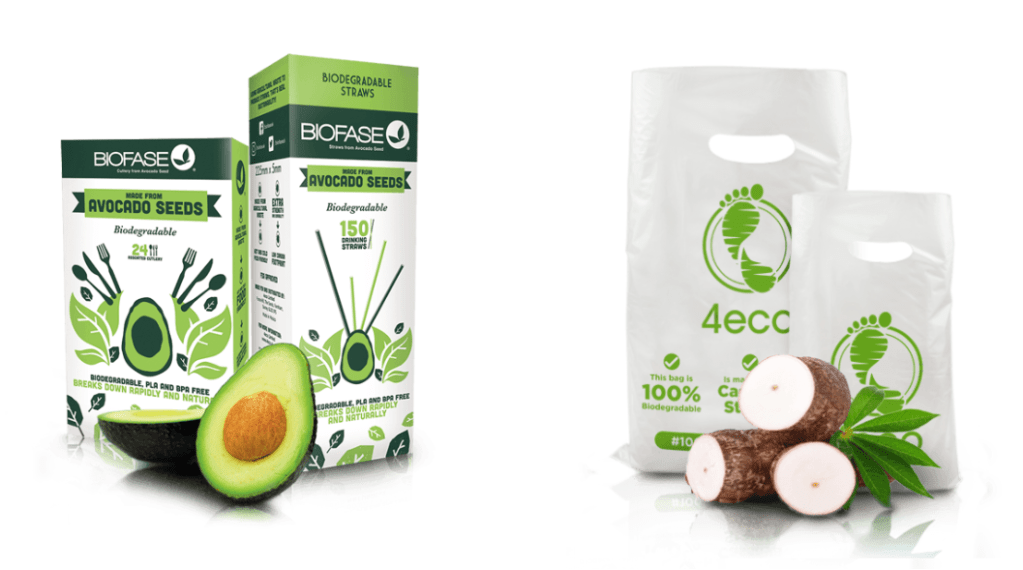
Ever go into a shop or a restaurant or a cafe on a super busy day and order your tiramisu kebab and pineapple milkshake to go and then eat it at the speed of sound with a plastic knife and fork and straw and then throw these indestructible single-use-utensils in the bin so they can litter the earth for the rest of eternity?
Okay, so maybe you didn’t order exactly that for lunch, but we can all admit that we’ve used the single-use-utensils at least once before. We live in a pronto pronto world people, where convenience is key so we can get things done before we know we have to do them and until they pass a law stating that everyone has to keep their best silverware on them at all times (not the worst idea?), disposable cutlery is going to be a part of that world.
So how can we make disposable cutlery that doesn’t harm the environment? Well, enter Biofase. Biofase makes biodegradable cutlery and straws out of avocado pits. Flipping avocado pits for crying out sustainably!
By utilising avocado pits, a material that would otherwise just end up as food waste, Biofase have actually found an alternative to plastic that doesn’t require the chopping down of any extra forests or harvesting of any extra raw materials.
According to the good folks at Biofase: 60% of the material in these utensils naturally biodegrades within 240 days and the rest takes a little bit longer, but fantastically, no smelly smelly microplastics are created by these products!
The product will biodegrade into a nutrient-rich organic material called humus, which creates a healthy soil environment for new plant growth. If it ends up in the landfill it will biodegrade with the other products around it and if it goes to the incinerator it does not emit methane gas.
By utilising avocado pits, a material that would otherwise just end up as food waste, Biofase have actually found an alternative to plastic that doesn’t require the chopping down of any extra forests or harvesting of any extra raw materials. The avocados have already been produced for consumption, and Biofase is just turning the leftover bits into these eco-friendly utensils.
Whenever possible, it’s probably best to avoid disposable utensils altogether and use the good old fashioned stainless steel versions from ancient times, but when there is a need for disposable utensils, making them out of food waste is probably as environmentally friendly as you’re gonna get.
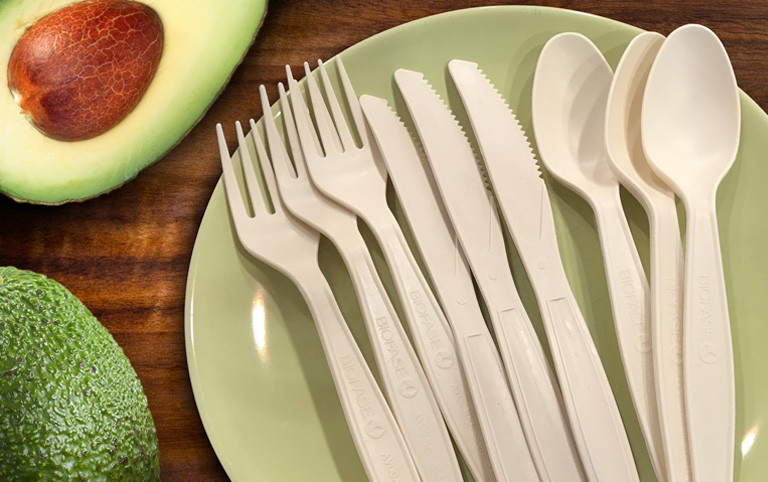
And remember, no innocent avocados are harmed in the making of these planet-friendly, single-use-plastic banishing utensils, as the avocados involved have already been used for consumption.
Biofase also offers a plastic bag alternative that looks and feels like plastic but is actually made entirely from cassava starch and other natural ingredients and contains absolutely zero plastic whatsoever. The bags dissolve in water, soil, or landfill under natural conditions. So why in the heck are we still using plastic bags at all? There’s really no excuse. Get these cassava starch bags into the shops double pronto I say!
Biofase is a Mexican company but based all around the world, and below are links to the Mexican website and also the UK based branch. To avocado pits, and beyond!
Biofase Mexico Website: https://www.biofase.com.mx/
Biofase UK Website: https://4eco.uk.com/
VirtueBrush – Toothbrushes made from Bamboo
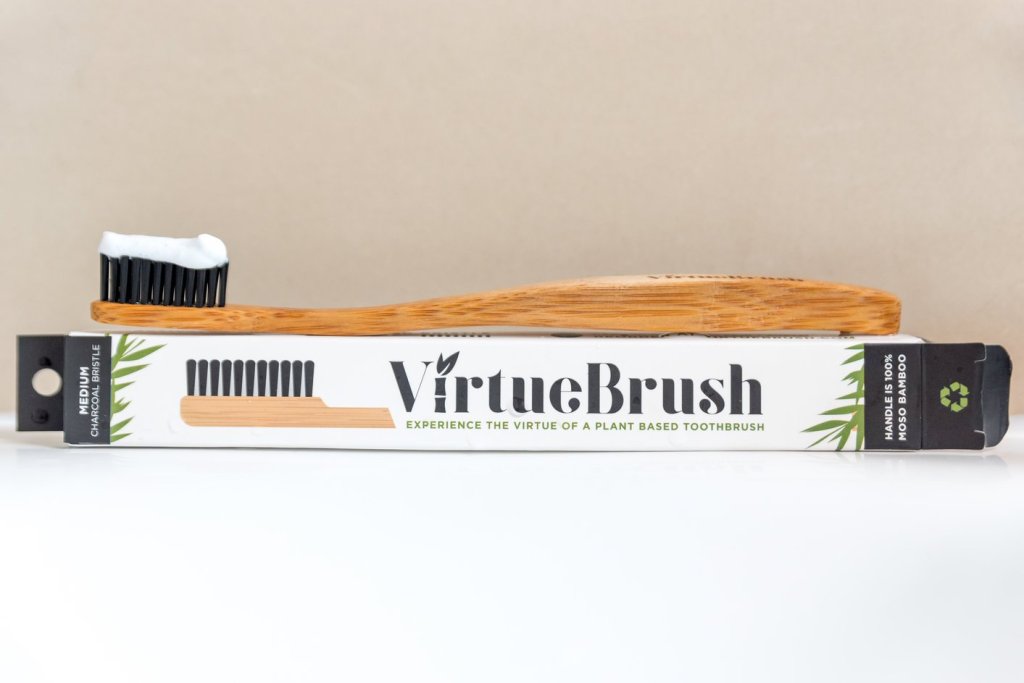
Okay so toothbrushes may not be single-use-plastic, but they are ‘only-a-few-times-use-plastic’, a term I’ve just coined that’s sure to become mainstream within the week, I’m telling you, just you watch. Cough. And plastic toothbrushes are not recyclable. Every plastic toothbrush you’ve ever used still exists somewhere, clogging up some river or ocean crevice and leaking its smelly microplastics all over its disgusted neighbours. I mean I thought toothbrushes were supposed to keep things clean?
Well they certainly can. We don’t have to make toothbrushes out of plastic you know? There are plenty of alternative materials, and a very suitable one seems to be bamboo.
Not only is VirtueBrush battling the relentless plastic toothbrush army by offering a bamboo alternative that naturally biodegrades, they are also working with ‘Trees for the Future’ to plant three trees per VirtueBrush sold online and one tree per brush sold in retail shops.
When grown and harvested in the right way, bamboo is an incredibly sustainable material for a number of wonderful reasons:
– It grows flipping fast, up to 3.5 feet a day, and reaches full size in 3-5 years.
– It regenerates from its own roots so doesn’t need to be replanted.
– It doesn’t require any chemical fertilisers for cultivation.
– It sequesters a whole load of CO2 from the atmosphere as it grows.
– It produces up to 35% more oxygen than an equivalent sized tree.
– It can be grown in nearly every region of this great green gargantuan earth.
So clearly, bamboo has a lot to offer, and there are a number of companies currently offering bamboo toothbrushes and other products, but Dublin based VirtueBrush is a particularly interesting one.
Not only is VirtueBrush battling the relentless plastic toothbrush army by offering a bamboo alternative that naturally biodegrades, they are also working with ‘Trees for the Future’ to plant three trees per VirtueBrush sold online and one tree per brush sold in retail shops. This ensures that any carbon emissions created through the creation and shipping of the toothbrushes is accounted for. So that’s less plastic rotting in the oceans, and more trees sucking in CO2 on land. A pretty virtuous combination if you ask me.
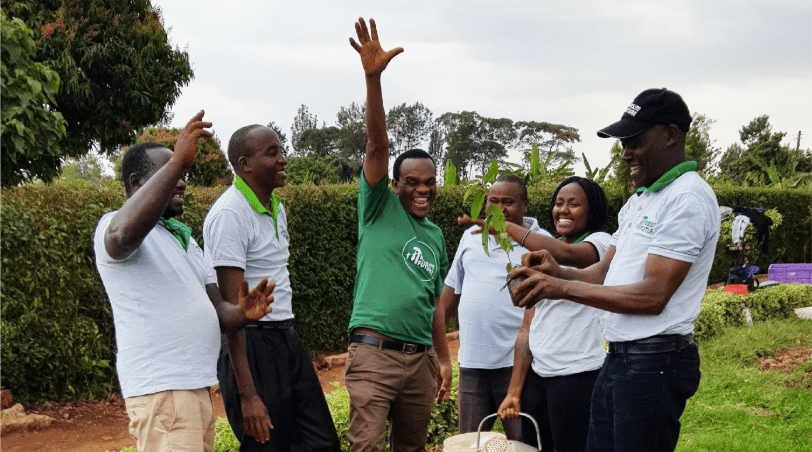
The VirtueBrush itself is composed of a 100% “moso bamboo’ handle, and dental grade nylon bristles. The handle is biodegradable, and after removing the bristles, you can just throw the handle in the compost or use it as fire kindling once you’re done with it. The packaging is also 100% recyclable white cardboard and contains zero plastic.
Trees for the Future by the way is a not-for-profit that since 1989 has planted over 115 million trees around the world, using a ‘forest garden approach‘ to regenerating land and helping to revitalise local communities in the process. You can learn more about them and VirtueBrush through some nice little links provided below. But now that we’ve finally managed to clean our teeth without destroying the planet, it’s time to smile, and move on. (And that’s a pearly white super-sustainable smile by the way!)
VirtueBrush Website: https://virtuebrush.com/
Trees for the future Website: https://trees.org/
Ecovative Design – Packaging (and other things) made from Mushrooms
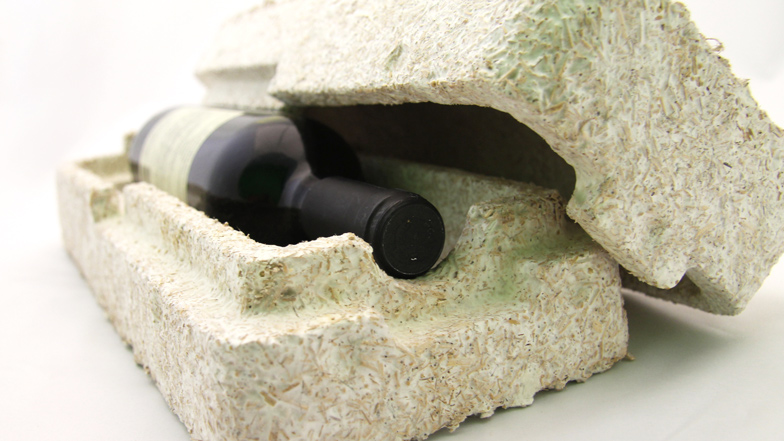
Hahaha you know what? I just got the name. All they had to do was switch the c with the v and they turned ‘evocative’ into ‘Ecovative’. Clever clever super-clever. And what these guys are doing is certainly evocative, and eco-friendly. And clever.
Packaging can be a real pain in the planet. In the EU alone in 2016, 16.3 million tonnes of plastic waste was generated, and 170kg of packaging waste (all materials) was generated per person. 170kg of waste PER PERSON in only ONE YEAR just from packaging, and a lot of that was plastic. And I’m sure we’ve all heard that notorious statistic that 91% of plastic worldwide does not get recycled! This is all very damning stuff really, but enough with the statistics, and on with the solutions!
Ecovative Design is a New York-based ‘biomaterials company’ that harnesses the power of mycelium, the root structure of mushrooms, to grow ‘advanced materials’ that can be used to replace plastic in multiple industries. As well as packaging, this super-adaptable material can be used in the skincare industry, for textiles, clothes, and even to create meat alternatives.
No microplastics involved when it comes to the disposal of this mycelium-based packaging, just tiny pieces of nutrient-rich mushroom goodness dissolving back into the great green earth instead. Now that’s a plastic alternative I can get on board with.
With regard to the ‘mushroom packaging’, it can be grown in 9 days to a custom shape, and is flame-resistant, water-resistant, and unlike our good old arch nemesis plastic over there in the naughty corner, this packaging is completely biodegradable. Ecovative even offers a ‘grow-it-yourself’ kit where you can grow your own mushroom packaging at home! I mean does it get any better than that? It kind of does make a whole lot of sense that if you’re growing your packaging out of natural ingredients, it’s not going to do much harm to the planet when the time comes for it to break back down into little pieces.
So no microplastics involved when it comes to the disposal of this mycelium-based packaging, just tiny pieces of nutrient-rich mushroom goodness dissolving back into the great green earth instead. Now that’s a plastic alternative I can get on board with.
You might have read recently actually that Ikea has replaced their polystyrene packaging with mushroom-based packaging? Well it’s Ecovative Design who are behind that truly wonderful development!
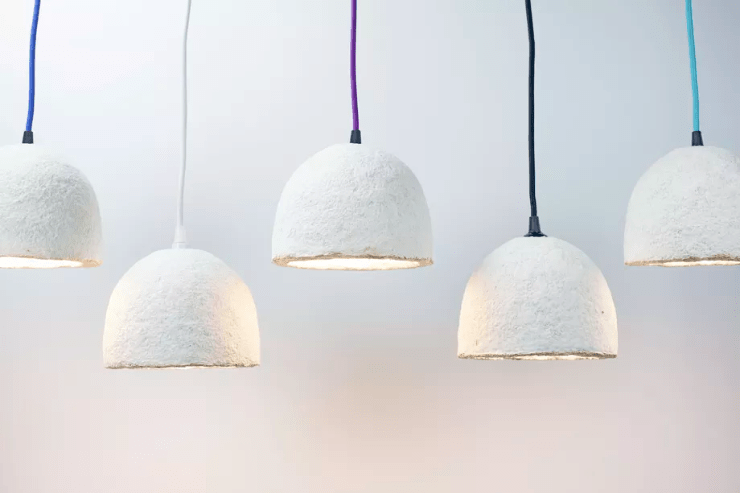
Really lovely stuff altogether. And you know I actually wrote an article a while back about the wonders (or the magic?) of mushrooms and all the ways they can help both people and the planet. From treating depression to cleaning up oil spills to ‘eating’ plastic waste, it’s super interesting stuff. If you’d like to read about that in detail (go on, goooooo on, you know you want to) then just click right here, and if you wanna check out Ecovative Design and all the wonderful things they’re doing I’ve very kindly provided a link to their website below.
Wow. This plastic-free world is looking pretty lovely so far really isn’t it? Maybe we don’t need to use plastic for anything anymore, ever again? Ever? Just wait there for a second though, I’m gonna go grab a coffee.
Ecovative Design Website: https://ecovativedesign.com/
rCUP – Reusable Coffee Cups made from Used Coffee Cups!
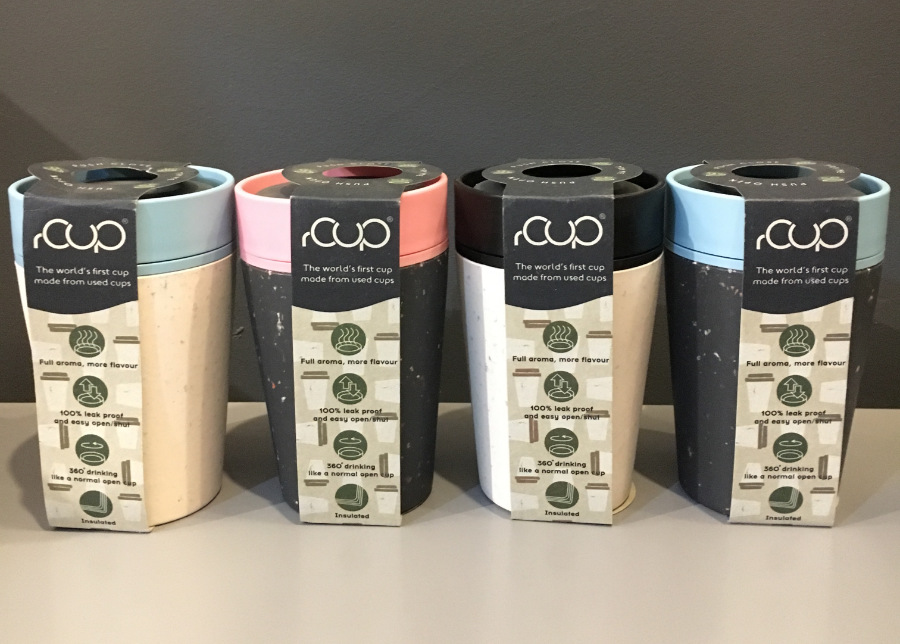
Okay I’m finished my coffee. But what should I do with the cup?? It’s one of those disposable paper cups but it’s got a flipping plastic lid and the inside of the cup is lined with a plastic coating so the cup can’t be recycled. Flip it! I guess I’ll just have to throw it on the landfill then. Well not if UK based eco-friendly, planet-loving, circular economy-embracing ‘rCUP’ has anything to do with it! (Also I didn’t actually use a disposable unrecyclable coffee cup in the making of this article. I filled my ceramic cup full of tea instead!)
As I mentioned so theatrically above, most disposable coffee cups cannot be recycled because they are lined with a thin plastic coating on the inside to stop the hot liquid seeping through the cup. Most also come with a big chunky plastic top as well, which is no fun for anybody, least of all the planet. According to the BBC last year, 99.75% of coffee cups are not recycled. I mean my goodness, that’s basically all coffee cups not being recycled. Ridiculous.
But thankfully, rCUP has come up with a solution that not only provides an eco-friendly alternative to disposable coffee cups, but also helps put old coffee cups to good use so they don’t end up on the rubbish tip.
rCUP really is killing two plastic birds with one perfectly circular stone here because as well as creating a product that will reduce the overall demand for disposable cups, they’re also helping to form the infrastructure needed to make disposable cups recyclable, and therefore, circular.
rCUP make high-quality reusable cups out of old single-use cups. These ‘rCUPs’ are super resilient, and maintain all the qualities you would want in a reusable cup. They’re 100% leak-proof, robust, keep drinks warm or cool, and can be picked up when the contents are very hot. rCUP is the only company that makes reusable cups out of coffee cups, and the idea is to create a circular economy for coffee cups.
As rCUP states on its website, ‘by creating products from used cups we’ve stimulated the demand for the once worthless used paper cup. This demand increases the value of used paper cups, which enables recycling firms to invest in the infrastructure required to recycle them.’
So rCUP really is killing two plastic birds with one perfectly circular stone here because as well as creating a product that will reduce the overall demand for disposable cups, they’re also helping to form the infrastructure needed to make disposable cups recyclable, and therefore, circular. The reusable rCUP itself can also be entirely recycled into a new rCUP at the end of its life, which rCUP say will be at least 10 years. So the rCUP is not only a wonderful alternative to disposable coffee cups and the single-use-plastic they contain, it is also leading the way towards a more circular economy, which is a tremendously wonderful thing.
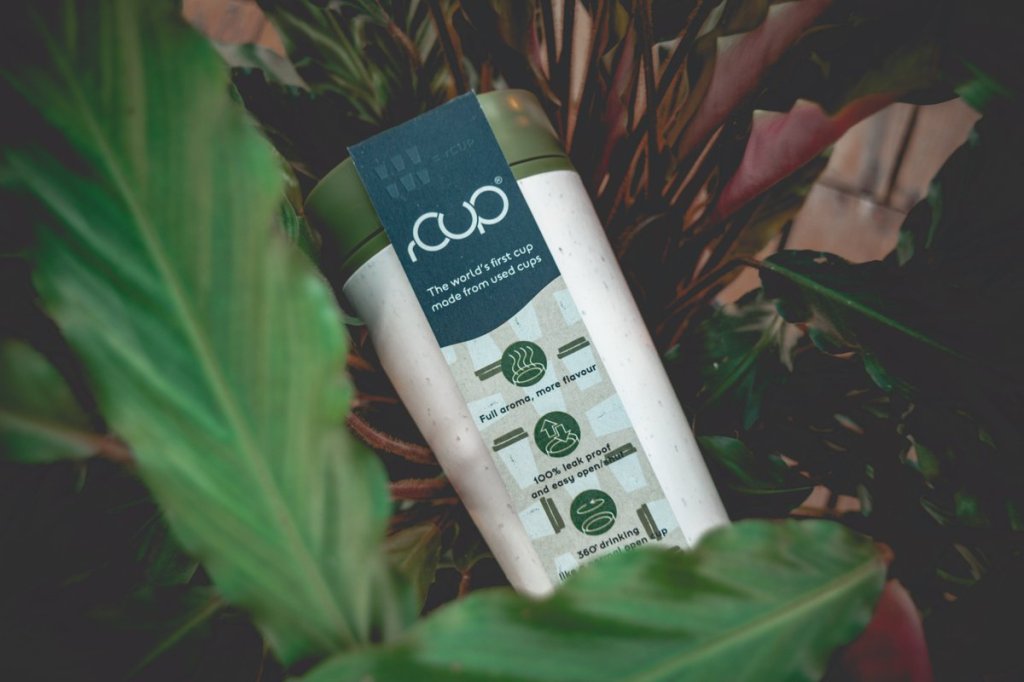
I’ve actually written at length about the circular economy and how exciting it is here if you fancy a peak, and you can find out more about rCUP through the link below. rCUP is created by an award-winning design company called ‘ashortwalk’ based in Cornwall in England, and they’re doing lots of other interesting stuff too so I’ve included their website below as well. Absolutely fabulous stuff so far, but to be honest, I’m getting kind of hungry now. Time for a takeaway I think!
rCUP Website: https://www.rcup.co.uk/
ashortwalk Website: https://www.ashortwalk.com/
Ark Reusables – Reusable Takeaway Containers made from Silicone
Doooooooon’t worry, I’ll leave the theatrics out this time and get right down to business. A lot of disposable food containers are made from styrofoam or different forms of plastic. Not only can this affect your personal health by leaking lots of horrible plastic chemicals into your food, but it also harms the health of the planet. According to the National Resources Defence Council in the US, 269,000 tonnes of plastic pollution is currently floating in the oceans and waterways of the world as a result of plastic litter from ‘takeout’ orders in the US alone. A gargantuan amount of plastic.
Fortunately, a lot of food places lately seem to be adopting more environmentally friendly containers made out of compostable materials like sugarcane, wood, paper, even banana leaves, and all sorts of other things as well. But what about forgoing the disposable container altogether and bringing your own?
This may not always be the best option as reusable containers can often be made from plastic themselves and can be pretty bulky and a pain in the convenience to transport, but Amsterdam based startup Ozarka offers a nifty solution to these problems in the form of the ‘Ark Reusable’ container.
By combining wonderful innovations like the Ark Reusable with planet-friendly disposables, we can go a long way towards making convenience food convenient for the planet as well as for us humans.
The Ark Reusable is a beautifully designed container made from 100% food-safe silicone. (Silicone is made out of sand, does not give off nasty chemicals, and does not break down into microplastics, and you can learn more about it here, and here) It is dishwasher safe, oven and microwave safe, freezer safe and pretty much folds completely flat when empty so it’s easy to transport. The ‘Ark’ also comes with a lifetime guarantee and is 100% recyclable. Ozarka also offers recycling services for the products once you’re done using them.
The idea is that you bring this container with you when you’re grabbing your super-fast on-the-go lunch and hand it to the food vendor instead of using one of the wasteful disposable containers on offer. Ozarka say that they have ‘spoken with dozens of chefs and food vendors, and found huge excitement around reusable containers. The interest is there, it just needs the right system, the right containers, and a shift in how people think about waste.’ So it does sound promising that with a little shift in everyone’s thinking, we could make disposable food containers a thing of the past entirely.
But there will always be a time when you need to grab your dinner on the go and you just don’t have your disposable container with you you say? We can’t just keep these silicone containers strapped to our bodies at all times you say? Well you’re dead right, that would be absolutely absurd! But whenever we can’t use a disposable container, we can put pressure on food vendors to start using any of the plastic-free, biodegradable options mentioned above. By combining wonderful innovations like the Ark Reusable with planet-friendly disposables, we can go a long way towards making convenience food convenient for the planet as well as for us humans.
And just like with all the other sections in this article, below is a link to the Ozarka and Ark Reusables websites so ‘ye can have a wee look for yerselves.’ (Not sure who I’m quoting there, maybe myself, but sure why not?)
Ozarka Website: https://www.ozarka.club/
Ark Reusables Website: https://arkreusables.com/
To a Plastic-Free Future
Whenever possible, it’s much better to avoid disposable products altogether and use a more permanent option, but we all know that’s not possible 100% of the time. This is a crazy world we live in after all. But when we do have to use disposable products, from what we’ve seen in this article, there is really no reason at all that we should have to use plastic.
Products such as the rCUP and the Ark Reusable are great examples of how reusable products can make the planet a better place, and Biofase, VirtueBrush and Ecovative Design show us that there’s really no need to make any of our single-use or ‘only-a-few-times-use’ (told you it would catch on) products out of plastic at all. There are plenty of other, better materials out there to choose from.
As the chorus of this song written from the perspective of single-use-plastic itself proclaims, “Single-use-plastic, I am indestructible, a momentary use, for a permanent object.” A momentary use, for a permanent object. That explains the ridiculousness of the whole thing really.
So it’s great to see that there are now loads of forward-thinking companies out there who are taking a moment, to come up with ideas that can lead us to a more sustainable, ‘just-don’t-use-plastic’ future. And then keep us there, permanently.
Maybe ‘just-don’t-use-plastic’ is more likely to catch on?
Well, I certainly hope so.
About the Author
Adam Millett is a freelance writer for hire with an affinity for dressing up as Spiderman and writing about saving the planet. He likes to climb trees and stare at the stars in his spare time and likes to help businesses tell their sustainability stories while he’s working. Visit his website at wordchameleon.com if you want to tell the world yours.

We can’t do it all Ourselves.
The Amazons and the Googles of this world have got to change as well if we’re going to have any chance.
We hear a whooooooooooole lot these days about what we can do, as individuals, to help the planet. Stop eating meat, stop having kids, stop taking flights, stop using single-use-plastic. Take half as many breaths per minute and only move our muscles when we really have to. All decent solutions, but will they really make much of a difference if the big bad energy devouring corporations of the world carry on emitting like there’s no (if they do keep doing what they’re doing there actually might not be) tomorrow? Probably not.
The Amazons and the Googles of this world have got to change as well if we’re going to have any chance. And you know what? It seems like they’re really starting to. Here’s a run-through of what some of the largest companies in the world are doing to benefit this great little planet of ours. Things really do seem to be changing on a large scale, and just maybe, we might actually have a chance after all. Have a look for yourself.
Amazon

Just the other week, Amazon, who up until then had pretty much kept its mouth shut about the climate crisis, announced a commitment to meet the Paris Agreement, a global action plan to put the world on track to avoid dangerous climate change by limiting global warming to well below 2°C and pursuing efforts to limit it to 1.5°C, 10 years early. To fulfil this commitment, Amazon has pledged to do the following:
- Commit to net-zero carbon by 2040 and 100% renewable energy by 2030.
- Order 100,000 fully-electric delivery vehicles, the largest order ever of its kind.
- Invest $100 million in reforestation projects around the world to begin removing carbon from the atmosphere now.
- Launch a new sustainability website to report progress on commitments.
When a big player like Amazon is the instigator, others tend to follow.
This all comes as part of The Climate Pledge, an initiative Amazon has co-founded with social enterprise Global Optimism. Companies who sign up to The Climate Pledge initiative agree to do the following:
- Measure and report greenhouse gas emissions on a regular basis.
- Implement decarbonization strategies in line with the Paris Agreement through real business changes and innovations, including efficiency improvements, renewable energy, materials reductions, and other carbon emission elimination strategies.
- Neutralize any remaining emissions with additional, quantifiable, real, permanent, and socially-beneficial offsets to achieve net-zero annual carbon emissions by 2040.
I can’t find any evidence of other companies signing up to the climate pledge yet, but I’m pretty sure they will in time. It’s still early days, as the pledge was only announced like 13 days ago, and when a big player like Amazon is the instigator, others tend to follow.

Google recently announced a major investment in renewable energy, and is currently running various other planet-friendly projects as well. Here’s a breakdown of what they’re doing, or what they will be doing to help the environment in the near future:
- Google recently announced 18 new energy deals across the US, Chile, and Europe, which will involve purchasing energy from solar farms across the United States, and making investments in Chile that combine both wind and solar power. 1600 Megawatts of clean energy will be purchased in total, which will ‘kick-start the development of millions of solar panels, wind turbines and other construction.’
- Google.org, the companies philanthropic arm, will gift a $500,000 grant to the Renewable Energy buyers alliance in the US, and €500,000 to Re-Source in Europe. (Haha, the Europeans got a slightly better deal there! But it’s all good for the world I suppose.) The money will be used to research new renewable energy business models and provide training for consumers.
- Since last year, Google have also been publishing sustainability reports about its products and supply chain processes, and has recently pledged to make its ‘Made by Google’ line of products more sustainable, claiming that all its products will contain recyclable materials by 2022. (What percentage of each product will be made from recycled material is unclear, but you would hope that whatever it is, it will increase in time.)
- Google has also said that all of its shipments, to or from customers, will be carbon neutral by 2020. Progress has already been made on this front, according to Anna Meegan, Google’s head of sustainability for hardware, who has stated that Google managed to reduce emissions by a hefty 40% just by switching from air shipments to cargo shipments. Quite a significant number. If it’s true, that’s very impressive!
- Finally, Google also has a recycling programme for customers in the US, where it will send customers a shipping label to send back unwanted products so the raw materials can be re-used.
So there we are, that was a flip load of bullet points, and that was just Google! Onto the next one.
Apple
It’s clear that Apple is making a tremendous effort to become a more sustainable operation, and as these efforts progress, they are bound to rub off on other companies as well.
An apple a day keeps the doctor away, but only if the apples are clean! Well not only do all of Apple’s stores, data centres, and offices now run on renewable energy, a milestone the company achieved last year, but Apple is also now offering financial help to the companies in its supply chain so they can switch to renewable energy as well. As part of Apple’s Supplier Clean Energy program, 44 of its suppliers have already pledged to transition to 100% clean energy, with even more to follow. Apple is also aiming to introduce 4 gigawatts of clean energy into the companies supply chain by 2020. Now that’s a whole lot of clean!
Significant structural alterations to Apple’s supply chains and production processes are also being implemented, with the company working towards a closed-loop supply chain (woooooo the circular economy!!!), and adopting more efficient manufacturing processes and materials to further reduce the raw materials needed to produce its products.

Although far from perfect yet, and still with some major concerns being voiced about the sustainability of some of its products, and the working conditions in some of its factories, it’s clear that Apple is making a tremendous effort to become a more sustainable operation, and as these efforts progress, they are bound to rub off on other companies as well.
The Others

Placing all these other companies in a section called ‘the others’ doesn’t mean they’re any less important or significant than the ones I’ve already described, neither does it mean that these companies care less about saving the planet, or that they’re bad guys on a very popular but questionable TV show from the mid to late noughties. It just means that I have limited time to write this article today as I’m a busy busy boy with lots of things to do and it’s Friday, so I’m giving you the gist of what these companies are up to here and then if you like, you can go research the hell out of them yourself and respond back in the comments below with the dirty (or hopefully clean) details about exactly what these companies are up to! Sound cool? Freezing.
People are starting to demand that companies treat the planet with respect, and companies are starting to respond.
Microsoft
Microsoft is also moving toward renewable energy, and will be buying 230 MW of solar and wind power in Texas from a company called Engie. The company is planning to cut its carbon emission by 75% by 2030, and is targeting over 70% renewable energy for its data centres by 2023. Not quite as ambitious or effective as Apple or Amazon, but still heading in the right direction. Microsoft is also making it more expensive for its business units to ignore climate change by doubling its internal carbon fee to $15 per metric tonne. Tax that flipping carbon baby!
There’s no getting away from it to be honest; Facebook is a pretty dodgy company. Scandal after scandal, privacy breach after privacy breach, Cambridge after Analytica. It certainly doesn’t look like Mr. Zuckleburgers has the prosperity of the entire human race in mind with most of his decisions, but at least Facebook do seem to be making some moves with regard to the shift toward renewable energy. The social media (data gathering) giant has recently signed a deal for 200MW of Texas wind power as it continues its ‘track record as a major buyer of renewable energy.’ Now if they could just stop all the other dodgy business, they’d be golden! (Or green.)
Ikea
Ikea probably deserves a much bigger section, as they seem to be doing quite a lot of amazing stuff with regard to the planet, but I’m running out of time! So here’s a headline that pretty much sums it up: ‘Ikea has invested in enough clean energy to power all of its operations (plus extra). The company believes that ‘the future is renewable’, and they are doing loads of brilliant stuff for the planet right now. You can read more about that here, and maybe I’ll dedicate a whole article to Ikea sometime soon, so look out for that one!
Nike
Nike have just opened a 1.5 million square foot distribution centre in Ham, Belgium, which will be powered by 100% locally sourced renewable energy. Now that is a flipping massive massive operation to be powered by 100% renewable, and incredibly impressive. Wind, solar, geothermal, hydroelectric, and biomass energy will be utilised.
The Other Others
McDonald’s, Dell, Wall-Mart, Honda, Starbucks, Coca Cola, and plenty of other companies, to varying degrees, have also started to incorporate sustainability into their business models. This list suggests that the big companies of 2019 know they have to start taking sustainability seriously. They know it’s not just some optional extra shiny green string anymore that they can add to their business portfoli(bow) to make them seem more environmentally conscious. People are starting to demand that companies treat the planet with respect, and companies are starting to respond. Their sustainability efforts and initiatives, will only increase from here. So it seems the future of business, is very much so, looking like a sustainable one. (If it’s not then we better get out the butter and jam, and the marmalade, chocolate spread, possibly peanut butter too. Maybe some cheese?…. Cause if it’s not, then, we’re toast!)
Sustainability: The New Normal
The next time you question whether the changes you make to your own lifestyle will make a difference, just remember that a lot of the big bad companies are starting to make changes too.
A combination of evolving consumer expectation and the increasing financial viability of renewable energy and green technology is making the drive for sustainability an unavoidable reality for big companies today. Sustainability, in every sense of the word, is going mainstream.
Whether the companies listed above are finally starting to clean up their act because they care about the planet, or because it’s saving them money is anyone’s best guess (it’s probably the money thing), but either way, it doesn’t matter too much. The important thing is that change is happening. Some of the biggest companies in the world are starting to move towards a more sustainable future, and that will only push other companies to follow suit.
So the next time you question whether the changes you make to your own lifestyle will make a difference, just remember that a lot of the big bad companies are starting to make changes too.
We’re all in this together, and to truly make sustainability the new normal, we will all have to evolve. Human, and corporation, alike.
About the Author

Adam Millett is a freelance writer for hire with an affinity for dressing up as Spiderman and writing about saving the planet. He likes to climb trees and stare at the stars in his spare time and likes to help businesses tell their sustainability stories while he’s working. Visit his website at wordchameleon.com if you want to tell the world yours.
If the Staff at Sligo General Hospital Ran the World, Life Would Be Like a Great Big Music Festival.

Too Many Sick People, Not Enough Beds
I arrived at the A&E ward of Sligo General Hospital (my local hospital in the west of Ireland) last Monday morning after a weekend of stomach pain and no idea what was wrong with me. I remained in A&E for over 36 hours, propped up on a makeshift trolley bed in a brightly-lit, loud and frenzied hallway packed full of sick and suffering people. I was awake all night, and in quite a lot of pain. I was told by nurses that they had 24 people waiting for beds at the time. Poor bastards. (The nurses, as well as the patients.)
I was finally given a bed in the surgical ward on Tuesday around midnight after the doctors diagnosed me with a perforated colon. (Shit happens I suppose.) (Unfortunately, in my case it wasn’t happening quite as it was supposed to!) (I guess I was shit out of luck?) (But who gives a shit really?) (It’s all bullshit in the end.) (Everything comes down to poo.) (Okay, that’s enough!) (Enough of my shit!) (Right that’s it now.) (That’s shit now.) (haha).
I have been moved to three different rooms since then due to overwhelming patient overload and limited beds. (And once because they needed to check me for MRSA.) Due to cutbacks cutbacks cutbacks implemented over the last decade or so, this hospital, and the majority of Irish hospitals it would seem, really are not equipped with the necessary facilities to provide proper care for the growing number of patients admitted, and as most of the nurses have said; it is not even winter yet. Things will only get busier in the coming months.
The Staff here have Superpowers!
The genuine care, love, and warmth shown by the staff here spreads to the patients, and creates a wonderful atmosphere of ‘we’re all in this together’.
All of this really should make for a truly horrible experience for me. A hole in the colon and an overrun hospital doesn’t exactly sound like a winning combination, but honestly, I have found the whole experience to be quite lovely, and incredibly inspiring. When I said Irish hospitals aren’t equipped with the necessary facilities, I was not talking about the human facilities. The staff here are the very best of the best. Top-notch, dedicated, talented professionals, and top-notch down to earth human beings as well. You can tell that everyone really gives a shit, and all colon jokes aside, that’s not something you find everywhere. It’s not something you find most places.
The genuine care, love, and warmth shown by the staff here spreads to the patients, and creates a wonderful atmosphere of ‘we’re all in this together’. It feels like everyone is looking out for each other, everyone really cares for each other; nurses, cleaning dudes, patients, doctors, everyone. It’s really very uplifting, which I’m sure in itself helps with patient recovery, and it all stems from the incredible people who work here. I mean it’s not like their jobs are easy! I found it hard not to be miserable when I worked on the tills in SuperValu. These people are under constant stress and pressure, and they radiate love and togetherness. They are legends.

Feeling the Love
In hospital, life gets ramped up a bit. People are in serious situations, and it becomes clear as people interact how much they genuinely care for each other. The atmosphere in this place is so real, and so full of love and sincerity between strangers that it makes you feel like you’re at a music festival or something. Sligo General Hospital, it’s the new Body & Soul!
Just like all the crazy beautiful characters you meet and instantly fall in love with at a music festival, the same is true at the hospital. Since I’ve been here I have met some really wonderful people. Nurses, cleaning dudes, restaurant staff, doctors, fellow patients, all sorts. Warm bonds have been instantly formed between people of all shapes, ages, sizes, and walks of life. You can really tell that everyone cares for each other. The patients as well as the staff. People in pain showing concern for others in pain. People in shit situations coming together to joke about it and make the most of it. Philosophical conversations with roommates about how we all take things for granted and collectively remembering how lucky we really are.
Warm bonds have been instantly formed between people of all shapes, ages, sizes, and walks of life. You can really tell that everyone cares for each other. The patients as well as the staff.
The Best of the Best
Every staff member I have so far come into contact with is a legend.
And my goodness we are so lucky, certainly those of us living in Ireland and in need of medical assistance anyway. People complain about the makeshift beds in the hallway (and to be honest the government can and should flipping do something about that, it’s really not fair on the staff, or the patients), but with regard to the quality of person that works in Irish hospitals, we are second to none in the universe. And that’s quality of wholesomeness, as well as expertise.
Every staff member I have so far come into contact with is a legend. A big wholesome beautiful legend with kindness in their heart and a passion for what they do. And that goes for the nurses, the doctors, the cleaning staff, the restaurant staff, everyone. They are all so very kind. They are doing a colossal job with limited resources and managing to care for far far far more patients than the hospital is really equipped to deal with. These people are at the very top of their professions, the work they do is ridiculously difficult in so many ways, and they deserve much, much better.

The staff here manage to create an atmosphere of love and kindness that rubs off on the patients, and it transforms what should be a poopy poopy experience (I just can’t stop with the poo jokes!), into an inspirational, truly heartwarming one. I’ve met some great people here, and have actually made some fond memories. If the staff weren’t so superhumanly uplifting, everyone here would be miserable, and I probably wouldn’t have the will to be writing anything right now. Yet I’m sat here, buzzing.
I thank the staff wholeheartedly for doing what they do. I’m lucky in that my condition isn’t serious, but for the unfortunate souls in here who do have serious conditions, I wish them a full and speedy recovery, and I know the staff will make that as likely as possible. They inspire a tremendous amount of hope.
These People are the Best, and They Deserve the Best
If the staff at Sligo General Hospital ran the world, life would be like a great big music festival. There would be love all around us, people would feel uplifted, people would feel inspired, people would genuinely care for each other and want to help each other. There would be joking, laughter, philosophical conversations about the meaning of life and death. There would be pain and sickness but people would be nursed back to health by those around them. There would be realness. There would be life. There would be connection.
The people here, and most likely the people in the majority of Irish hospitals and medical facilities, are brilliant at what they do. So how about giving these inspirational people the appreciation they deserve, financial compensation that mirrors the deep technical and emotional work required of them, and the facilities they need to really work their magic and take care of everyone properly?
It wouldn’t be the worst idea on earth. My goodness, they certainly deserve it.
(The non-stop supply of Tay and Toasht makes all the difference as well. You’d know you’re in the weshht.)
About the Author
Adam Millett is a freelance writer for hire with an affinity for dressing up as Spiderman and writing about saving the planet. He likes to climb trees and stare at the stars in his spare time and likes to help businesses tell their sustainability stories while he’s working. Visit his website at wordchameleon.com if you want to tell the world yours.
 A Wall of Hope